By Dr. Niraj Ghanghoriya | Toothcareusa.com
Puffy gums can be more than just an annoyance; they’re often a clear signal from your body that something isn’t quite right with your oral health. While it’s easy to dismiss a little swelling, understanding the cause and knowing how to get rid of puffy gums quickly is crucial for preventing more serious dental problems. At Toothcareusa.com, we believe in empowering you with the knowledge to maintain a vibrant, healthy smile. Let’s dive into what causes gum inflammation and, more importantly, how to get your gums back to their healthy, firm state.
Understanding Puffy Gums: It’s More Than Just a Little Swelling
Before we tackle how to get rid of puffy gums, it’s essential to understand why they swell in the first place. Gums become puffy when they’re inflamed, typically due to an immune response in your body. This inflammation can range from mild irritation to a sign of advanced gum disease.
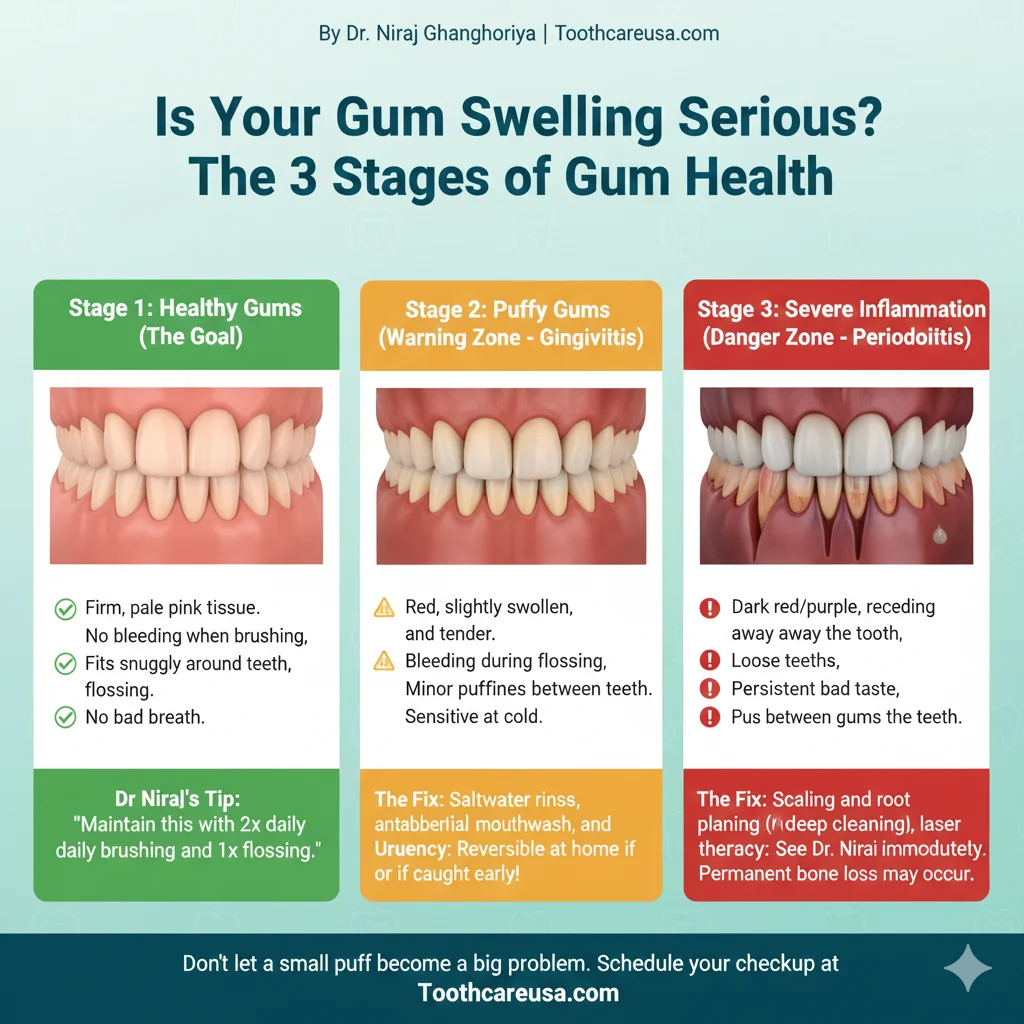
This infographic visually breaks down the different stages, helping you quickly identify where your gum health stands. As you can see, early detection and understanding the “stage” of your puffy gums are key to effective treatment.
Why Are My Gums Puffy? The Root Causes
Most commonly, puffy gums are a symptom of gingivitis, the earliest and most reversible stage of gum disease. But other factors can contribute too:
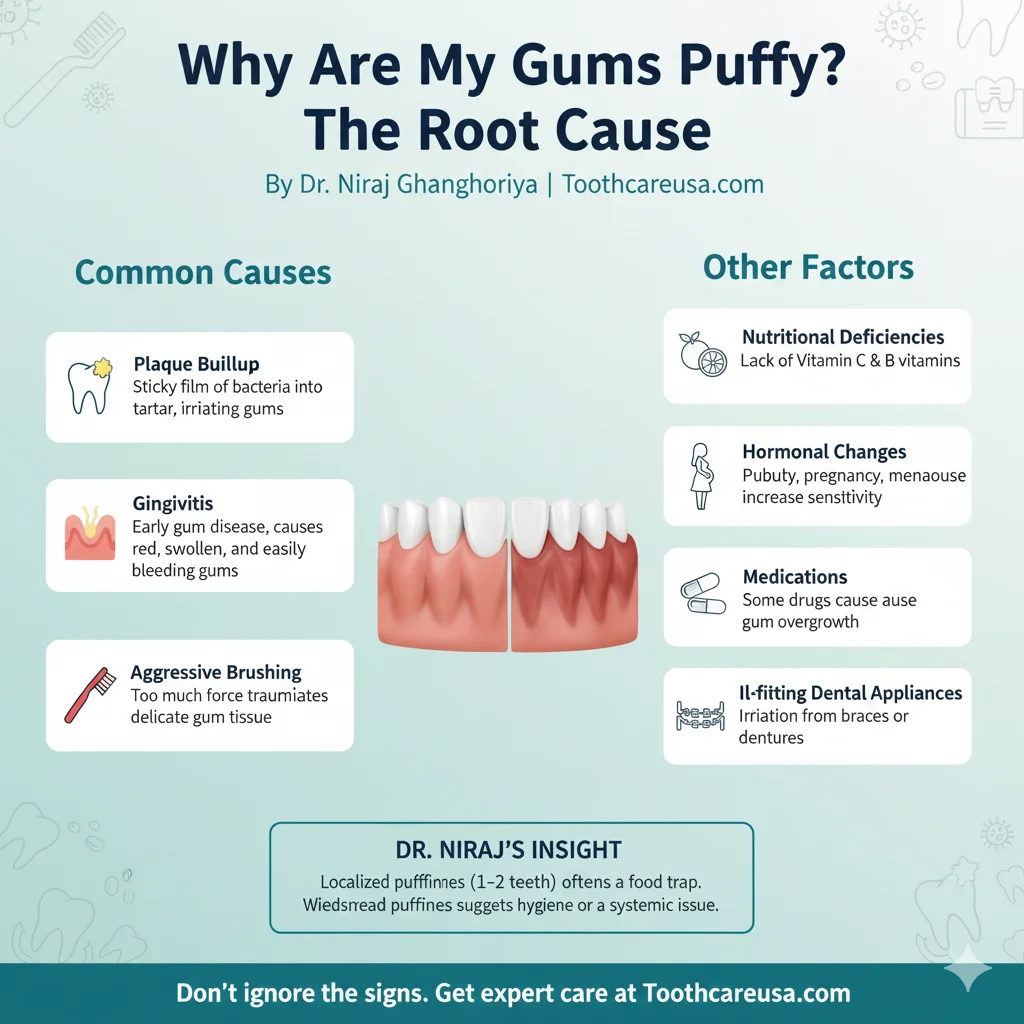
- Plaque Buildup: This is the primary culprit. When plaque (a sticky film of bacteria) isn’t removed daily, it hardens into tartar, irritating your gums and leading to inflammation.
- Gingivitis: This mild form of gum disease is characterized by red, swollen, and easily bleeding gums. Good oral hygiene can usually reverse it.
- Aggressive Brushing or Flossing: While good hygiene is vital, brushing too hard or using an incorrect technique can traumatize delicate gum tissue, leading to swelling.
- Nutritional Deficiencies: A lack of essential vitamins, particularly Vitamin C and certain B vitamins, can impact gum health and lead to puffiness.
- Hormonal Changes: Fluctuations during pregnancy, puberty, menstruation, or menopause can increase gum sensitivity and inflammation.
- Medications: Some drugs, like certain anti-seizure medications or calcium channel blockers, can cause gum overgrowth (gingival hyperplasia).
- Ill-fitting Dental Appliances: Braces, retainers, or dentures that don’t fit correctly can rub against the gums, causing irritation and swelling.
Immediate Relief: Natural Ways to Soothe Puffy Gums at Home
While these remedies are not a substitute for professional dental care, they can offer temporary relief from discomfort and help reduce swelling while you plan your next steps.
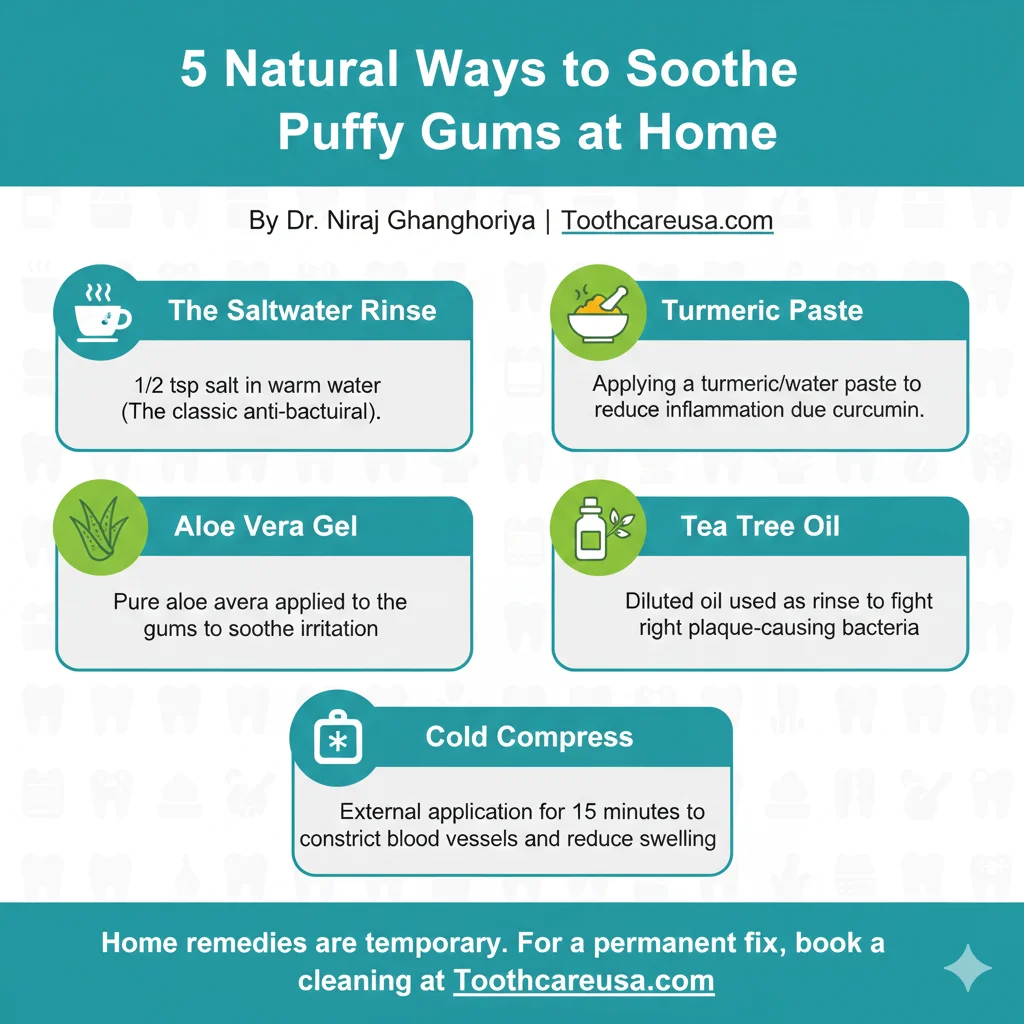
Let’s elaborate on some of these effective home treatments:
- Warm Saltwater Rinse: A classic for a reason! Mix half a teaspoon of salt into a glass of warm water and rinse for 30 seconds multiple times a day. Salt is a natural disinfectant and helps reduce inflammation.
- Turmeric Paste: Turmeric contains curcumin, a powerful anti-inflammatory compound. A paste made from turmeric powder and a little water can be gently applied to the affected gums.
- Aloe Vera Gel: Pure aloe vera has soothing and anti-inflammatory properties. Applying a small amount to your gums can provide relief.
- Diluted Tea Tree Oil: Known for its antiseptic qualities, a few drops of tea tree oil diluted in water can be used as a mouth rinse to combat bacteria. (Always dilute and never swallow).
- Cold Compress: If you’re experiencing pain along with puffiness, a cold compress held against the outside of your cheek can help reduce swelling and numb the area.
Remember, these natural remedies are excellent for temporary relief and support, but they don’t address the underlying cause of persistent puffy gums.
The “Dos and Don’ts” for Healthier Gums: Avoiding Common Mistakes
Sometimes, what you’re doing to help your gums might actually be making things worse. It’s crucial to adopt practices that promote healing and prevent further irritation.
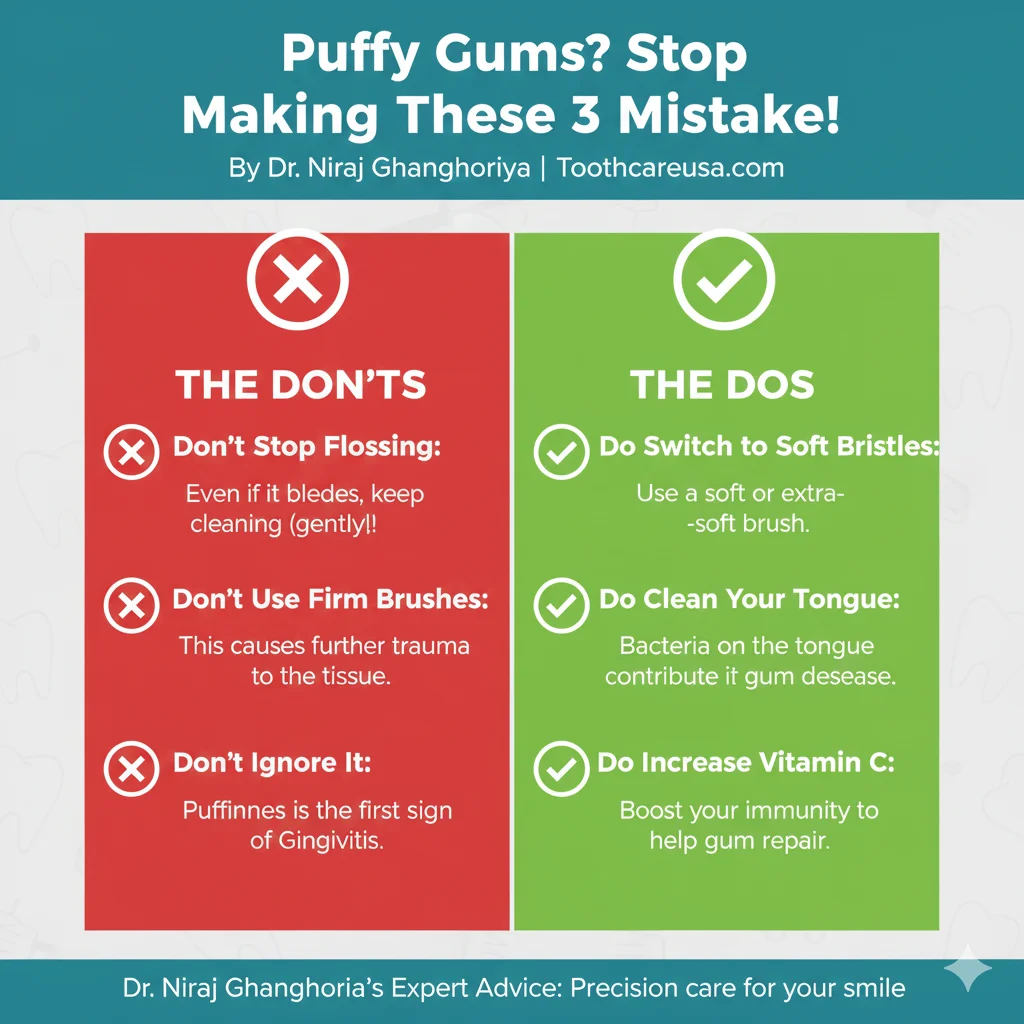
Following these guidelines can make a significant difference in your gum health:
The Don’ts:
- Don’t Stop Flossing: Many people avoid flossing when their gums bleed, fearing they’ll cause more harm. However, bleeding often indicates the presence of plaque, and gently flossing helps remove it, which is essential for healing.
- Don’t Use Firm Brushes: Hard-bristled toothbrushes can be too abrasive for inflamed gums, leading to further irritation and even gum recession.
- Don’t Ignore It: Puffy gums are often the first sign of gingivitis. Ignoring this early warning sign can lead to the progression of gum disease, potentially resulting in more severe and harder-to-treat conditions like periodontitis.
The Dos:
- Do Switch to Soft Bristles: A soft or extra-soft toothbrush is gentle on inflamed gums while still effective at removing plaque.
- Do Clean Your Tongue: Your tongue can harbor bacteria that contribute to bad breath and gum disease. A tongue scraper or your toothbrush can effectively remove these bacteria.
- Increase Vitamin C Intake: Vitamin C is vital for gum health and plays a crucial role in tissue repair and immunity. Include plenty of citrus fruits, berries, and leafy greens in your diet.
When to See Your Dentist: Don’t Delay Professional Care
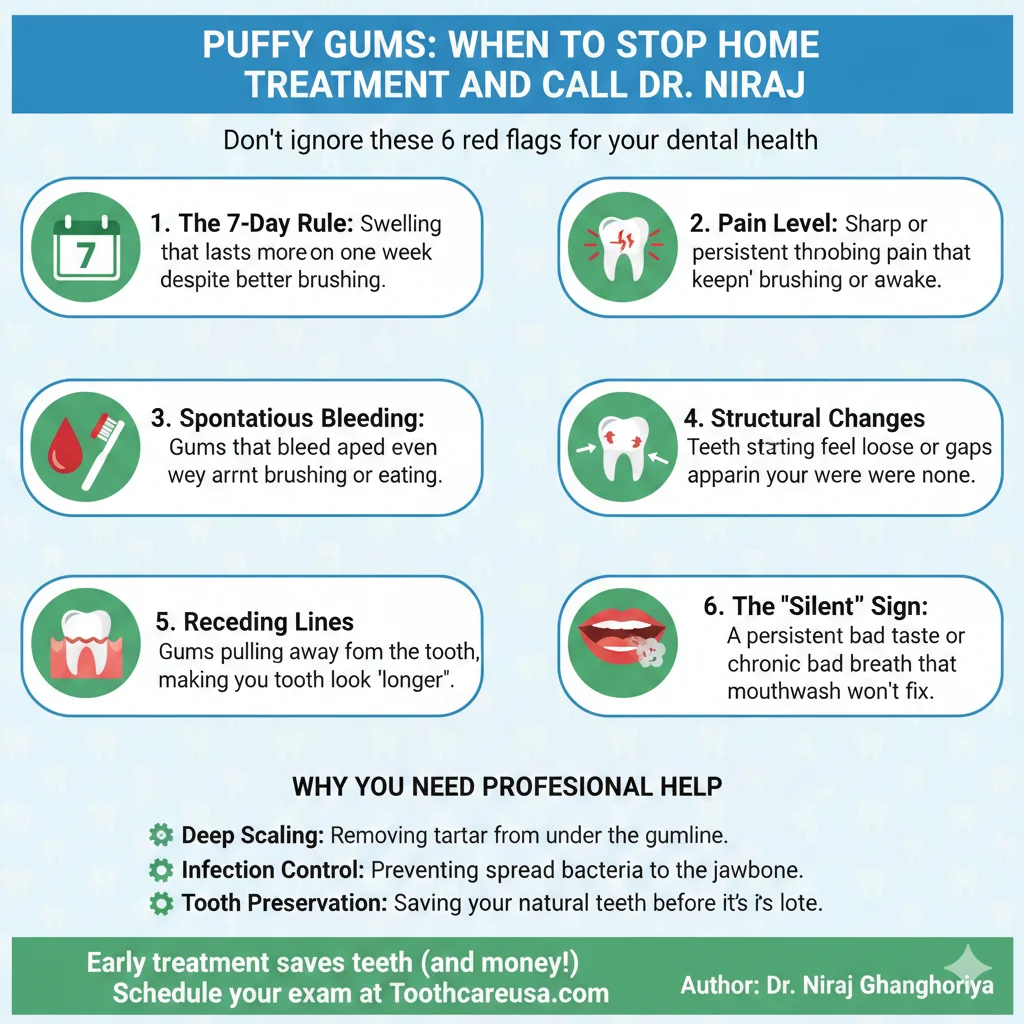
While home remedies and improved hygiene can help mild cases, persistent or severe puffy gums always warrant a visit to a dental professional.
You should schedule an appointment with a Dentist if you experience:
- Puffiness that lasts longer than a week.
- Severe pain or discomfort.
- Gums that bleed excessively or without provocation.
- Receding gums or visible pockets forming around your teeth.
- Loose teeth or changes in your bite.
- A foul taste in your mouth that doesn’t go away.
A professional cleaning can remove stubborn plaque and tartar that brushing and flossing can’t, and a Dentist can diagnose any underlying conditions requiring specific treatment.
Conclusion:
Puffy gums are a common issue, but they’re not one to ignore. By understanding the causes, implementing effective home remedies, practicing good oral hygiene, and knowing when to seek professional help, you can successfully get rid of puffy gums and safeguard your overall oral health.
Don’t let gum inflammation compromise your smile. If you’re concerned about your gums or simply due for a checkup, schedule an appointment with a specialized dentist today. We’re here to help you achieve and maintain a healthy, confident smile!
Common Questions About Puffy Gums (FAQ)
How can I get rid of puffy gums overnight?
While you cannot fully cure gum disease in one night, you can significantly reduce swelling by rinsing with warm saltwater and applying a cold compress to the outside of your cheek. This constricts blood vessels and flushes out bacteria, providing immediate relief.
Can puffy gums go away on their own?
If the puffiness is caused by minor irritation (like a piece of food stuck in the gum), it may resolve with careful flossing. However, if it is caused by plaque buildup or gingivitis, it will not go away without improved oral hygiene or a professional cleaning from a dentist.
Is salt water good for puffy gums?
Yes. Saltwater is a natural disinfectant that creates an alkaline environment in the mouth, which inhibits bacterial growth. It also helps to draw out excess fluid from inflamed tissues, reducing puffiness.
When should I be worried about gum swelling?
You should be concerned if the swelling lasts more than 7 days, is accompanied by a high fever, or if your teeth feel loose. These are signs that the inflammation has progressed into a deeper infection or periodontitis.

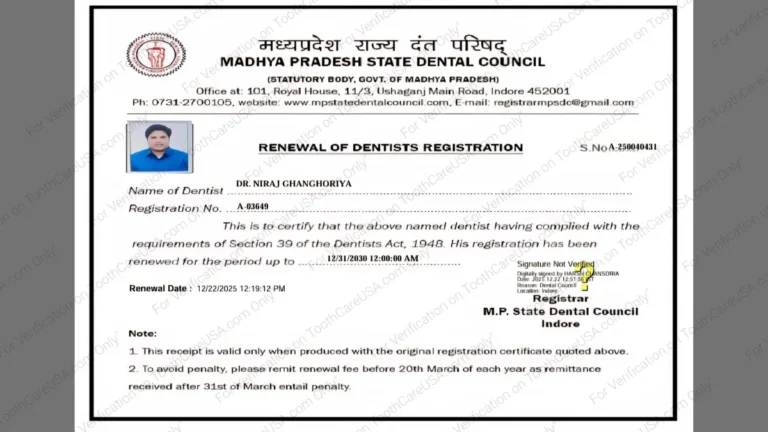
Dr. Niraj Ghanghoriya is a passionate dental surgeon with over 12 years of experience in clinical dentistry. He completed his BDS from the prestigious Sri Aurobindo Institute of Dentistry in 2012 and specializes in painless root canals, smile makeovers, and preventive oral care. He is the Founder of ToothCareUSA.com and a registered Dental Surgeon (Reg No: A-03649) based in Indore. Known for his patient-first approach and clear communication, Dr. Ghanghoriya aims to make dental knowledge accessible to everyone. When he’s not in the clinic, he enjoys writing informative dental blogs to help people take better care of their oral health. He reviews every article on this site to ensure medical accuracy and patient safety.