

If you are reading this, you are likely in pain right now. As a dentist, I know that tooth pain rarely follows a schedule. It strikes late at night, on weekends, or exactly when you can’t get to a dental clinic.
The throbbing, sharp, or unbearable pressure of a toothache can make it impossible to focus, eat, or sleep. You need relief, and you need it fast.
I am Dr. Niraj Ghanghoriya, and while I always recommend seeing a professional to treat the root cause of the problem (whether it’s a cavity, infection, or wisdom tooth), I know that sometimes you just need to get through the night.
In this guide, I have compiled 15 proven home remedies for tooth pain that actually work. From the correct way to use clove oil to numb the nerve, to simple kitchen ingredients that reduce inflammation, these strategies are designed to give you immediate, temporary relief until you can sit in the dentist’s chair.
⚠️ Dr. Niraj’s Safety Note: Please remember that home remedies for Tooth Pain do not cure tooth decay or infections. They only mask the pain signals. Once the pain subsides, do not cancel your appointment—the problem is still there, and it will come back if untreated.
Let’s look at the most effective Home Remedies for Tooth Pain and ways to stop the pain right now.
1. How to Use Clove Oil for Tooth Pain (The #1 Remedy)
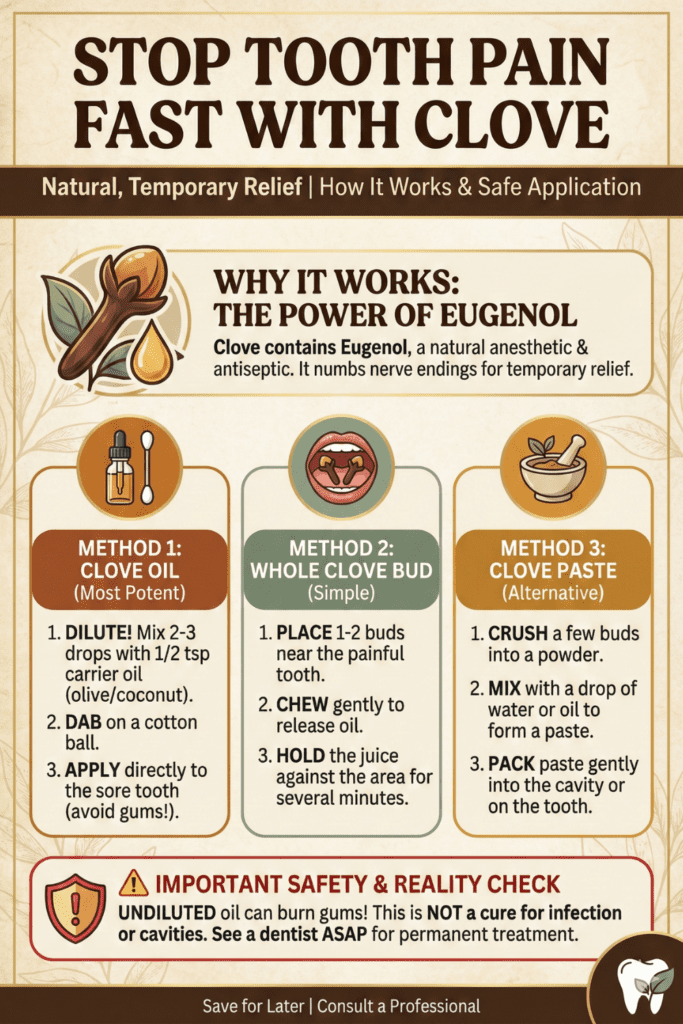
If there is one home remedy that acts closest to a dentist’s anesthesia, it is Clove Oil. This is because cloves contain a natural chemical called Eugenol, which acts as a powerful antiseptic and anesthetic.
When applied correctly, Eugenol effectively “numbs” the nerve endings in the tooth pulp, offering significant tooth pain relief for 1–2 hours.
Instructions:
- Prepare: Put a small amount of clove oil on a clean cotton ball or a Q-tip.
- Dilute (Important): If the oil is a 100% pure extract, mix a drop with a carrier oil (like olive oil or coconut oil) to prevent irritation.
- Apply: Gently dab the cotton ball directly onto the sore tooth or into the cavity hole.
- Hold: Bite down gently on the cotton ball for about 10 minutes to keep it in place.
⚠️ Dr. Niraj’s Warning: Be careful not to let the pure clove oil touch your gums or tongue for too long. It is strong enough to cause a chemical burn or a stinging sensation on soft tissue. Apply it only to the hard tooth structure or the cavity itself.
2. Warm Salt Water Rinse
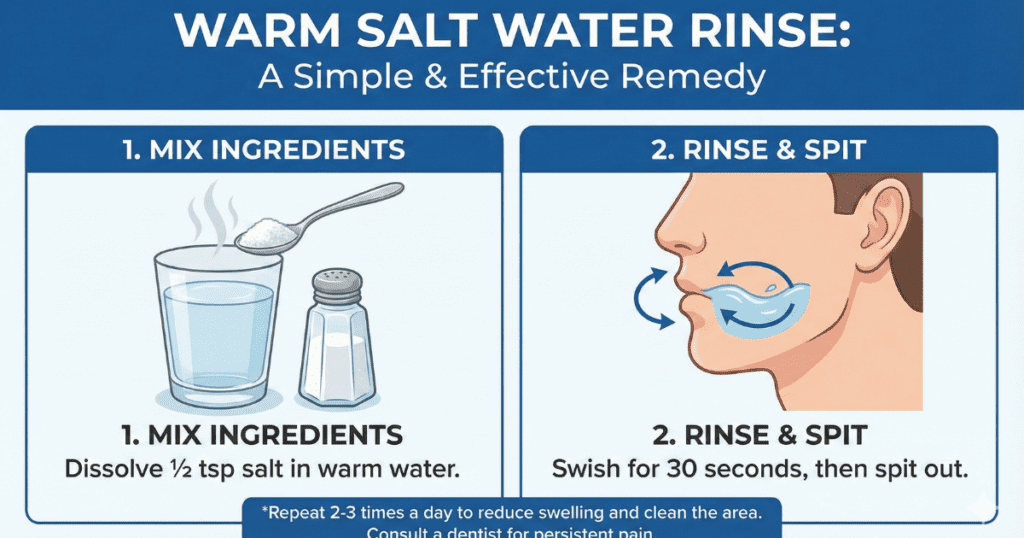
This is the oldest and most reliable remedy in dentistry. A warm salt water rinse does two important things: it acts as a natural disinfectant to kill bacteria, and the salt helps draw out fluid from the tissues, reducing gum swelling and pressure.
It is particularly effective if your pain is caused by food stuck between teeth or a minor gum infection.
Instructions:
- Mix: Stir 1/2 teaspoon of table salt into a glass of warm water (not scalding hot).
- Swish: Take a sip and swish it vigorously around your mouth for 30 seconds, focusing on the painful area.
- Spit: Spit it out; do not swallow.
- Repeat: You can do this as often as needed—every few hours is best.
💡 Dr. Niraj’s Tip: If you have high blood pressure, be careful not to swallow the salt water. If the taste is too strong, you can add a drop of peppermint oil for a fresher feeling.
3. Cold Compress or Ice Pack
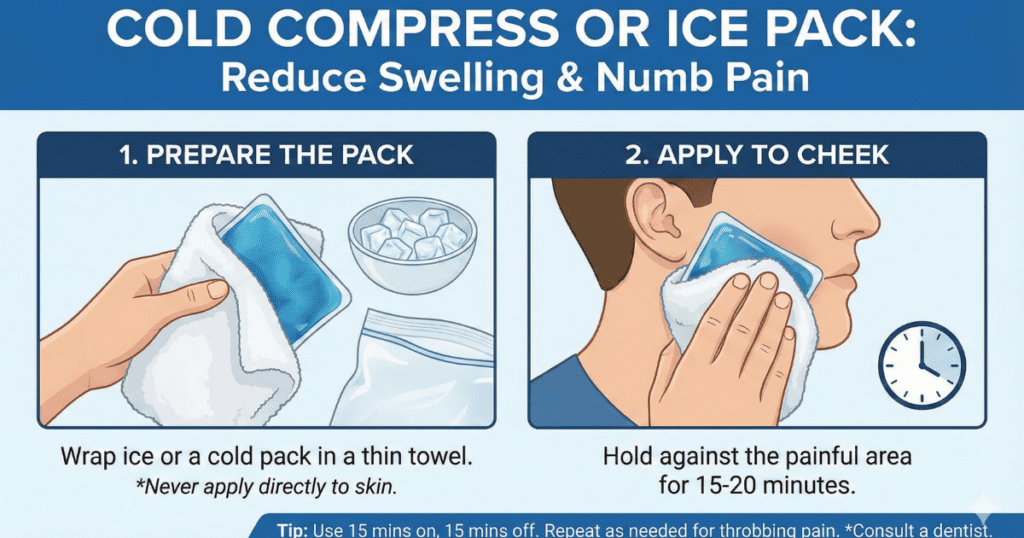
If your face is swollen, or if the tooth pain is “throbbing” (like a heartbeat in your jaw), a cold compress is your best friend. Cold temperature constricts the blood vessels, which slows down blood flow to the area and reduces inflammation and unbearable tooth pain.
This method is best for pain caused by trauma (a hit to the face) or a deep infection that has spread to the cheek.
Instructions:
- Wrap: Wrap a bag of ice or a frozen vegetable pack in a thin towel. Never apply ice directly to the skin.
- Apply: Hold the compress against the outside of your cheek, near the painful tooth.
- The 15/15 Rule: Hold it there for 15 minutes, then take it off for 15 minutes. Repeat this cycle.
🚫 Important: Do not put heat (like a hot water bottle) on a swollen face. Heat draws more blood to the infection and can make the swelling much worse!
4. Garlic Paste (Nature’s Antibiotic)
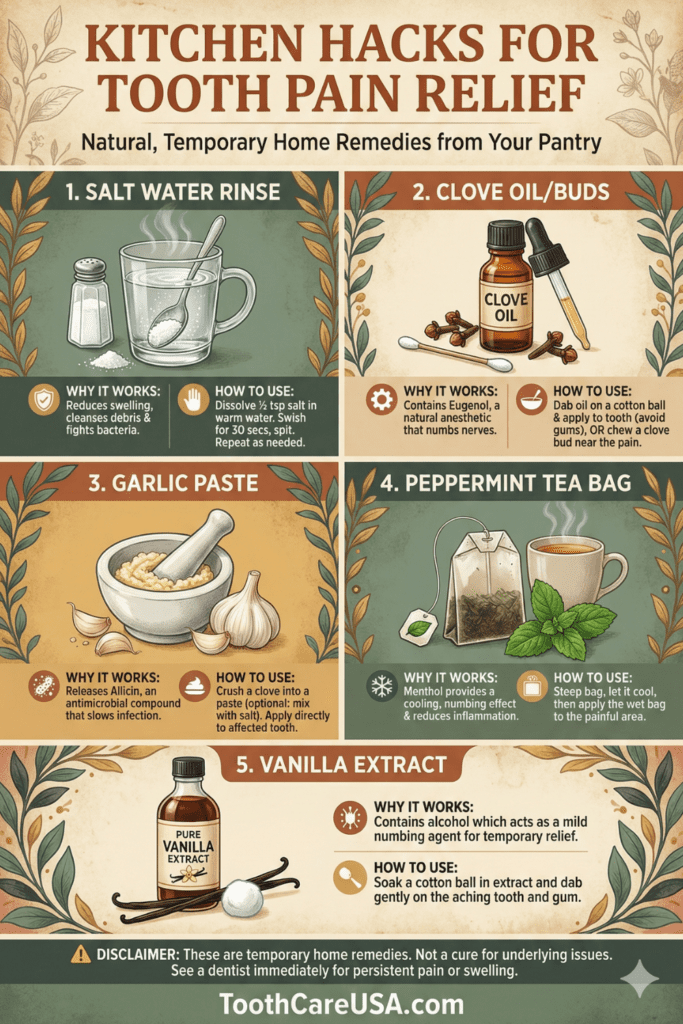
You might worry about your breath, but garlic is a powerhouse when it comes to killing bacteria. When crushed, garlic releases a compound called Allicin, which is a natural antibiotic agent.
Using garlic can help reduce the bacterial load in the infected area and provide relief from severe tooth pain.
Instructions:
- Crush: Crush a fresh garlic clove to release the juices.
- Mix: (Optional) Mix the crushed garlic with a pinch of table salt or black salt to create a paste.
- Apply: Apply the paste directly to the affected tooth.
- Alternative: You can also slowly chew a fresh clove of garlic with the affected tooth to release the juices locally.
💡 Dr. Niraj’s Tip: Garlic can sting raw skin. If the burning sensation on your gums is too intense, remove it immediately and rinse with cool water.
5. Peppermint Tea Bags
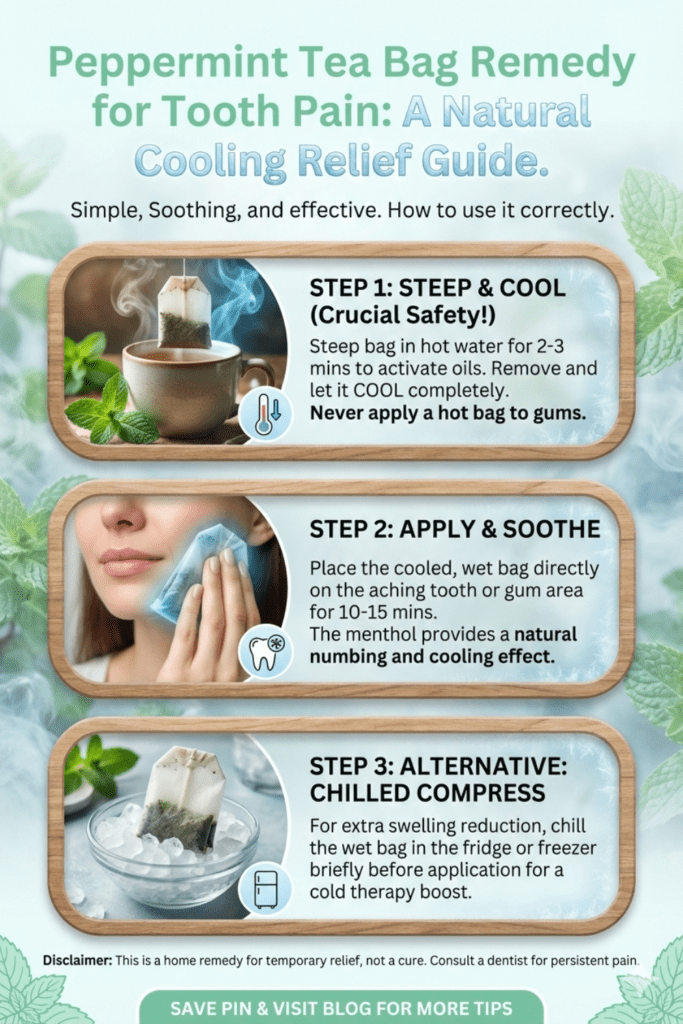
Peppermint is not just for fresh breath; it has numbing properties similar to cloves. Peppermint contains menthol, which cools the area and calms sensitive nerves. This is an excellent remedy for gum pain or generalized sensitivity.
Instructions:
- Steep: Steep a peppermint tea bag in hot water for just a minute.
- Cool: Remove the bag and let it cool down until it is slightly warm (not hot!).
- Apply: Place the wet tea bag directly against the aching tooth or gum area.
- Freeze (Option B): For a cooling effect, put the wet tea bag in the freezer for a few minutes before applying it to the tooth.
6. Vanilla Extract
This is a surprising Home Remedies for Tooth Pain that many people already have in their baking cupboard. Vanilla extract contains alcohol, which acts as a mild numbing agent (anesthetic). Additionally, the scent of vanilla is known to be soothing, which can help lower anxiety associated with the pain.
Instructions:
- Dab: Pour a small amount of real vanilla extract onto your finger or a cotton swab.
- Rub: Rub it directly onto the affected area for a few minutes.
- Repeat: You can repeat this process several times a day as it is very gentle.
7. Hydrogen Peroxide Rinse
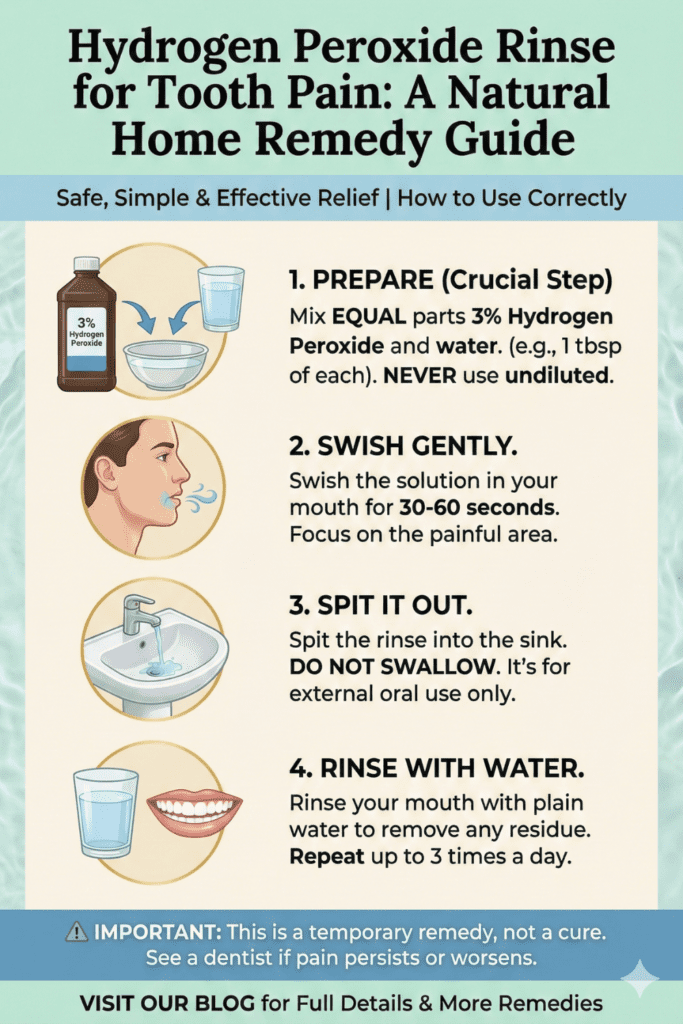
Hydrogen peroxide is an effective antibacterial mouthwash, especially if your tooth pain is caused by an infection or gum disease. It helps to kill bacteria, reduce plaque, and heal bleeding gums.
Instructions:
- Dilute (CRITICAL): Mix 3% hydrogen peroxide with equal parts water (1:1 ratio). Never use it undiluted.
- Swish: Swish the solution in your mouth for 30 seconds.
- Spit: Spit it out and rinse your mouth with plain water.
⚠️ Dr. Niraj’s Warning: Do not swallow hydrogen peroxide. It can cause stomach issues. This remedy is strictly for rinsing and spitting. Not recommended for children.
8. Guava Leaves
If you have access to a guava tree, you have a potent remedy at hand. Guava leaves have anti-inflammatory and antimicrobial properties that can help heal wounds and relieve toothaches.
Instructions:
- Chew: Wash fresh, tender guava leaves and chew them slowly until the juice coats the sore tooth.
- Boil: Alternatively, boil 4–5 guava leaves in water to make a mouthwash. Add a pinch of salt and use it to rinse your mouth.
9. Thyme Essential Oil
Thyme is more than just a seasoning; it contains Thymol, a compound with strong antiseptic and antifungal properties. In fact, Thymol is often used as an ingredient in commercial mouthwashes (like Listerine) because it effectively kills bacteria in the mouth.
Instructions:
- Direct: Place a drop of thyme essential oil on a cotton ball and apply it to the tooth.
- Rinse: Mix one drop of thyme oil into a small glass of water to create a potent mouthwash.
10. Oregano Oil (Potent Relief)
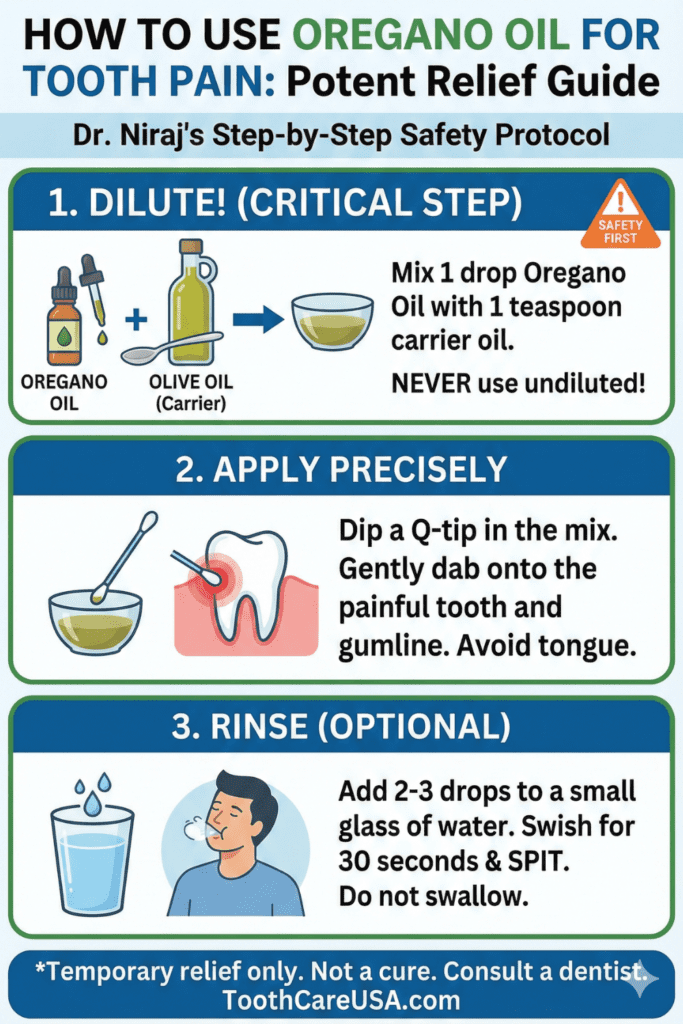
Oregano oil is one of the most powerful essential oils for killing bacteria. It contains Carvacrol, which makes it highly effective for deep infections.
⚠️ Dr. Niraj’s Warning: Oregano oil is extremely strong and “hot.” You must dilute it with a carrier oil (like olive oil) before putting it in your mouth, or it may burn your tongue.
Instructions:
- Mix 1 drop of oregano oil with 1 teaspoon of olive oil.
- Apply to the gum or tooth using a Q-tip.
The Best Medicine for Tooth Pain (OTC Options)
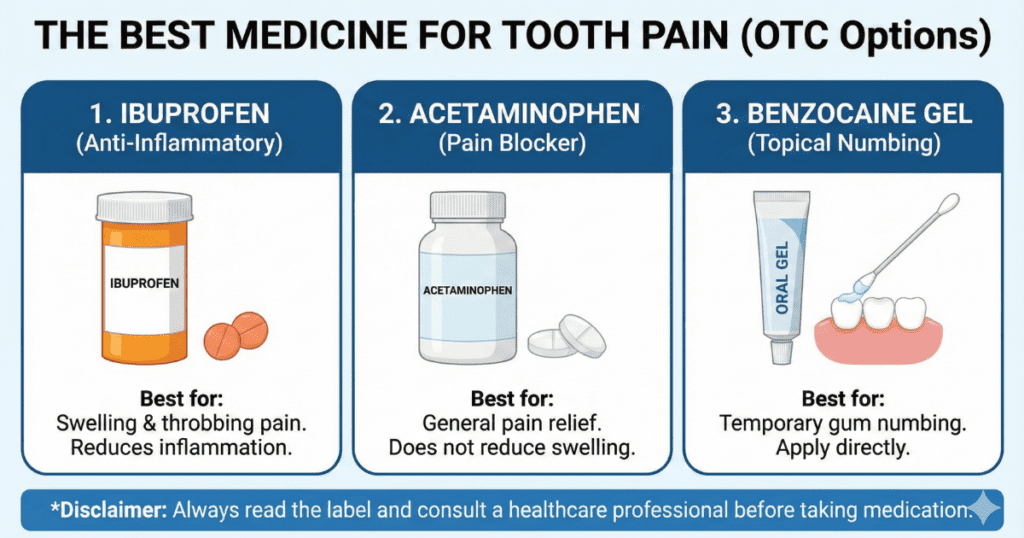
Sometimes, natural remedies aren’t enough. If you need something stronger to get through the workday or sleep at night, over-the-counter (OTC) medication is your best bet.
Here is my breakdown of the best tooth pain tablets available at your local pharmacy.
13. Ibuprofen (Advil, Motrin) – Best for Inflammation
If your toothache is caused by an abscess, trauma, or deep cavity, there is likely inflammation (swelling) inside the tooth.
- Why it works: Ibuprofen is an NSAID (Non-Steroidal Anti-Inflammatory Drug). It targets the inflammation itself.
- Best For: Throbbing pain, swollen gums, or pain after dental work.
14. Acetaminophen (Tylenol) – Best for Pain Signals
If you cannot take Ibuprofen (due to stomach issues or pregnancy), Acetaminophen is the alternative.
- Why it works: It blocks the pain signals from reaching your brain, though it doesn’t reduce the swelling as well as Ibuprofen.
- Dr. Niraj’s “Combo” Tip: In severe cases (for adults), taking Ibuprofen and Acetaminophen in alternating doses can provide maximum relief. Always consult your doctor before mixing medications.
15. Benzocaine Gels (Orajel, Anbesol) – Best for Numbing
These are topical gels that you apply directly to the gum.
- Why it works: It is a local anesthetic that creates a “numbing” effect on the surface.
- Best For: Temporary relief of nerve pain or gum soreness.
- Note: The effect usually lasts only 20–30 minutes.
What NOT To Do (Common Myths)-Home Remedies for Tooth Pain
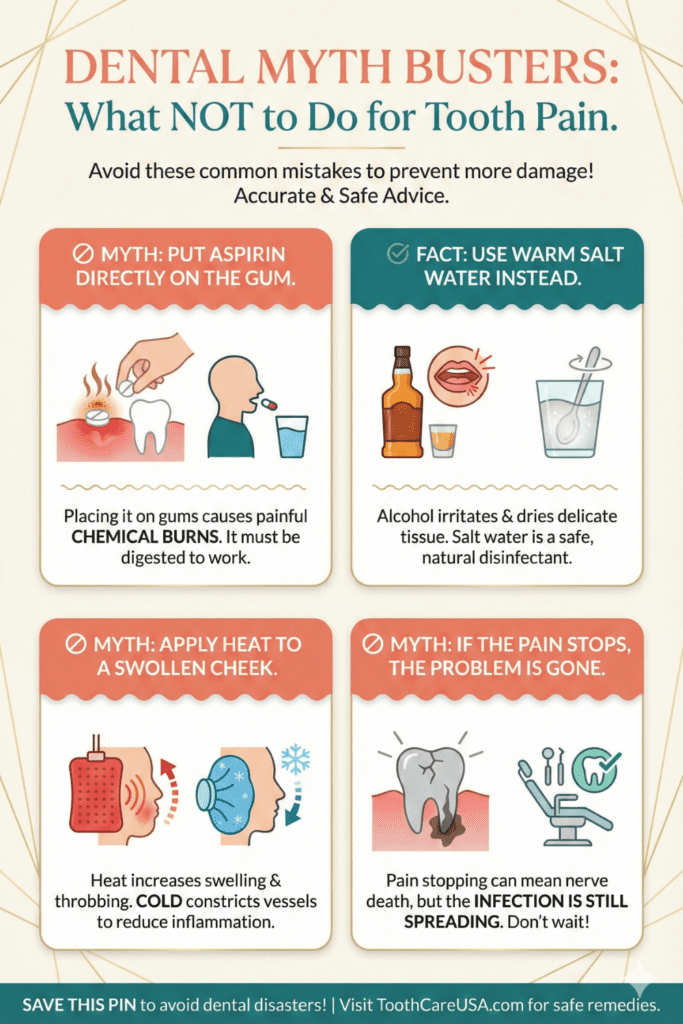
To protect your oral health, please avoid these dangerous myths:
- ❌ Don’t put Aspirin on the gum: This is a classic myth. Placing a pill directly on your gum will cause a chemical burn (Aspirin Burn), leaving a painful white sore on your tissue. Swallow the pill; don’t park it.
- ❌ Don’t ignore swelling: If your face is swelling up, home remedies are not enough. You need professional treatment immediately.
When to See a Dentist Immediately and Stop Home Remedies for Tooth Pain
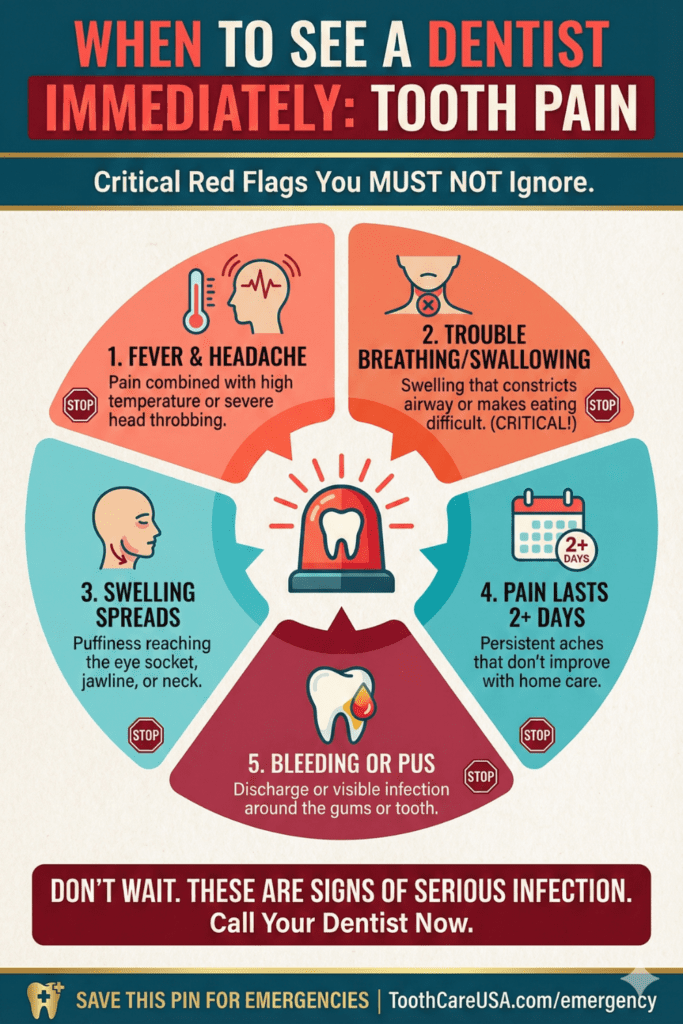
Pain is your body’s way of saying something is wrong. While these 15 remedies can help you manage tooth pain at night or over the weekend, they are not a cure.
Call ToothCareusa.com or your local dentist immediately if:
- You have a fever or headache along with the toothache.
- You have trouble swallowing or breathing.
- The swelling spreads to your eye or neck.
- The pain lasts more than 2 days.
Need a professional diagnosis? Visit ToothCareusa.com to learn more about your symptoms and find the right treatment plan.
Conclusion: A Final Note from Dr. Niraj
Managing tooth pain at home is all about buying time until you can get professional help. While remedies like clove oil, salt water rinses, and garlic paste are incredibly effective at numbing the nerve and reducing inflammation, they are not a cure.
As a dentist, I often tell my patients, “Pain is just the alarm. Turning off the alarm doesn’t put out the fire.”
Even if the pain vanishes completely using these methods, the cavity or infection inside the tooth remains. If left untreated, it can spread to the jawbone or lead to a root canal. Please use these remedies to get a good night’s sleep, but make that dental appointment first thing in the morning!
Which remedy worked best for you? Did the clove oil work instantly, or did you prefer the peppermint tea? Let me know in the comments below—I’d love to hear your experience!
Stay healthy and keep smiling,
Dr. Niraj Ghanghoriya, Author & Founder, ToothCareusa.com
medical Disclaimer
The information provided on ToothCareusa.com is for educational purposes only and does not constitute medical advice, diagnosis, or treatment. Always consult your dentist or other qualified healthcare provider with any questions you may have regarding a medical condition. Never disregard professional medical advice or delay in seeking it because of something you have read on this website.
5 Frequently Asked Questions (FAQs): Home Remedies for Tooth
What is the fastest way to stop tooth pain at home instantly?
While results vary, Clove Oil is widely considered the fastest home remedy because it contains Eugenol, a natural anesthetic that numbs the nerve upon contact. For swelling-based pain, applying a cold compress or ice pack to the cheek can provide immediate relief by constricting blood vessels and numbing the area.
Can a saltwater rinse kill the nerve of a tooth?
No, salt water cannot kill a tooth nerve. However, a warm salt water rinse is highly effective at cleaning the infected area, drawing out fluid to reduce gum swelling, and creating an environment where bacteria cannot thrive. It provides symptom relief but does not cure the underlying infection or “kill” the nerve.
Is it safe to put crushed Aspirin directly on my tooth or gum? No, never do this.
Placing aspirin directly on your gums or tooth is a dangerous myth that can cause a chemical burn known as an “aspirin burn,” leaving a painful white sore on your tissue. Aspirin should only be swallowed with water to work effectively as a pain reliever.
How long can I rely on home remedies before seeing a dentist?
Home remedies are intended for temporary relief (24 to 48 hours). If your tooth pain persists for more than two days, or if you experience fever, earache, or pain when opening your mouth, you must see a dentist immediately. Even if the pain stops suddenly, it could indicate that the nerve has died, but the infection may still be spreading silently.
Which toothache remedies are safe to use during pregnancy?
During pregnancy, it is generally safe to use warm salt water rinses and cold compresses. Acetaminophen (Tylenol) is often recommended over Ibuprofen, but you should always consult your OB-GYN and dentist before taking any medication or using essential oils like Clove Oil while pregnant.

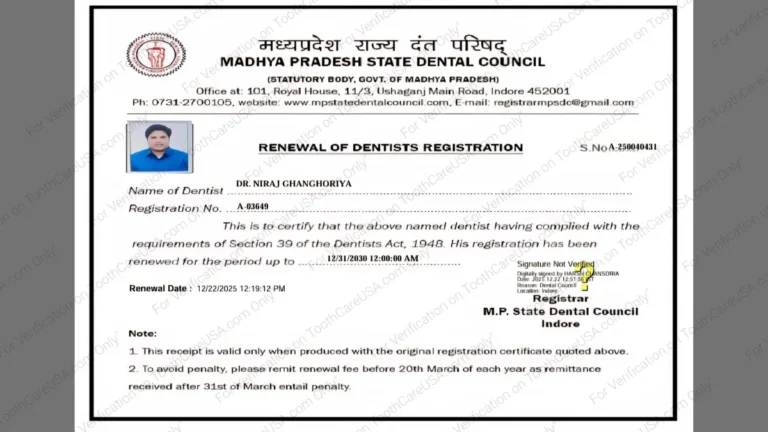
Dr. Niraj Ghanghoriya is a passionate dental surgeon with over 12 years of experience in clinical dentistry. He completed his BDS from the prestigious Sri Aurobindo Institute of Dentistry in 2012 and specializes in painless root canals, smile makeovers, and preventive oral care. He is the Founder of ToothCareUSA.com and a registered Dental Surgeon (Reg No: A-03649) based in Indore. Known for his patient-first approach and clear communication, Dr. Ghanghoriya aims to make dental knowledge accessible to everyone. When he’s not in the clinic, he enjoys writing informative dental blogs to help people take better care of their oral health. He reviews every article on this site to ensure medical accuracy and patient safety.



I?¦ve been exploring for a little bit for any high-quality articles or blog posts on this kind of area . Exploring in Yahoo I at last stumbled upon this website. Studying this info So i?¦m happy to exhibit that I have a very good uncanny feeling I found out exactly what I needed. I so much indisputably will make certain to do not put out of your mind this website and give it a look regularly.