
By Dr. Niraj Ghanghoriya, Dental Specialist | ToothCareUSA.com
In my clinical practice, one of the most frequent questions I get from patients—especially those interested in holistic wellness—is about oil pulling. You’ve likely seen it trending on social media or pinned on Pinterest boards alongside glowing testimonials. But as a dental specialist, my job is to separate the hype from the histology. Does swishing coconut oil actually transform your oral health, or is it just a placebo?
In this comprehensive guide, we are going to dive deep into the science, the traditional roots, and the real-world clinical effects of this practice.
What is oil pulling?
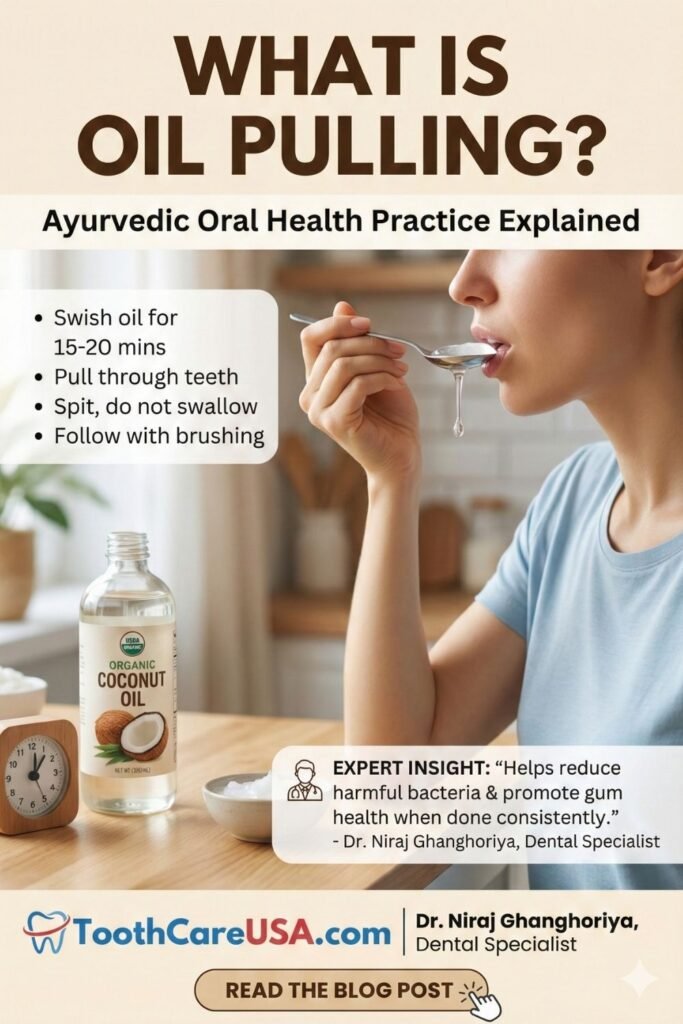
To understand oil pulling, we have to look past the modern trend and back to its origins. Put simply, oil pulling is an ancient oral hygiene practice that involves swishing an edible oil (most commonly sesame, coconut, or sunflower oil) in your mouth for an extended period—typically 15 to 20 minutes—and then spitting it out.
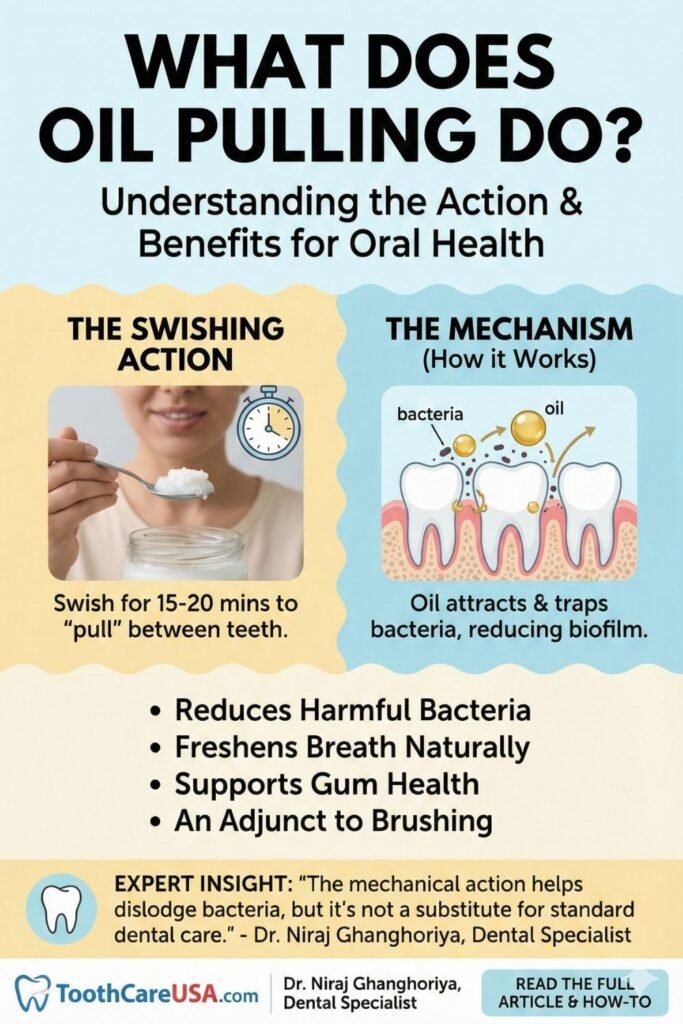
In my clinic, I often explain the mechanism to patients using a “magnet” analogy. Most of the harmful bacteria in your mouth, specifically Streptococcus mutans, are single-celled organisms enclosed in a lipid (fatty) membrane. Because “like dissolves like,” when you swish the oil, the fat in the oil attracts the fatty membrane of the bacteria. As you swish, the oil emulsifies (turns a milky white color) and effectively pulls these bacteria out of their hiding spots in the gum pockets and between teeth.
Historically, this wasn’t just a quick rinse. It is a disciplined therapy. Unlike mouthwash, which uses alcohol or antibacterial agents to kill bacteria instantly (sometimes killing good bacteria too), oil pulling is a mechanical cleansing process. It relies on the viscosity of the oil to “trap” pathogens so they can be expelled from the body.
Dr. Niraj’s Clinical Tip: If you are new to this, do not start with 20 minutes. The jaw muscles can get tired quickly. I recommend my patients start with 5 minutes and work their way up. Also, never swallow the oil—it is loaded with the bacteria and toxins you just removed from your mouth!
Oil pulling benefits
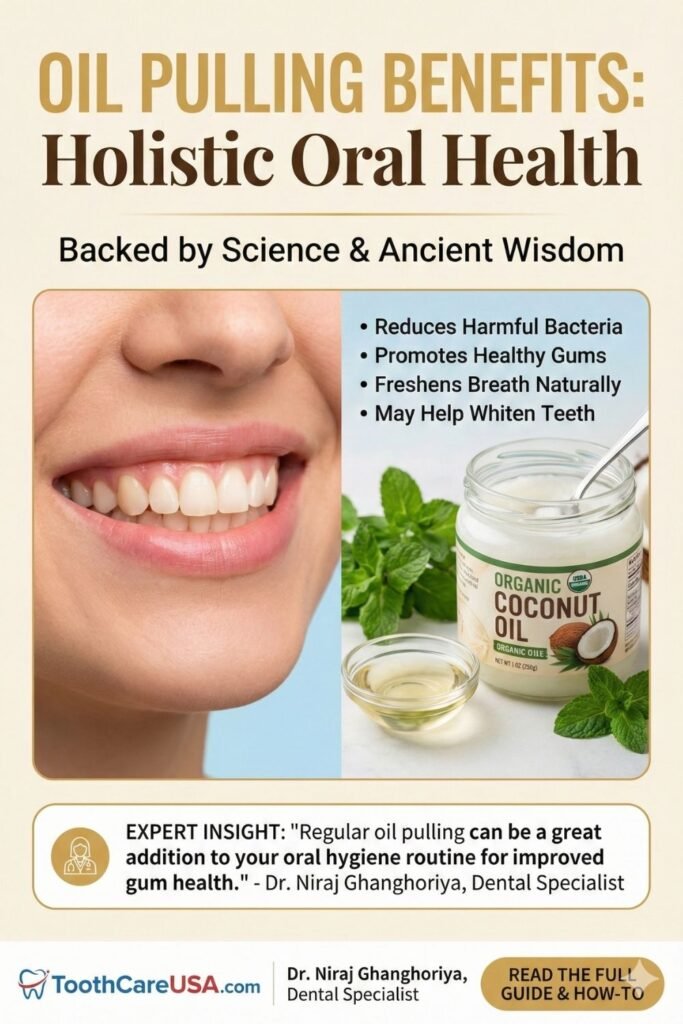
When patients ask me about the benefits, I always start by clarifying what it can do versus what the internet claims it can do. While some anecdotal reports claim it cures systemic diseases, dental science focuses on localized oral health benefits.
The primary benefit we see clinically is a reduction in plaque indices. Plaque is that sticky film of bacteria that forms on your teeth. If left undisturbed, it calcifies into tartar (calculus), which leads to gum disease. Studies, including those published in the Journal of Traditional and Complementary Medicine, have shown that consistent oil pulling can significantly reduce plaque accumulation.
Another major benefit is the reduction of gingivitis (gum inflammation). The mechanical action of swishing stimulates the salivary glands. Saliva is your mouth’s natural defense system; it buffers acids and contains enzymes that fight bacteria. By increasing saliva flow and reducing the bacterial load, gum tissues often appear less red and swollen after a few weeks of consistent practice.
Furthermore, many of my patients report a subjective feeling of “freshness” and reduced morning breath (halitosis). Halitosis is often caused by volatile sulfur compounds (VSCs) produced by bacteria on the tongue. Oil pulling is particularly effective at coating and cleaning the tongue surface, which aids in reducing malodor.
Does oil pulling work?
This is the million-dollar question: Does it actually work? From a scientific standpoint, the answer is a qualified yes, but it depends on what you are expecting it to “work” for.
If you are asking if it works to replace brushing and flossing, the answer is a hard no. In my practice, I have seen patients try to substitute their regular hygiene routine with oil pulling, and unfortunately, they often end up with interproximal cavities (cavities between teeth). Oil pulling cannot physically remove the sticky food debris trapped between tight contact points, the way floss can.
However, if you are asking if it works as an adjunct (add-on) therapy to reduce bacterial load, the science supports it. The process of saponification (soap making) happens during oil pulling. The alkali in your saliva reacts with the fat in the oil to form a mild soap-like substance. This soap helps cleanse the mucous membranes.
A study comparing oil pulling with chlorhexidine (the gold standard prescription mouthwash) found that oil pulling was effective against plaque-induced gingivitis. While chlorhexidine was faster, oil pulling had fewer side effects, such as staining or taste alteration. So, does it work? Yes, as a preventive maintenance tool, it works well to lower bacterial counts in the oral cavity.
Benefits of oil pulling (Specific to Gum Health)
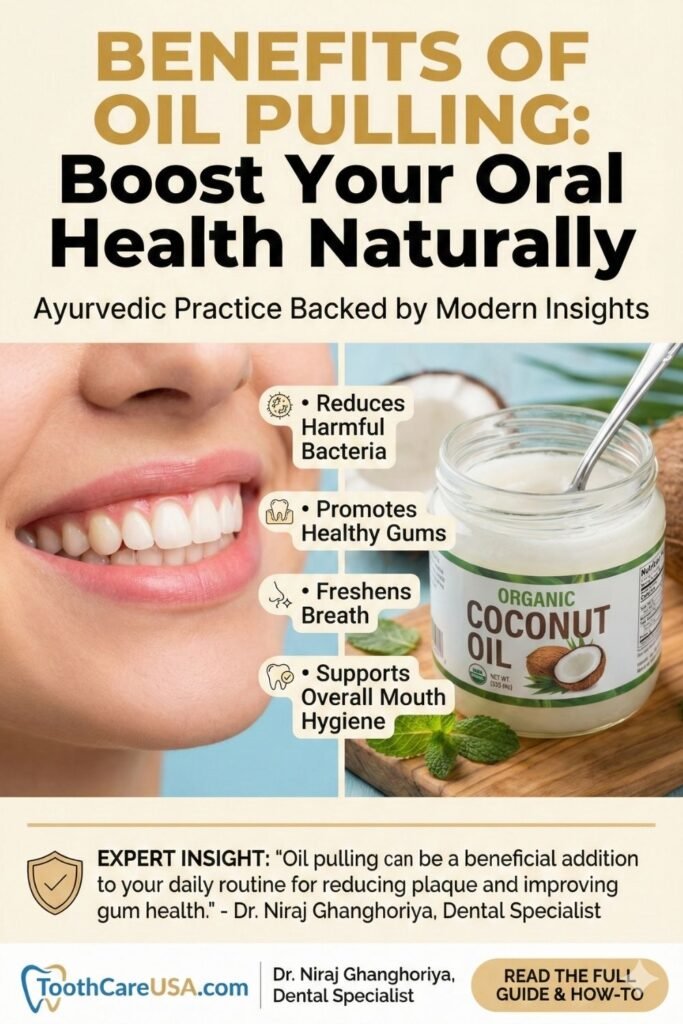
Let’s drill down specifically into gum health, as this is where I see the most tangible results in my patients at ToothCareUSA.com. Gum disease (periodontitis) is inflammatory. While brushing handles the teeth, oil pulling is excellent for the soft tissues—the gums, the inner cheeks, and the palate.
One specific benefit is the moisturizing effect. Many modern toothpastes and mouthwashes contain Sodium Lauryl Sulfate (SLS) or high alcohol content, which can dry out the mucosa. Dry mouth (Xerostomia) is a breeding ground for cavities. Using coconut oil, specifically, provides a soothing, moisturizing barrier. Coconut oil also contains Lauric Acid, a medium-chain fatty acid that has proven antimicrobial and anti-inflammatory properties.
I have treated patients with minor gum bleeding who incorporated coconut oil pulling into their routine. Over 3 to 4 weeks, we often observe a reduction in bleeding on probing. This doesn’t mean it cures deep periodontal pockets—you still need professional scaling for that—but it creates a healthier environment that supports healing.
Dr. Niraj’s Clinical Insight: Think of oil pulling as a “conditioner” for your gums. Just as you condition your hair to keep it soft and resilient, oil pulling conditions the gum tissue, making it more resistant to bacterial invasion.
Oil pulling pros and cons
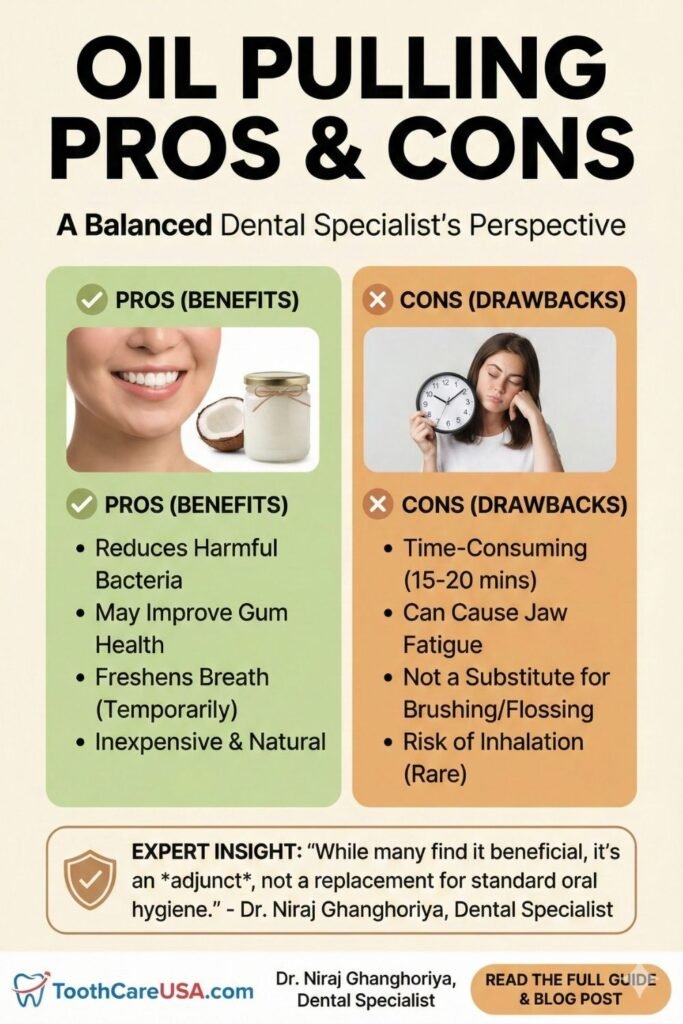
As with any medical or wellness intervention, we must weigh the advantages against the disadvantages. Here is an honest breakdown based on what I observe in a clinical setting.
Pros:
- Natural & Chemical-Free: For patients sensitive to chemicals or those who prefer organic lifestyles, this is a safe, single-ingredient alternative to commercial rinses.
- Reduces Bad Bacteria: Effective at lowering Streptococcus mutans counts.
- No Staining: Unlike Chlorhexidine or Stannous Fluoride, coconut oil will not stain your teeth brown.
- Accessible: It is inexpensive and readily available in most kitchens.
Cons:
- Time-Consuming: Spending 20 minutes every morning swishing is a significant commitment. In our fast-paced world, compliance is the biggest hurdle I see.
- Drain Clogging: If you spit coconut oil into your sink, it solidifies at room temperature and will clog your plumbing. (Always spit it in the trash!).
- Jaw Fatigue: Rigorous swishing can aggravate the temporomandibular joint (TMJ).
- Lipoid Pneumonia Risk: This is rare, but if the oil is accidentally aspirated (breathed into the lungs), it can cause a serious type of pneumonia. This is why I caution against doing it while lying down or rushing.
Oil pulling side effects
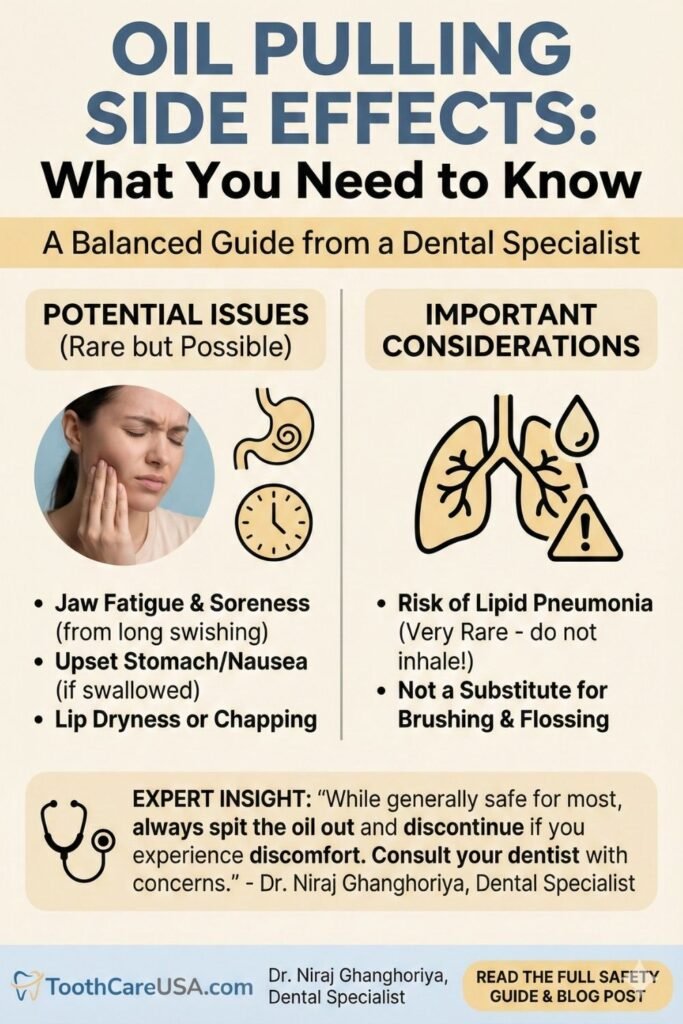
While generally safe, oil pulling is not without potential side effects. Transparency is key to E-E-A-T, and I want my patients to be fully informed.
The most common “side effect” is actually stomach upset. This usually happens for two reasons: either the patient swallows the oil (which is now full of bacteria), or the sensation of oil in the mouth triggers the gag reflex. If you have a sensitive stomach, starting with a smaller amount (half a teaspoon) is wise.
Another issue is TMJ strain. Patients with existing jaw issues, popping, or clicking joints may find that swishing for 20 minutes exacerbates their condition. If you feel tension in your jaw, stop immediately. You do not need to swish aggressively; a gentle movement of the oil is sufficient.
Rarely, some patients may experience a “Herxheimer reaction” or a detox symptom, manifesting as a headache or slight nausea when they first start, though this is anecdotal. More seriously, as mentioned above, Lipoid Pneumonia is a real medical risk if the oil enters the windpipe. This is why I strictly advise against oil pulling for children or anyone with swallowing difficulties (dysphagia).
What does oil pulling do?
At a microscopic level, what is actually happening when you oil pull? It is a process of emulsification and saponification.
When you put the oil in your mouth, it is hydrophobic (repels water). However, saliva contains enzymes and bicarbonate. As you swish, the mechanical energy mixes the oil with saliva. This creates an emulsion that increases the surface area of the oil, allowing it to coat every crevice of the oral cavity—areas that a toothbrush bristle (which is stiff) might miss.
The oil acts as a solvent. The lipid layer of the bacteria adheres to the oil. As the oil gets thicker and turns white (which usually happens after about 10-15 minutes), it indicates that the oil has reached its saturation point with saliva, bacteria, and toxins.
Furthermore, the mechanical swishing generates a scrubbing action against the teeth. While it is not abrasive like silica in toothpaste, the fluid dynamics (hydrodynamic shear forces) help dislodge loose debris and plaque biofilm that hasn’t fully calcified yet. It essentially lowers the “bio-burden” of the mouth, giving your immune system less work to do.
Oil Pulling Ayurveda
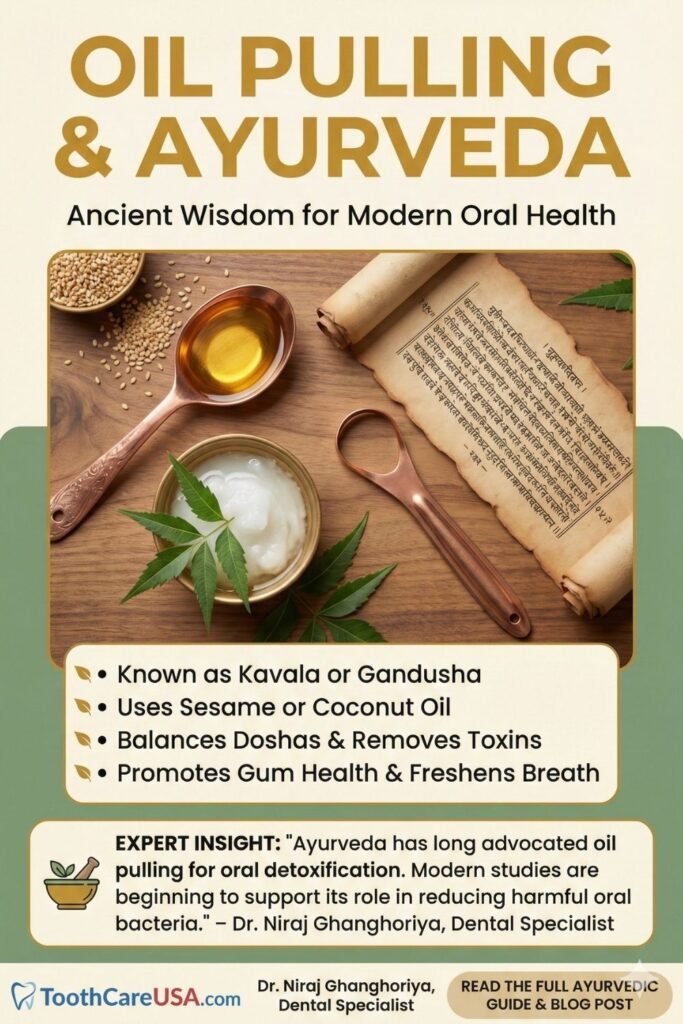
We cannot discuss oil pulling without respecting its roots in Ayurveda, the traditional medicine system of India. In ancient texts like the Charaka Samhita and Sushruta Samhita, this practice is referred to as Kavala Graha or Gandusha.
There is a subtle difference between the two:
- Gandusha involves holding the liquid in the mouth without moving it until the eyes tear up or the nose runs.
- Kavala Graha involves swishing the liquid and gargling, which is what we know today as oil pulling.
Ayurveda suggests that the tongue is connected to various organs (kidneys, lungs, heart) and that oil pulling purifies the entire system, not just the mouth. While modern dentistry focuses on the oral benefits, the Ayurvedic perspective views it as a holistic detox. Traditionally, sesame oil was the gold standard because it is considered “warming” and balancing for the body. However, modern preference has shifted to coconut oil due to its taste and high Lauric Acid content.
Understanding this history helps us appreciate that this isn’t a “TikTok trend”—it is a medical protocol that has survived for over 3,000 years.
Is oil pulling bad?
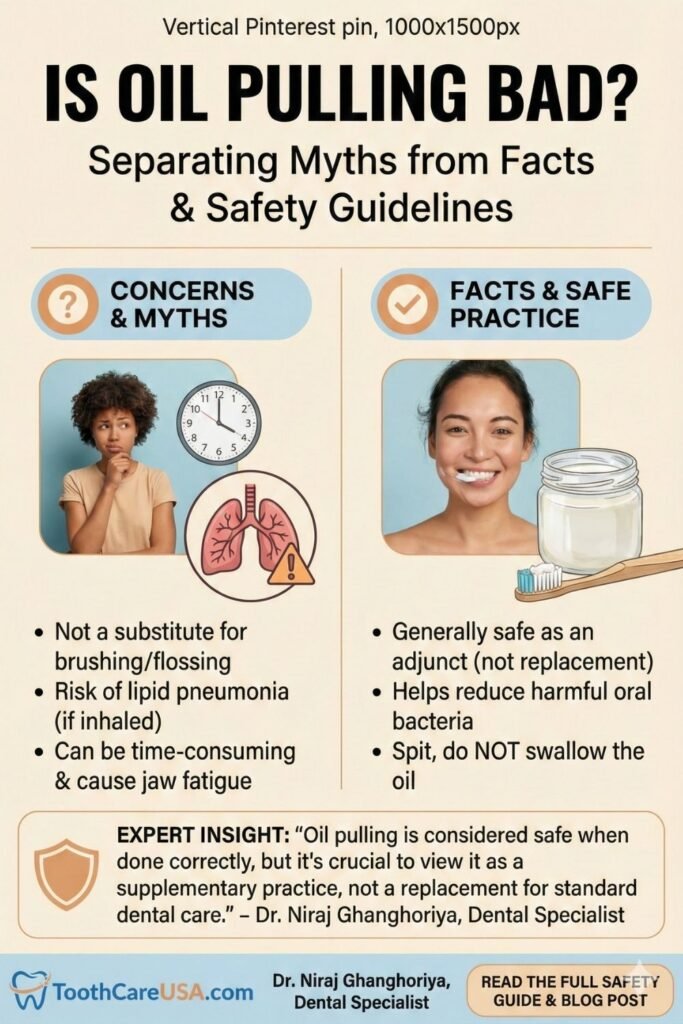
Is oil pulling inherently “bad”? No. But can it lead to bad outcomes if done incorrectly? Yes.
The biggest danger I see as a dentist is replacement therapy. It is “bad” if a patient stops flossing because they believe oil pulling does the job. I have had to perform root canals on patients who neglected standard hygiene in favor of alternative methods alone. Oil pulling is not a magic wand; it does not reverse tooth decay that has already penetrated the enamel.
It can also be “bad” for your dental work if you use the wrong oils or techniques aggressively. While coconut oil is safe for fillings and crowns, aggressive swishing could theoretically loosen temporary crowns or irritate healing surgical sites.
Also, some critics argue that the time investment yields diminishing returns compared to simply brushing better. From a strict efficiency standpoint, 2 minutes of brushing and 1 minute of flossing is far more effective at disease prevention than 20 minutes of oil pulling. So, if you only have time for one, stick to the brush.
Effects of oil pulling
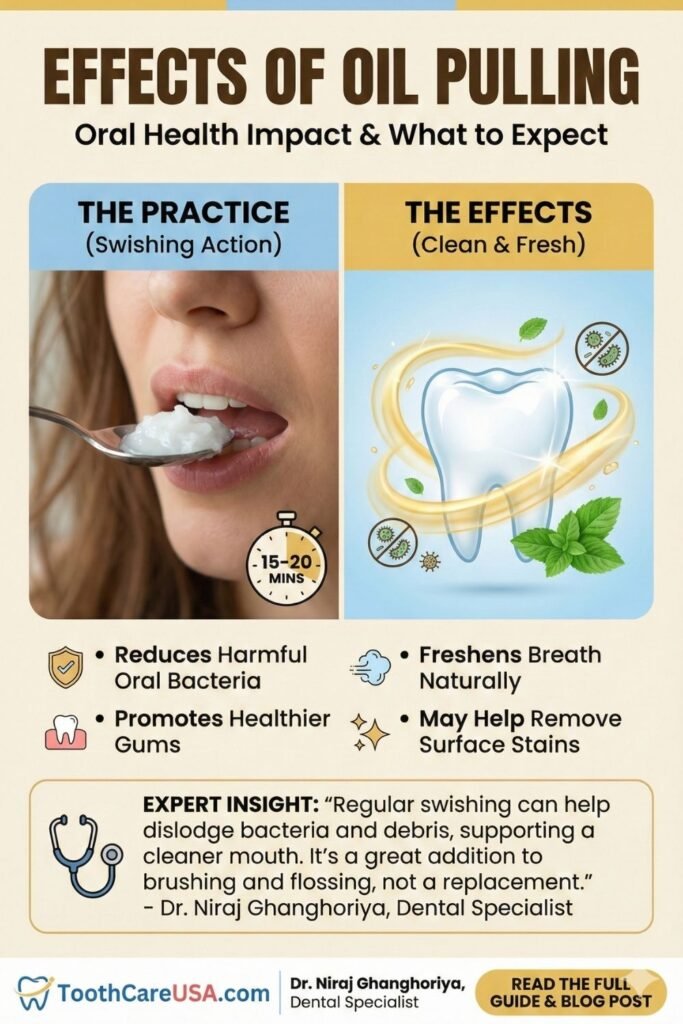
When you start oil pulling, the effects occur in stages. Transparency is vital here, so you manage your expectations.
Immediate Effects (Day 1-7): You will likely notice your teeth feel “slicker” or smoother. This is the removal of the biofilm layer. Your breath may smell fresher in the morning.
Short-Term Effects (Week 2-4): If you have mild gingivitis, you may notice pinker, firmer gums and less bleeding when you floss. Some patients report a slight brightening of the teeth. Note: this is not whitening (changing the intrinsic color of the tooth) but brightening (removing surface stains).
Long-Term Effects (Month 3+): With consistent practice, the oral microbiome may shift. By consistently suppressing pathogenic bacteria like S. mutans, you may find you are less prone to tartar buildup between professional cleanings. However, this varies heavily based on diet and genetics.
Dr. Niraj’s Advice: Consistency is key. Doing it once a month will have zero effect. It requires daily or alternate-day application to alter the bacterial colony in the mouth.
Oil pulling dental facts
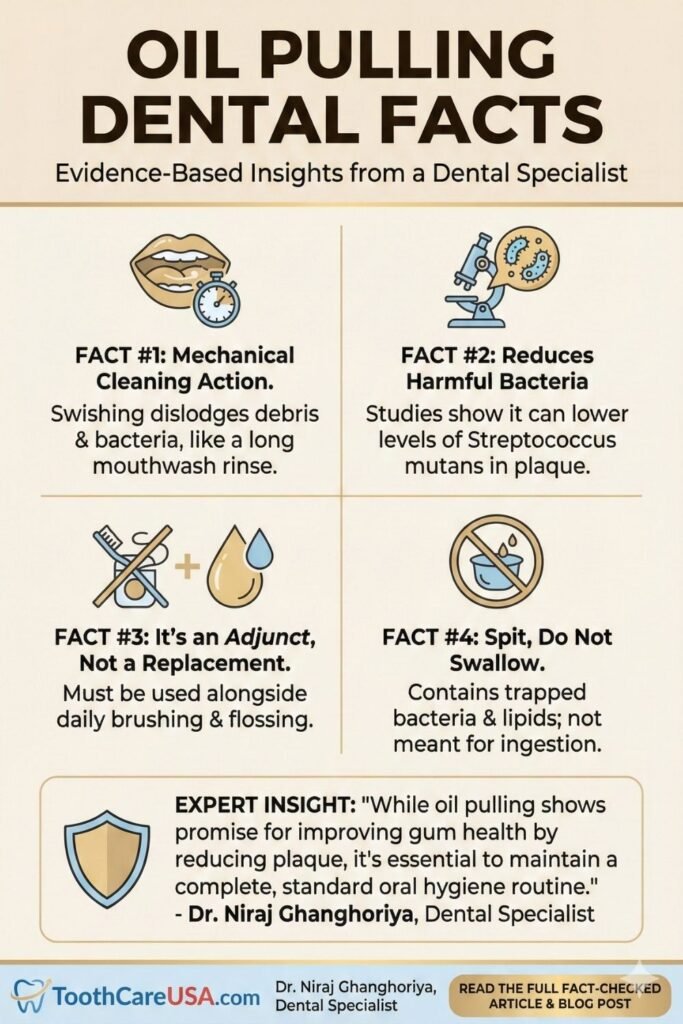
To wrap up, let’s look at the cold, hard dental facts supported by the American Dental Association (ADA) and clinical studies.
- Fact: Oil pulling reduces Streptococcus mutans bacteria in plaque and saliva.
- Fact: There is no scientific evidence that oil pulling whitens teeth deeper than surface stain removal. It cannot change your natural shade.
- Fact: Oil pulling does not “heal” cavities. Once the enamel structure is compromised, only a dental restoration can fix it.
- Fact: The ADA does not currently recommend oil pulling as a replacement for standard oral hygiene due to a lack of large-scale clinical trials, but they acknowledge it as a safe supplementary practice.
- Fact: Coconut oil has a saponification value, meaning it effectively cleanses, but it lacks the remineralizing agents (like fluoride or hydroxyapatite) found in toothpaste.
Final Thoughts from Dr. Niraj Ghanghoriya
Oil pulling is a fantastic, natural addition to your oral hygiene toolkit. It bridges the gap between ancient Ayurvedic wisdom and the modern need for bacterial control. At ToothCareUSA.com, we encourage comprehensive care. Brush twice a day, floss daily, and if you can spare 15 minutes, pull some oil. Your gums will thank you.
References & Further Reading:
- Asokan S et al. “Effect of oil pulling on Streptococcus mutans count in plaque and saliva using Dentocult SM Strip mutans test: a randomized, controlled, triple-blind study.” J Indian Soc Pedod Prev Dent. 2008.
- Shanbhag VK. “Oil pulling for maintaining oral hygiene – A review.” J Tradit Complement Med. 2017.
- American Dental Association (ADA) – Statement on Unconventional Dentistry.
Frequently Asked Questions Quation(FAQ )
Should I brush my teeth before or after oil pulling?
You should always brush your teeth after oil pulling, not before. Swishing loosens the biofilm and traps bacteria in the oil, so brushing afterward ensures these toxins are physically removed from the mouth. In my clinical practice, I advise patients to oil pull first thing in the morning on an empty stomach, rinse with warm water, and then follow their standard brushing routine.
Can oil pulling damage fillings or loosen dental crowns?
No, oil pulling is generally safe for dental fillings, crowns, and veneers. The oil itself does not have the chemical properties to dissolve dental cement. However, I often warn my patients to avoid aggressive swishing if they have a known loose cap or a temporary crown, as the mechanical hydraulic force—rather than the oil—could potentially dislodge it.
Does oil pulling actually whiten teeth?
Oil pulling can make teeth appear brighter by removing surface stains and sticky plaque, but it does not “whiten” teeth like professional bleaching. It lacks the peroxide agents necessary to change the intrinsic color of your enamel. I tell patients at ToothCareUSA.com to view it as a natural deep-cleaning method rather than a cosmetic whitening treatment.
What happens if I accidentally swallow the oil
You should never swallow the oil. After 15–20 minutes of swishing, the oil is saturated with bacteria, toxins, and food debris drawn out from your gum pockets. Swallowing it reintroduces these pathogens into your digestive system, which can lead to an upset stomach or diarrhea. Always spit the oil into a trash can to prevent it from clogging your sink drains.
Which oil is best for oil pulling: coconut or sesame?
While traditional Ayurveda recommends sesame oil, I clinically recommend organic coconut oil to my patients. Coconut oil contains high levels of Lauric Acid, which has proven antimicrobial properties specifically effective against Streptococcus mutans (cavity-causing bacteria). Additionally, most patients find the taste of coconut oil much more pleasant and easier to tolerate than sesame or sunflower oil.

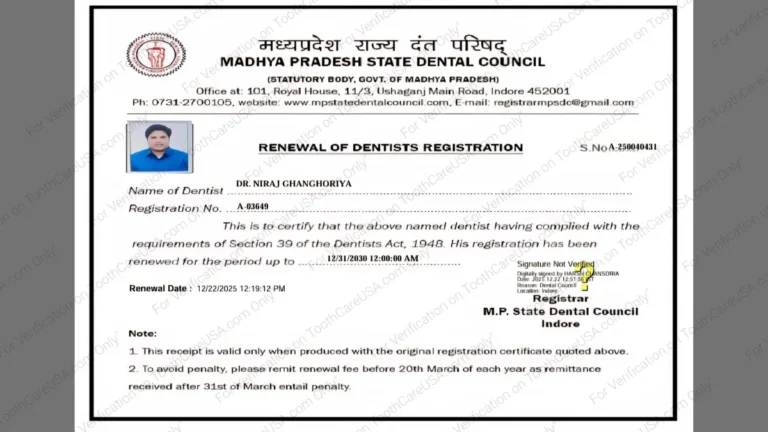
Dr. Niraj Ghanghoriya is a passionate dental surgeon with over 12 years of experience in clinical dentistry. He completed his BDS from the prestigious Sri Aurobindo Institute of Dentistry in 2012 and specializes in painless root canals, smile makeovers, and preventive oral care. He is the Founder of ToothCareUSA.com and a registered Dental Surgeon (Reg No: A-03649) based in Indore. Known for his patient-first approach and clear communication, Dr. Ghanghoriya aims to make dental knowledge accessible to everyone. When he’s not in the clinic, he enjoys writing informative dental blogs to help people take better care of their oral health. He reviews every article on this site to ensure medical accuracy and patient safety.

Hello there! Do you use Twitter? I’d like to follow you if that would be ok. I’m definitely enjoying your blog and look forward to new updates.