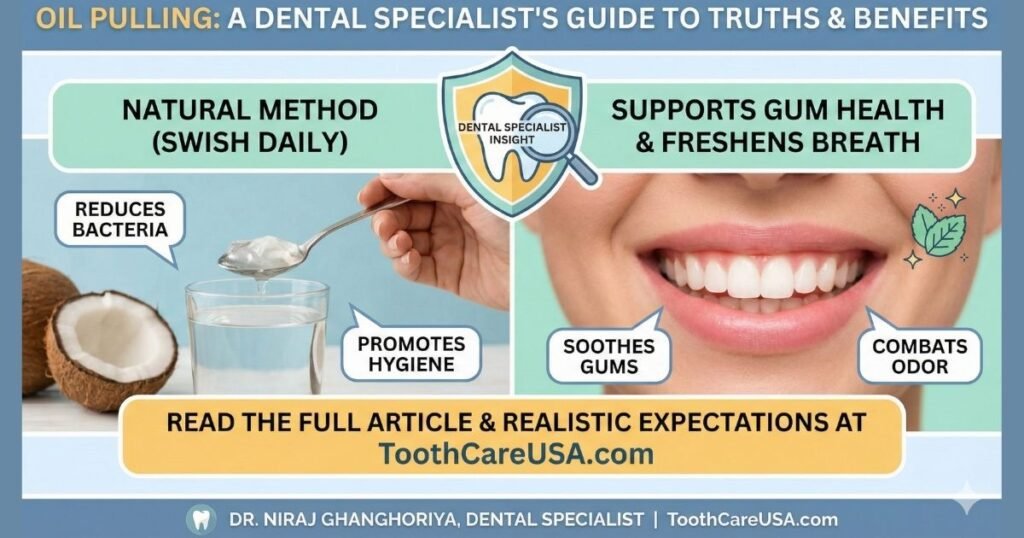
By Dr. Niraj Ghanghoriya (Dental Specialist) Published on ToothCareUSA.com
Introduction
In my years of clinical practice, I’ve seen dental trends come and go. But one ancient Ayurvedic practice has stuck around and often sparks questions in my dental chair: Oil Pulling.
Patients often ask me, “Dr. Niraj, can swishing coconut oil really fix my teeth?”
As a dental specialist, I believe in combining modern science with holistic preventive care. While oil pulling isn’t a “magic cure-all,” it can be a powerful addition to your oral hygiene routine when understood correctly. Today, we are going to dive deep into the science, the myths, and the clinical reality of oil pulling for cavities, gums, and overall health.
Oil pulling for cavities
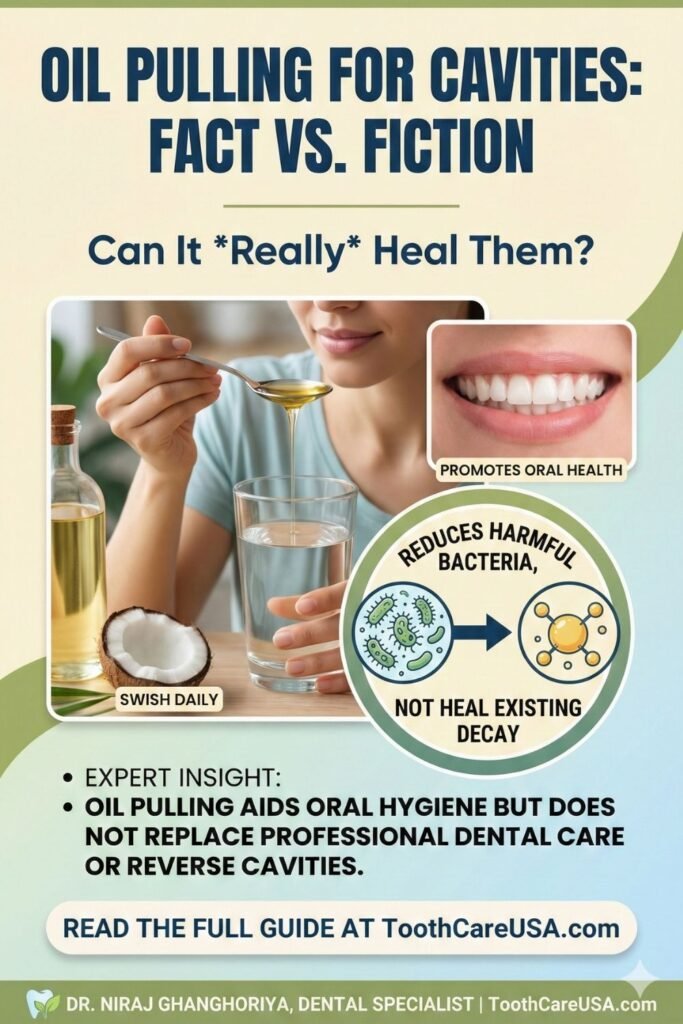
When we talk about oil pulling for cavities, we first need to understand the mechanism. The mouth is a gateway to the body, and it is naturally full of bacteria. Some are good, but others, like Streptococcus mutans, are the primary culprits behind tooth decay.
The concept behind oil pulling is simple chemistry: “like dissolves like.” Most bacteria in the mouth are single-celled organisms enclosed in a lipid (fat) membrane. When you swish oil (a fat) around your mouth, it acts like a magnet for these bacteria. The lipids in the bacteria are attracted to the lipids in the oil.
In my practice, I explain it to patients like this: Imagine your mouth is a dirty floor. Brushing is like sweeping, but oil pulling is like using a mop to pick up the microscopic dust that the broom missed. When you spit the oil out, you are physically removing a significant load of bacteria that would otherwise produce the acid that eats away at your enamel.
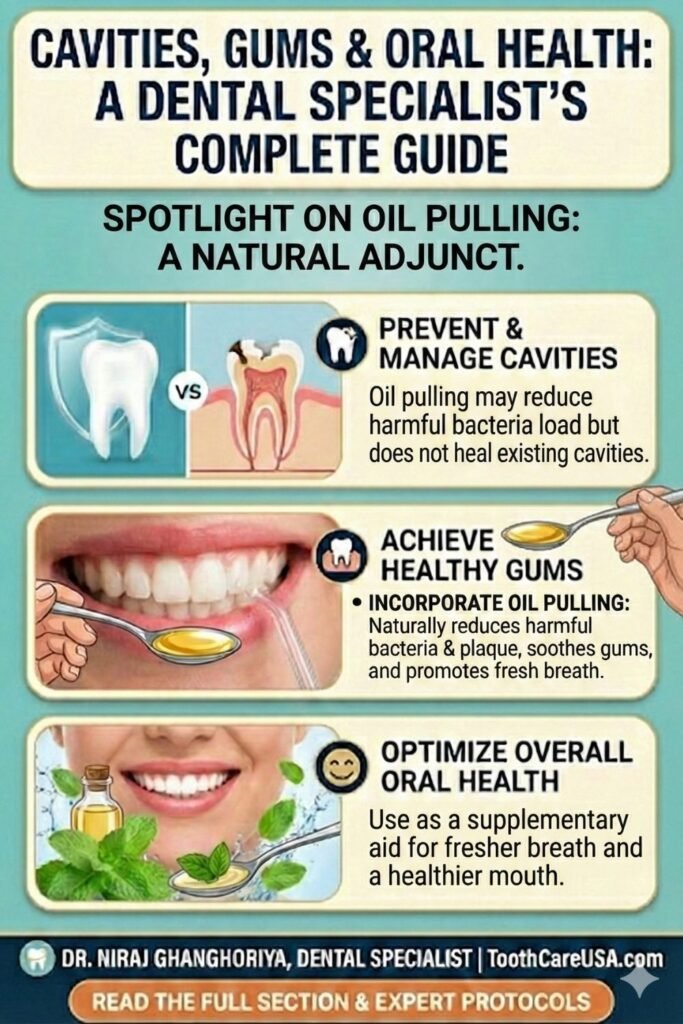
While studies have shown that oil pulling with coconut oil can significantly reduce the bacterial count in saliva, it is crucial to view this as a preventive measure. It creates an environment where cavities are less likely to form, rather than acting as a drill-and-fill dentist.
Dr. Niraj’s Clinical Insight: “I recommend using cold-pressed, organic coconut oil. It contains lauric acid, which has proven antimicrobial and anti-inflammatory properties. Swish for 15–20 minutes, but never swallow the oil—it is full of the toxins and bacteria you just pulled out of your gums!”
Can oil pulling heal cavities
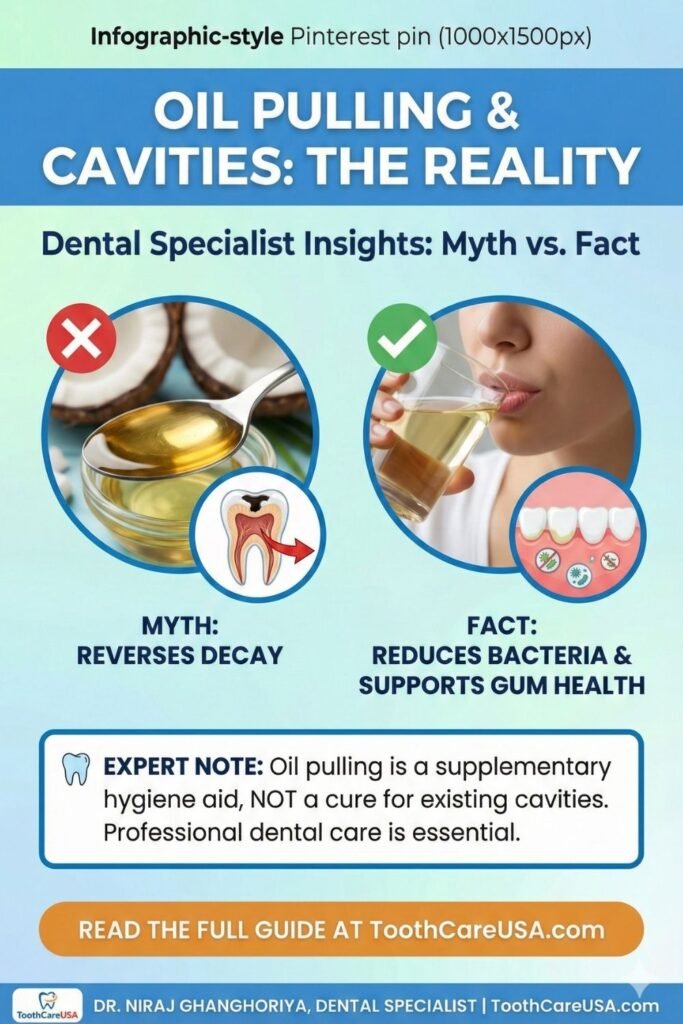
This is the most common question I receive via email and in the clinic: Can oil pulling heal cavities?
To be 100% transparent and follow medical ethical guidelines: No, oil pulling cannot heal an existing cavity.
Once the tooth structure is destroyed—meaning the enamel has been breached and a physical hole (cavitation) exists—no amount of oil, toothpaste, or rinse can “regrow” that lost structure. Enamel does not have living cells that regenerate like your skin or bones.
However, there is a nuance here regarding early demineralization. Before a cavity becomes a hole, it starts as a “white spot lesion.” This is where the enamel is weak but intact. In this specific stage, reducing oral bacteria via oil pulling, combined with fluoride or hydroxyapatite toothpaste, can help the tooth remineralize.
But I must be firm: if you have a black or brown spot that catches a dental explorer, you need a filling. Relying solely on oil pulling to “heal” a deep cavity is dangerous. I have seen patients delay treatment hoping oil would fix it, only to end up needing a root canal later because the decay reached the nerve.
Dr. Niraj’s Advice: “Do not use oil pulling as a substitute for restorative treatment. Use it to protect your other healthy teeth, but see a specialist to manage existing decay.”
Oil pulling for gums
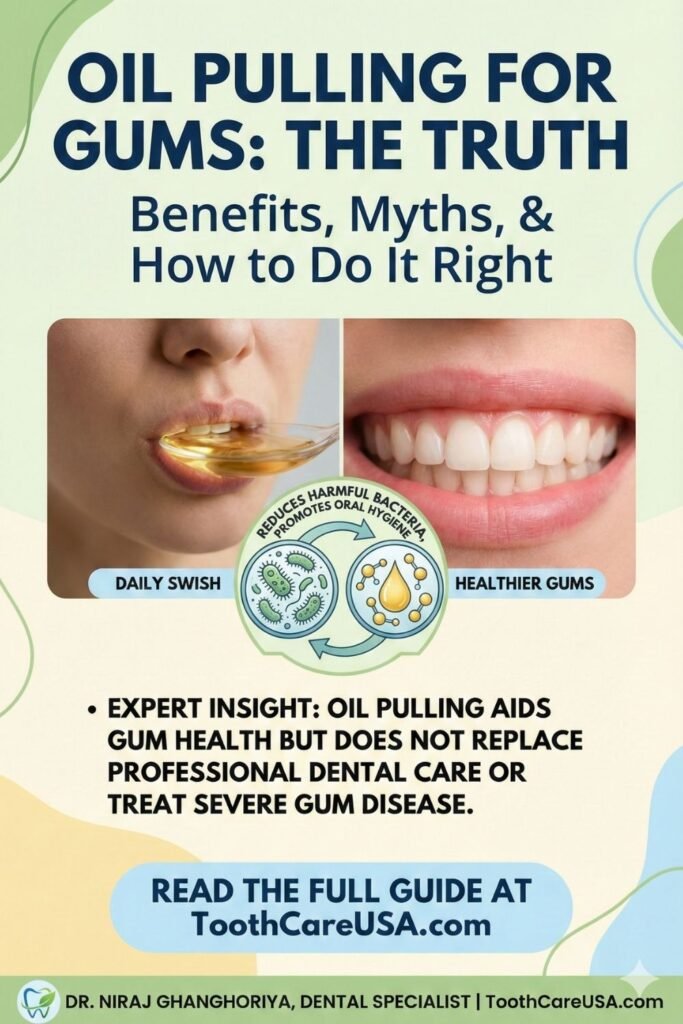
Oil pulling for gums is perhaps where this practice shines the brightest. Gingivitis (gum inflammation) is caused by plaque buildup at the gumline. This plaque triggers your body’s immune response, leading to red, puffy, and bleeding gums.
In a study published in the Journal of Clinical and Diagnostic Research, oil pulling was found to be effective in reducing plaque-induced gingivitis. The mechanical action of swishing creates a saponification process (a soap-like cleansing effect) that dislodges plaque from the pockets between your teeth and gums.
I frequently suggest this to patients who struggle with flossing or have dexterity issues. The oil can reach areas deep in the gum pockets that bristles sometimes miss. The anti-inflammatory nature of coconut oil also helps soothe the gum tissue directly. After just one week of consistent oil pulling, many of my patients report significantly less bleeding when they brush.
Oil pulling gum recession
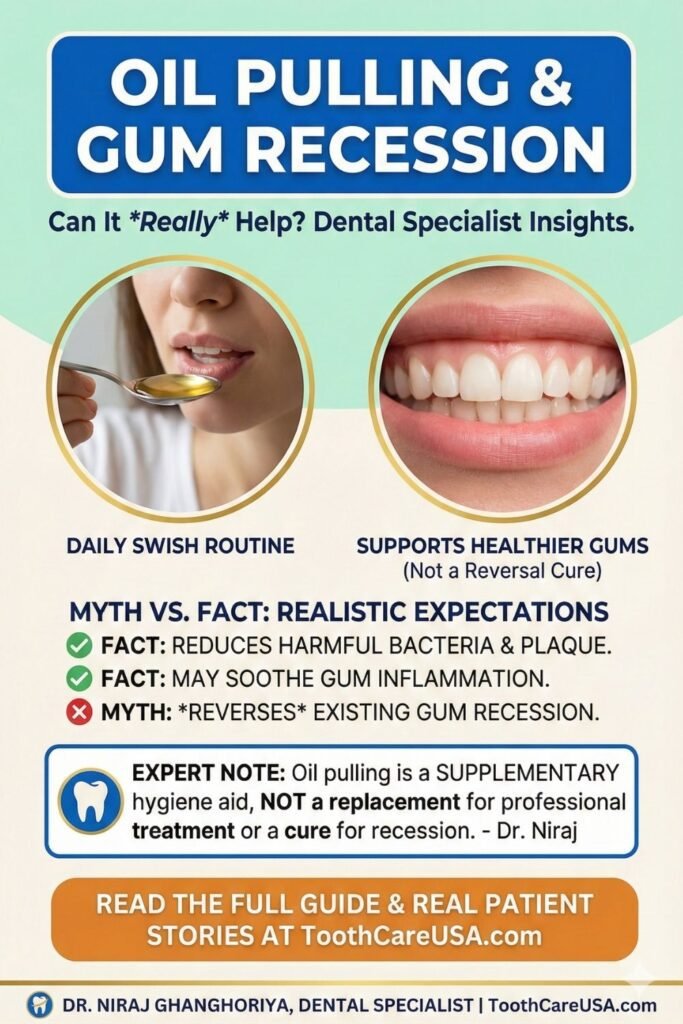
Gum recession is a condition where the gum tissue pulls back, exposing the sensitive root of the tooth. It is often caused by aggressive brushing, grinding, or chronic periodontal disease.
When patients ask about oil pulling gum recession, I clarify that oil pulling cannot grow gum tissue back. Once gum tissue is lost, it usually requires surgical intervention (like a gum graft) to restore.
However, oil pulling is excellent for stopping the progression of recession. Recession is often driven by chronic inflammation. By reducing the bacterial load and inflammation (the root cause of periodontitis), you stop the gums from detaching further. It acts as a shield, maintaining the height of the gum you currently have.
Clinical Note: “If you have receding gums, you likely have sensitive teeth. Coconut oil can form a thin protective barrier over exposed dentin tubules, potentially offering temporary relief from sensitivity to cold or sweet foods.”
Oil pulling for receding gums
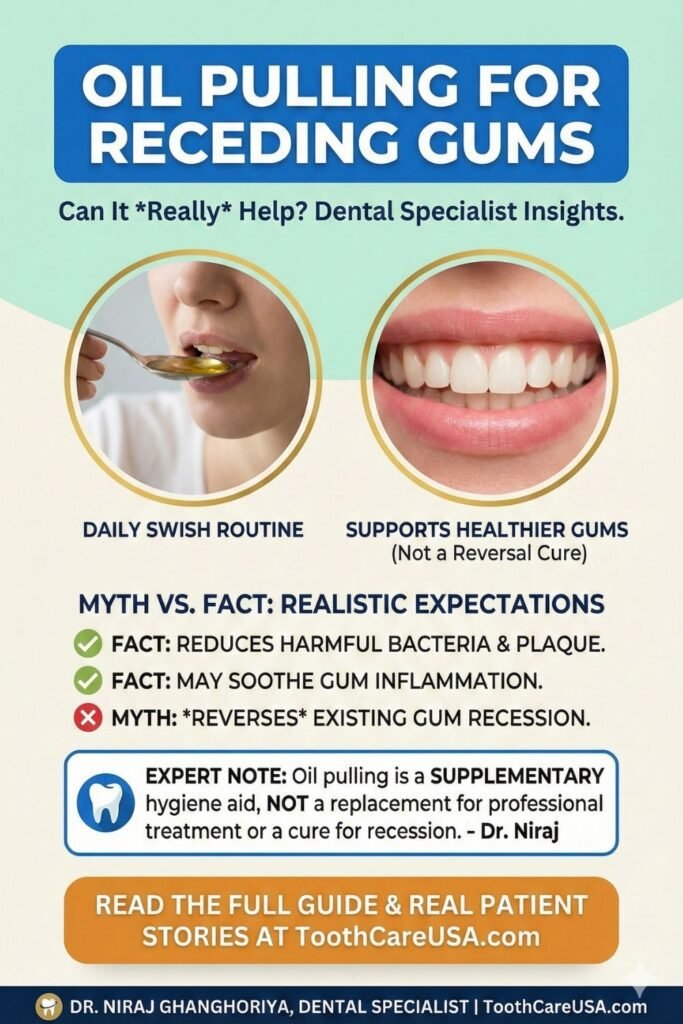
Focusing specifically on management, oil pulling for receding gums requires a gentle approach. If you have severe recession, your tooth roots are exposed. These roots are covered in cementum, which is much softer than enamel.
Vigorous brushing can wear this cementum away (abrasion). Oil pulling provides a “non-abrasive” way to clean these delicate areas. It cleanses the exposed roots without the friction of a toothbrush, which is vital for patients with severe recession.
I advise my patients with recession to incorporate oil pulling as the first step in their morning routine. By removing the bacteria gently with oil first, you may not need to scrub as hard with your toothbrush later, preserving your remaining gum tissue.
Oil pulling for bad breath
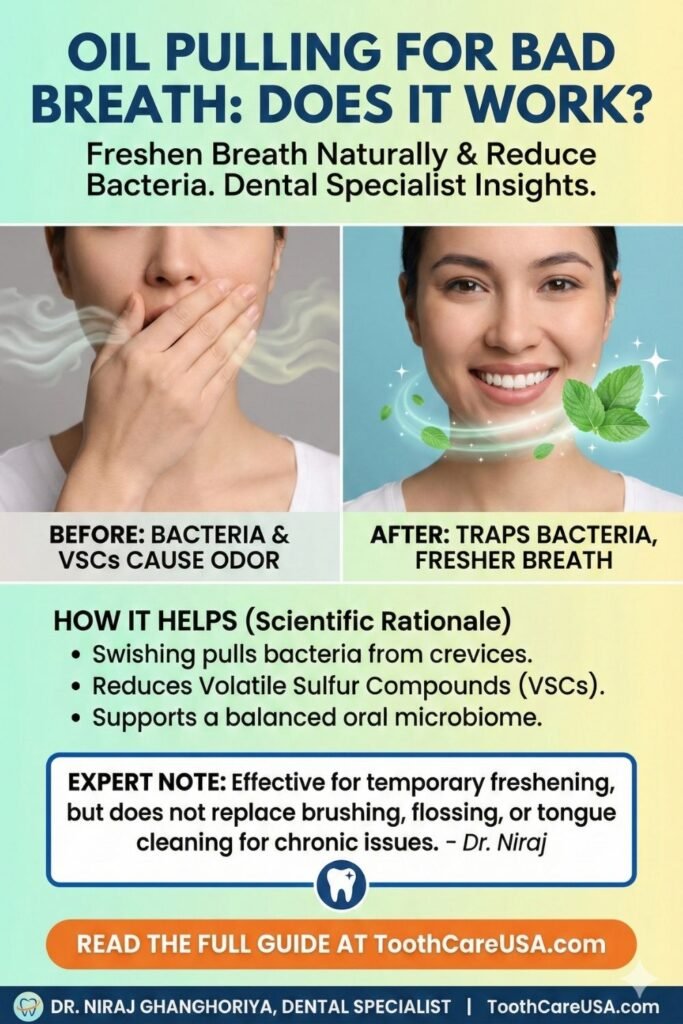
Halitosis, or bad breath, is usually caused by volatile sulfur compounds (VSCs) produced by bacteria on the tongue and in gum pockets. Oil pulling for bad breath is highly effective because it targets these specific bacteria.
Standard mouthwashes often contain alcohol, which dries out the mouth. A dry mouth (Xerostomia) actually worsens bad breath over time because saliva is your mouth’s natural cleanser. Oil pulling does the opposite—it cleanses while stimulating saliva production.
The oil traps the bacteria and their foul-smelling byproducts. When you spit the oil out (usually it turns milky white), you are expelling the source of the odor. I have seen great results in patients who suffer from “morning breath” by adding this to their a.m. routine.
Oil pulling and cavities
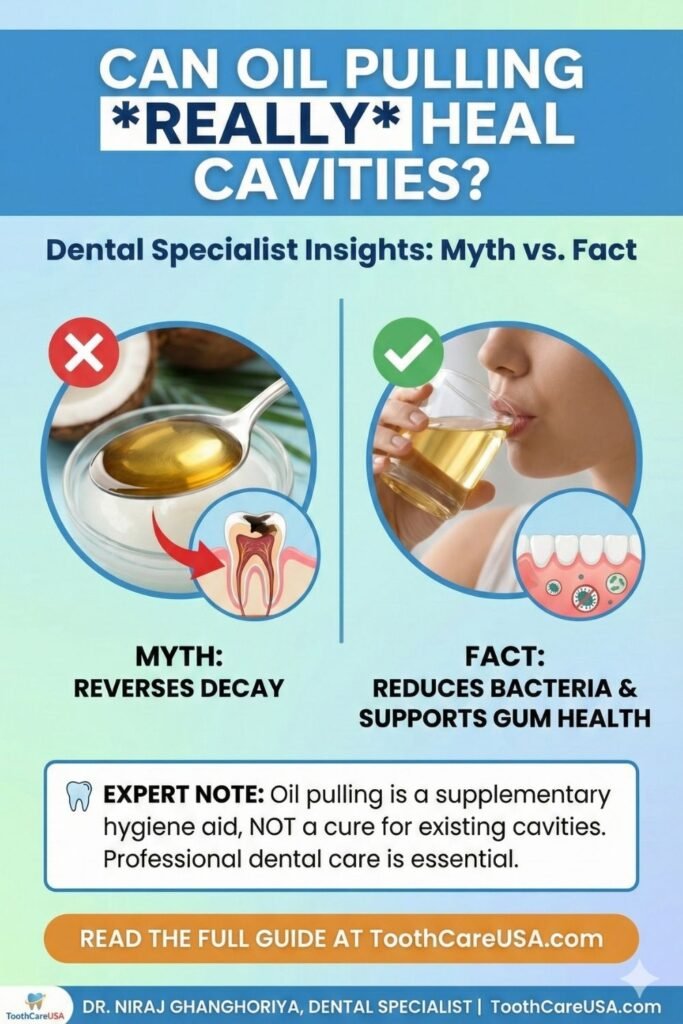
Let’s look at the relationship between oil pulling and cavities from a holistic risk-assessment perspective. Dentistry is moving toward CAMBRA (Caries Management By Risk Assessment).
If you are a “high risk” patient—meaning you have a dry mouth, a high sugar diet, or a history of many fillings—oil pulling is a fantastic adjunctive therapy. It modifies the biofilm (plaque) in your mouth.
Plaque that causes cavities is thick and sticky. Oil pulling changes the consistency of this plaque, making it “slippery” and unable to adhere to the tooth surface as easily. If the bacteria can’t stick, they can’t eat sugar and produce acid. Therefore, while it doesn’t cure a cavity, it disrupts the cavity-forming process.
Dr. Niraj’s Protocol: “For high-risk cavity patients: Oil pull for 10 minutes in the morning, followed by rinsing with water, and then brushing with a fluoride toothpaste.”
Oil pulling for gum health
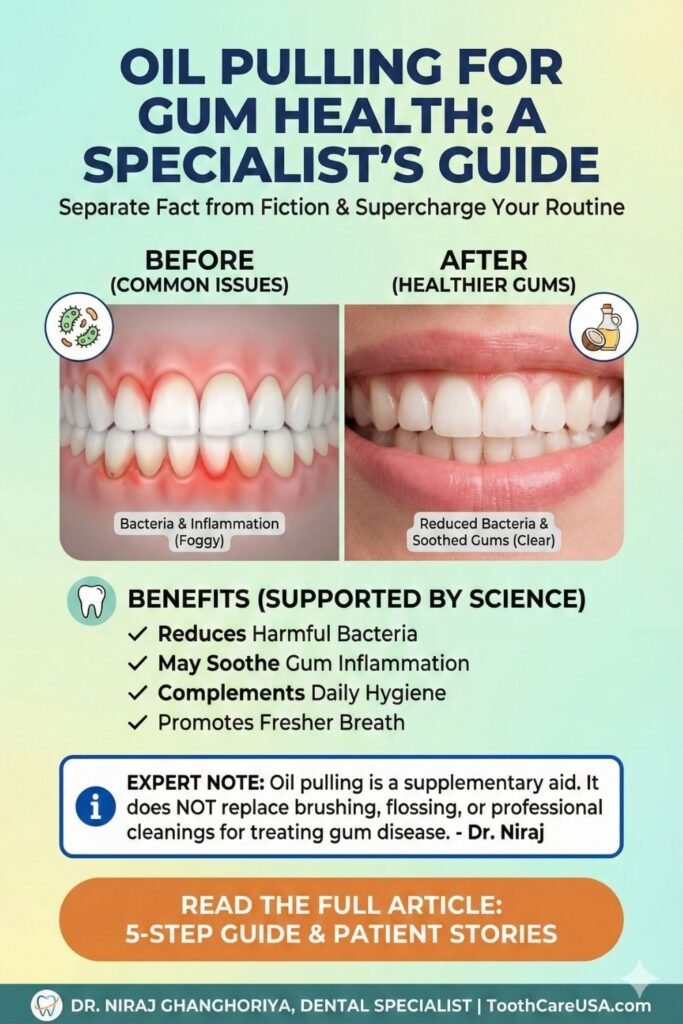
Oil pulling for gum health extends beyond just preventing disease; it’s about maintaining optimal pink, firm, stippled gingiva.
The mechanical exercise of swishing for 15 to 20 minutes also works the muscles of the face and jaw, increasing blood flow to the oral tissues. Increased blood flow means better nutrient delivery and waste removal for the gum cells.
I also see it as a mindfulness practice. It forces patients to spend 20 minutes focusing on their oral health, which inevitably leads to better habits throughout the day. If you spend 20 minutes cleaning your mouth, you are less likely to drink a sugary soda an hour later!
Oil pulling after tooth extraction
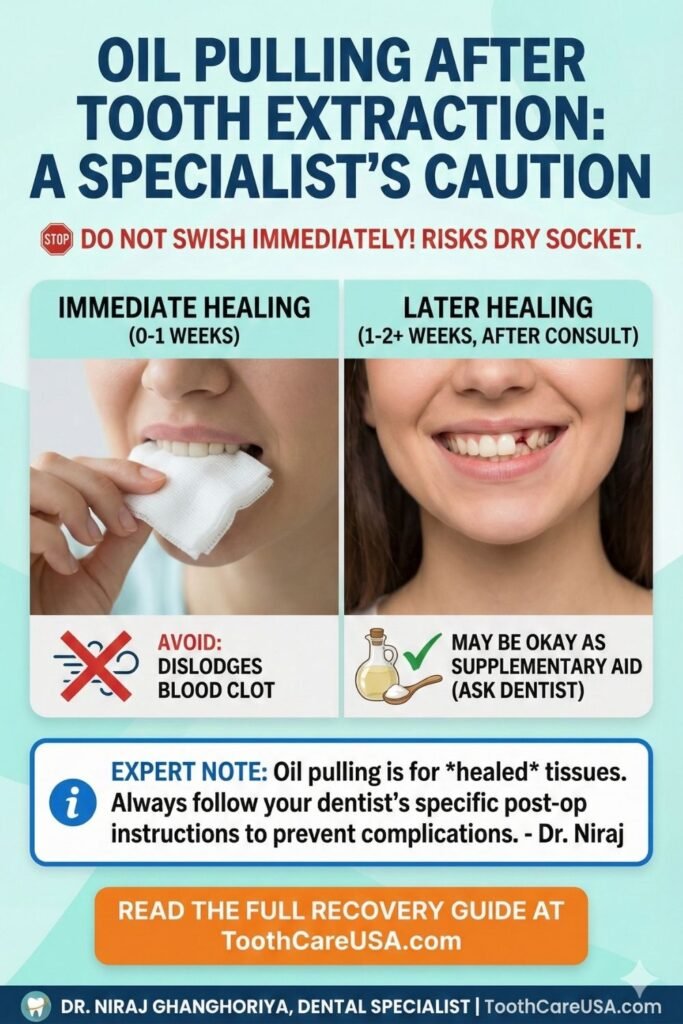
This is a critical section regarding safety. Patients often ask if they should use oil pulling after tooth extraction to keep the wound clean.
My Clinical Warning: Do NOT oil pull for at least 3 to 4 days after an extraction.
Here is why: Healing after an extraction depends on a blood clot forming in the socket. The “pulling” action generates significant negative pressure (suction) inside the mouth. This suction can dislodge the blood clot, leading to a painful condition called Dry Socket (Alveolar Osteitis).
Once the initial healing phase has passed (usually after 5-7 days), gentle swishing with oil can be soothing and help keep food debris out of the socket, but it must be done very passively—no vigorous “pulling” until the socket is fully closed.
Dr. Niraj’s Alert: “Avoid suction of any kind—straws, smoking, and vigorous oil pulling—for 72 hours post-extraction.”
Oil pulling sinus infection
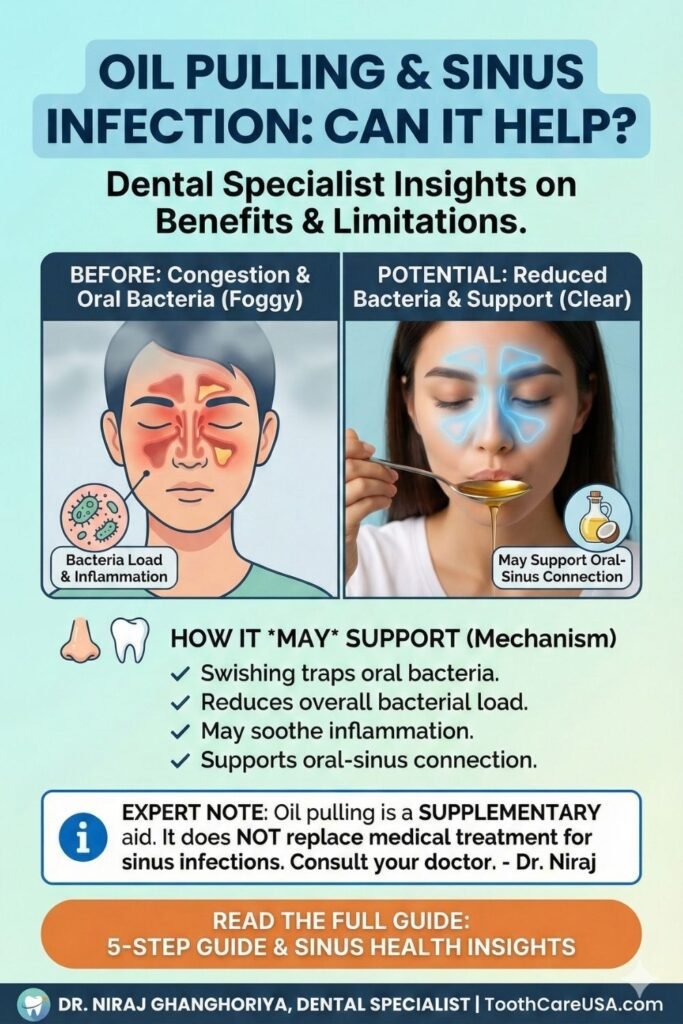
Interestingly, the benefits of oral health often spill over into the respiratory system. Many proponents swear by oil pulling for sinus infections.
While I am a dental specialist, the anatomy connects us. The roots of your upper back teeth are very close to (and sometimes inside) the maxillary sinus floor. Oral bacteria can travel to the sinuses. By reducing the overall bacterial load in the mouth and throat, you reduce the strain on your immune system.
Furthermore, the act of swishing stimulates mucus drainage and increases circulation in the oral and nasal cavities. While it is not a cure for sinusitis (you should see an ENT for that), keeping the oral cavity bacteria-free is helpful for overall upper respiratory health.
Oil pulling mouthwash
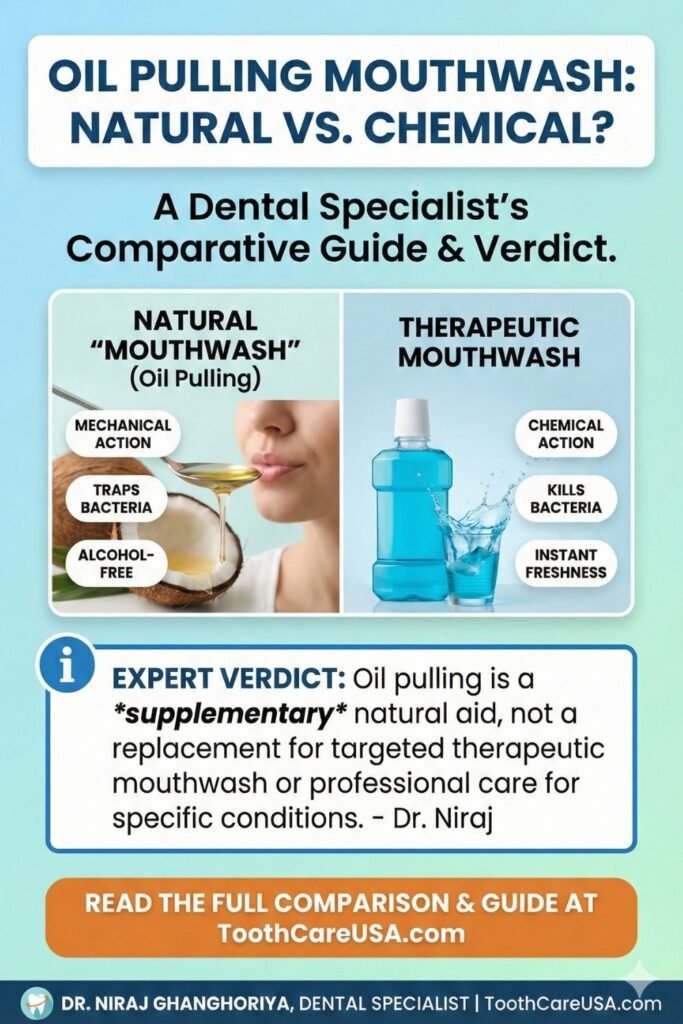
Finally, let’s compare oil pulling mouthwash techniques to commercial chemical rinses (like Chlorhexidine or Listerine).
Chlorhexidine is the “gold standard” in dentistry for killing bacteria, but it has side effects: it stains teeth brown and alters taste perception. It also kills all bacteria indiscriminately.
Coconut oil is a biological alternative. It is not as potent as Chlorhexidine, but it has no side effects. It doesn’t stain teeth (it may actually whiten them slightly by removing surface stains) and doesn’t disrupt the microbiome as harshly.
For daily, long-term maintenance, I prefer my patients use oil pulling over alcohol-based mouthwashes. It is sustainable, natural, and maintains a healthy balance of oral flora.
Conclusion & Key Takeaways
Oil pulling is a legitimate, science-backed adjunctive therapy for oral hygiene. It reduces plaque, fights gingivitis, and combats bad breath. However, it is not a miracle cure that replaces brushing, flossing, or professional dental visits.
- For Cavities: It helps prevent them, but does not heal existing holes.
- For Gums: excellent for reducing inflammation and bleeding.
- Safety: Avoid immediately after tooth extractions.
Ready to start? Grab a spoonful of organic coconut oil tomorrow morning and give it a try. Your gums will thank you!
References & Further Reading
- Peedikayil, F. C., et al. (2015). Effect of coconut oil in plaque-related gingivitis – A preliminary report. Nigerian Medical Journal.
- Shanbhag, V. K. L. (2017). Oil pulling for maintaining oral hygiene – A review. Journal of Traditional and Complementary Medicine.
- American Dental Association (ADA) Statement on Oil Pulling and Unconventional Dentistry.
Disclaimer: This content is for informational purposes only and does not constitute medical advice. Always consult with your dentist for diagnosis and treatment.
Frequently asked question
How long does it take to see results from oil pulling?
Most patients report fresher breath within 2 to 3 days of daily use. For significant improvements in gum health, such as reduced bleeding or inflammation (gingivitis), it typically takes 14 to 21 days of consistent practice.
Dr. Niraj’s Clinical Note: “In my practice, I find that patients who quit after one week rarely see the benefits. Consistency is key to reducing the bacterial load effectively.”
Should I brush my teeth before or after oil pulling?
You should always brush your teeth after oil pulling. The swishing process pulls bacteria and toxins out of your gum pockets into the oil. Brushing immediately afterward helps to mechanically remove this oily, bacteria-laden film from your enamel and mouth.
Dr. Niraj’s Clinical Note: “I advise my patients to rinse with warm water first to remove the oil residue, then brush with fluoride toothpaste to remineralize the enamel.”
Can oil pulling remove tartar (calculus) from my teeth?
No, oil pulling cannot remove hardened tartar. It is effective at reducing soft plaque and biofilm, which prevents new tartar from forming, but it cannot dissolve existing calculus. Only a professional dental scaling with ultrasonic tools can safely remove hardened tartar.
Dr. Niraj’s Clinical Note: “If you feel rough, hard ridges near your gumline, oil won’t budge them. That is a sign you are due for a professional hygiene appointment.”
Which oil is most effective for pulling: Coconut or Sesame?
Organic, cold-pressed coconut oil is generally considered the most effective choice today due to its high concentration of Lauric Acid, which has potent antimicrobial properties against Streptococcus mutans. Sesame oil is the traditional Ayurvedic choice and is a valid alternative if you dislike the taste of coconut.
Dr. Niraj’s Clinical Note: “I personally recommend coconut oil to my patients because its taste is milder, making it easier to sustain the habit long-term.”
Is oil pulling safe for dental crowns, veneers, and fillings?
Yes, oil pulling is safe for patients with crowns, veneers, and composite fillings. Vegetable oils do not react with or dissolve the dental cements and bonding agents used in restorative dentistry. It creates a non-abrasive cleaning environment around these restorations.
Dr. Niraj’s Clinical Note: “The only exception is if you have a temporary crown. The suction created by vigorous swishing could theoretically loosen a temporary crown, so be gentle until your permanent crown is seated.”

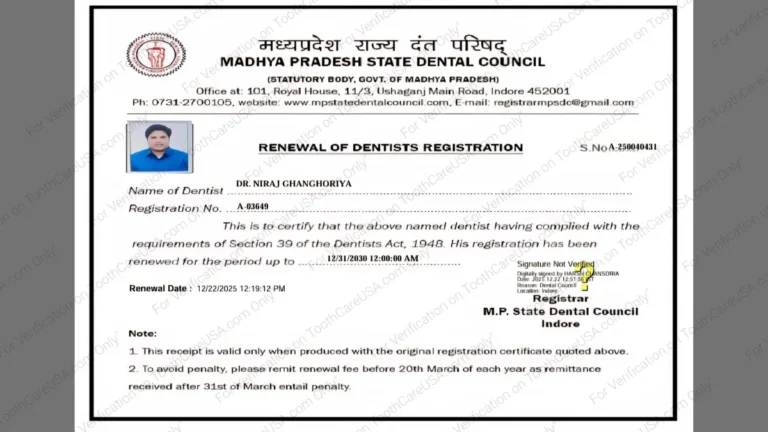
Dr. Niraj Ghanghoriya is a passionate dental surgeon with over 12 years of experience in clinical dentistry. He completed his BDS from the prestigious Sri Aurobindo Institute of Dentistry in 2012 and specializes in painless root canals, smile makeovers, and preventive oral care. He is the Founder of ToothCareUSA.com and a registered Dental Surgeon (Reg No: A-03649) based in Indore. Known for his patient-first approach and clear communication, Dr. Ghanghoriya aims to make dental knowledge accessible to everyone. When he’s not in the clinic, he enjoys writing informative dental blogs to help people take better care of their oral health. He reviews every article on this site to ensure medical accuracy and patient safety.