Author: Dr. Niraj Ghanghoriya (Dental Specialist)
Micro-Note: Educational purposes only. See full disclaimer below.
The Quick Answer
The average cost of zygomatic dental implants in the United States ranges from $28,000 to $45,000 per arch. This price typically includes the surgical placement of the specialized zygoma fixtures, general anesthesia or IV sedation, and the immediate temporary prosthesis. While significantly higher than standard implants, this procedure is often the only viable option for patients with severe maxillary atrophy (total upper jaw bone loss) who want fixed teeth without years of bone grafting.
Introduction
If you are looking for the cheapest quote on the cost of zygomatic dental implants, you might be looking for trouble.
As a specialist, I often tell my patients: when it comes to drilling into the cheekbone, “bargain hunting” is the most expensive mistake you can make. The anatomy involved here is complex—we are working millimeters away from the orbit (eye socket) and the sinus cavity.
I understand the anxiety. You have likely been told you have “no bone left” for regular implants. You may have been turned away by other dentists or told you need to wear a removable denture for the rest of your life. Zygomatic implants are the solution, but the price tag is intimidating.
In this guide, I will give you the honest, transparent breakdown of what you are actually paying for. We will look beyond the sticker price to understand the safety, the skill, and the materials required to give you a smile that is safe, functional, and permanent.
The “Quick Answer”: What is the Average Price Range?
When patients ask me about the cost of zygomatic dental implants, they often expect a simple, flat number. However, because every mouth is biologically unique, costs vary based on the complexity of your anatomy.
To give you a realistic baseline, here is what you can expect to see in 2026:
Global Price Range Estimates (Per Arch)
| Region / Type | Average Cost Range | What is Included? |
| USA (Standard Zygoma) | $28,000 – $38,000 | 2 Zygomatic Implants + 2 Standard Implants + Provisional Teeth |
| USA (Quad Zygoma) | $35,000 – $45,000+ | 4 Zygomatic Implants (Severe Atrophy) + Provisional Teeth |
| United Kingdom / Europe | £20,000 – £35,000 | Similar inclusions to USA standards. |
| “Medical Tourism” Locations | $12,000 – $18,000 | Warning: Often excludes follow-up care and complication management. |
The “All-In” Number
It is crucial to understand that the surgical fee is just one part of the equation. A trustworthy quote should be “all-inclusive,” covering the surgery, the anesthesia, the temporary teeth you wake up with, and the post-operative visits. Always ask if the final, permanent set of teeth (usually Zirconia) is included in the initial quote, or if that is a separate fee charged 6 months later.
What Are Zygomatic Implants? (And Why Do They Cost More?)
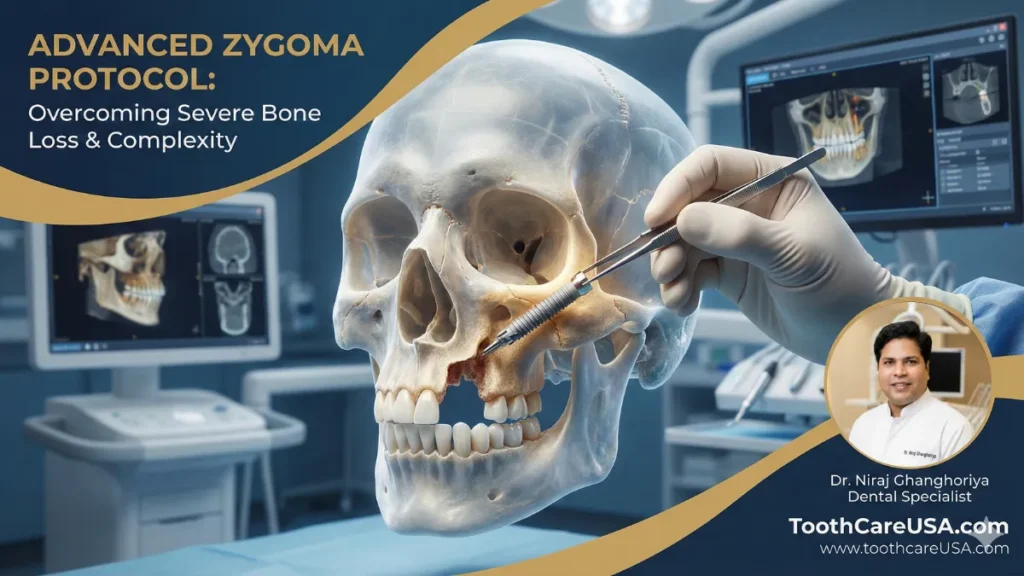
To understand the price, you have to understand the biology. Standard dental implants are like screws that go into a piece of wood (your jawbone). But what happens when the wood is gone?
Many of my patients suffer from Severe Maxillary Atrophy. This is the clinical term for when the upper jawbone has dissolved, usually due to long-term denture wear or gum disease. In these cases, standard implants are physically impossible because there is nothing to screw them into.
The Zygoma Difference
Zygomatic implants are different. They are much longer—ranging from 30mm to 55mm in length—and they bypass the jawbone entirely to anchor into the Zygoma (the dense cheekbone). The cheekbone does not dissolve like the jawbone does, making it an incredibly stable foundation.
The Specialist Premium
The reason the cost of zygomatic dental implants is higher is largely due to the skill required. This is not a procedure taught in general dental school. It requires a specialist—typically an Oral and Maxillofacial Surgeon or a highly trained Periodontist/Prosthodontist—who understands the ZAGA Classification (Zygoma Anatomy-Guided Approach). You are paying for a surgeon who knows how to navigate the complex nerves and sinuses of the face safely.
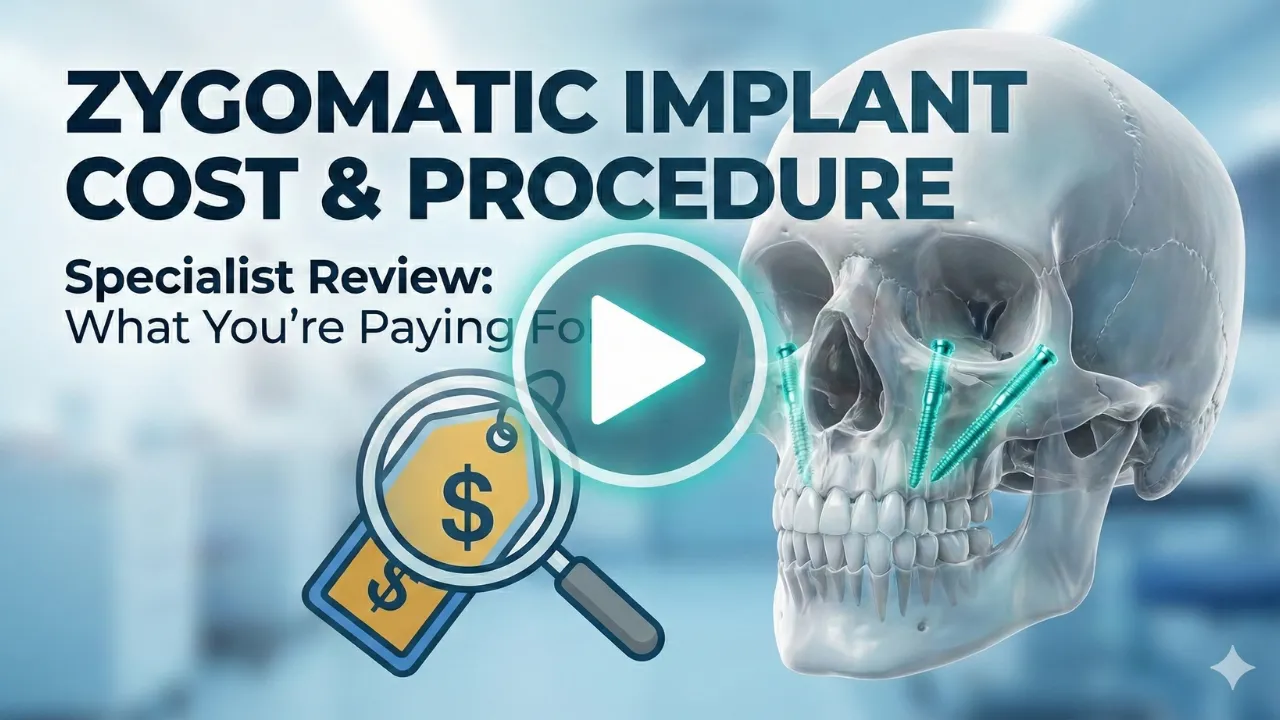
▶ Visualizing the Procedure: Dr. Ghanghoriya’s Review
Dr. Niraj G.
Dental Specialist
Specialist’s Commentary
“While this animation perfectly illustrates the ideal placement of the implant body into the cheekbone, real-world anatomy is rarely this symmetrical. In my practice at ToothCareUSA, I specifically utilize the ZAGA (Zygoma Anatomy-Guided Approach). Notice how the implant doesn’t just go ‘through’ the sinus but hugs the outer wall? This is critical to prevent chronic sinusitis.”
Video Key Takeaways:
- Cheekbone Anchorage: Visualizes how the 45° angle bypasses the sinus to anchor in dense bone.
- Immediate Loading: Shows why teeth can be attached instantly (no 6-month wait).
- Graftless Solution: Demonstrates avoidance of hip grafts or sinus lifts.
Breaking Down the Bill: Where Does Your Money Actually Go?
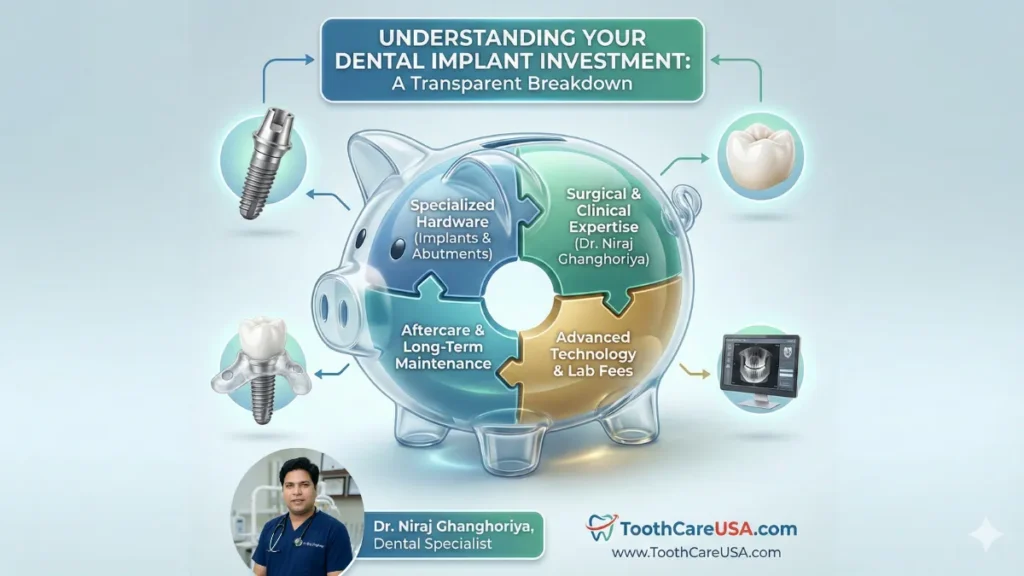
When you see a $35,000 invoice, it helps to know you aren’t just paying for a “brand name.” Here is the clinical breakdown of the overhead involved in this advanced surgery.
1. The Hardware (Zygoma Fixtures)
Standard titanium implants are relatively small. Zygomatic implants are sophisticated medical devices designed to endure massive biting forces. They are manufactured to strict tolerances to ensure Osseointegration (the biological process where bone fuses to the metal). The cost of these specialized fixtures is significantly higher than that of standard screws.
2. Hospital & Anesthesia Fees
Safety is my non-negotiable priority. Placing an implant into the cheekbone requires the patient to be absolutely still. Therefore, we almost always utilize General Anesthesia or deep IV Sedation. This means hiring a Board-Certified Anesthesiologist and utilizing a surgical suite that mimics a hospital setting. These facility and professional fees are a major line item that ensures you wake up safely.
3. Advanced Diagnostics (CBCT Analysis)
We cannot guess with zygomatic implants. Before we ever touch a patient, we perform a CBCT Analysis (Cone Beam Computed Tomography). This 3D scan allows us to map your sinus cavities, orbit location, and nerve pathways. We often use this data to create 3D-printed surgical guides, which adds to the laboratory costs but ensures pinpoint accuracy.
Zygomatic Implants vs. Bone Grafting: A Cost-Benefit Analysis
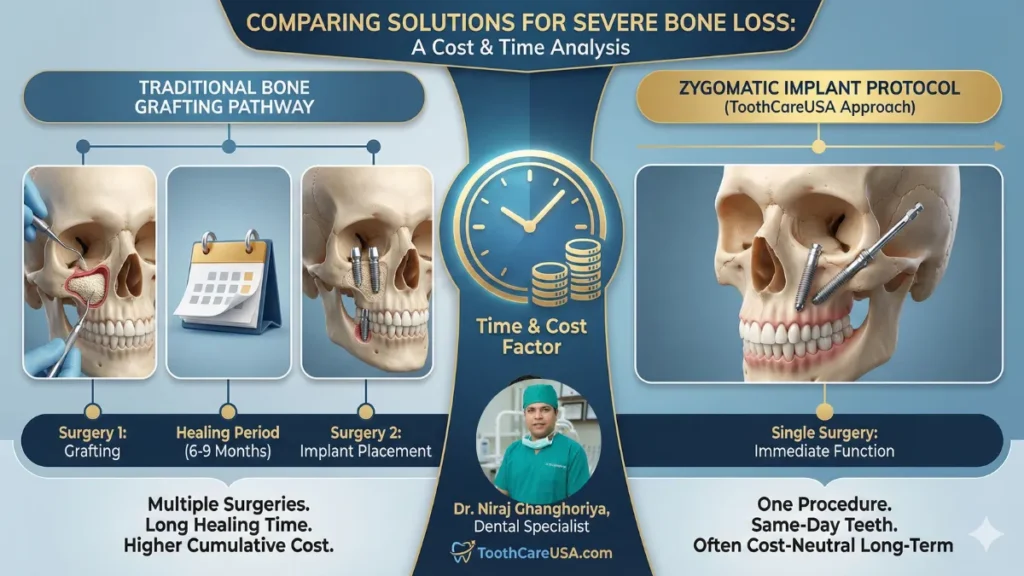
A common question I get is: “Dr. Niraj, isn’t it cheaper to just grow new bone?”
On paper, a “Sinus Lift” or bone graft looks cheaper than the cost of zygomatic dental implants. However, we have to look at the “Cost of Time.”
The Bone Grafting Pathway:
- Surgery 1: Sinus Lift/Bone Graft. Cost: $$$.
- Wait Time: You must heal for 6 to 9 months (wearing a removable denture).
- Surgery 2: Place Standard Implants. Cost: $$$.
- Wait Time: Heal for another 4 to 6 months.
- Surgery 3: Uncover implants and place teeth.
The Zygomatic Pathway:
- Surgery 1: Place Zygomatic Implants + Load Teeth immediately. Cost: $$$$.
- Result: You walk out with fixed teeth the same day (Immediate Loading Protocol).
When you add up the multiple surgeries, the anesthesia fees for each visit, and the year of your life spent healing, Zygomatic implants often come out to be cost-neutral or even more economical in the long run.
The “Hidden Costs” Most Clinics Don’t Quote
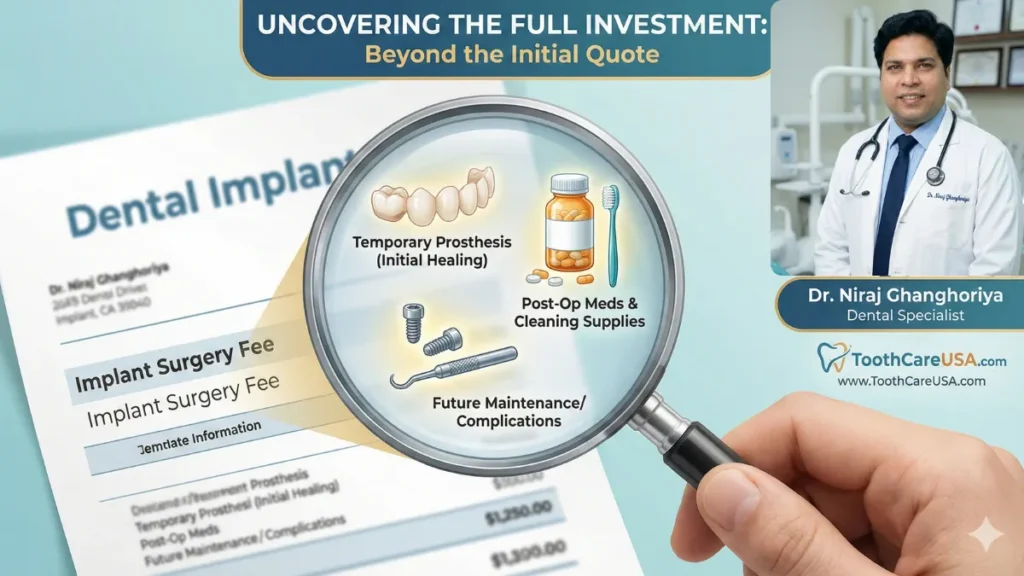
Transparency is vital in healthcare. When you are comparing quotes, you need to look for these often-omitted expenses.
1. The Temporary vs. Permanent Prosthesis
Most “All-on-4” or Zygoma quotes cover the surgery and the first set of teeth. These are usually made of acrylic (plastic) and are designed to be lighter while your bone heals. However, 6 months later, you will need a permanent set, usually made of Zirconia or Titanium-reinforced acrylic. Some clinics charge an extra $5,000 to $10,000 for this final set. Always ask: “Does this price include the final Zirconia teeth?”
2. Complication Management
While rare, complications like Sinus Pneumatization (enlargement of the sinus) or gum recession can occur. If you choose a budget clinic, they may charge you for every follow-up visit or X-ray. In my practice, I believe post-operative care should be part of the package, but you must verify this with your provider.
3. Maintenance Tools
You cannot clean zygomatic implants with a regular toothbrush alone. You will need a water flosser, Superfloss, and interdental brushes. While small, these ongoing costs are necessary to prevent Peri-implantitis (infection around the implant).
Understanding “Quad Zygoma” Pricing
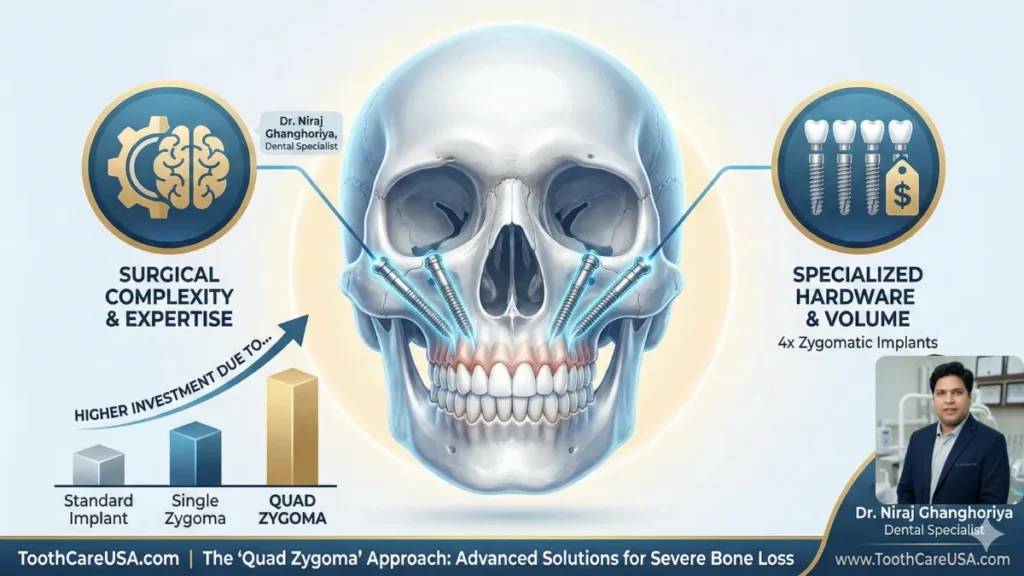
In the most severe cases of bone loss, even the front of the jaw has dissolved. In this scenario, we cannot place any standard implants. We must place 4 zygomatic implants (2 in the left cheekbone, 2 in the right).
This procedure is called a Quad Zygoma.
Why does it cost more?
- Double the Hardware: We are using four expensive zygomatic fixtures instead of two.
- Surgical Complexity: The angulation required to place four implants into the zygomas without them touching is extremely technically demanding.
- Time: The surgery takes longer, increasing anesthesia time.
If you have been told you need a Quad Zygoma, expect the price to be at the higher end of the spectrum ($35,000 – $45,000+), as this is essentially the most advanced procedure in dental implantology.
Insurance, Medicare, and Financing Options
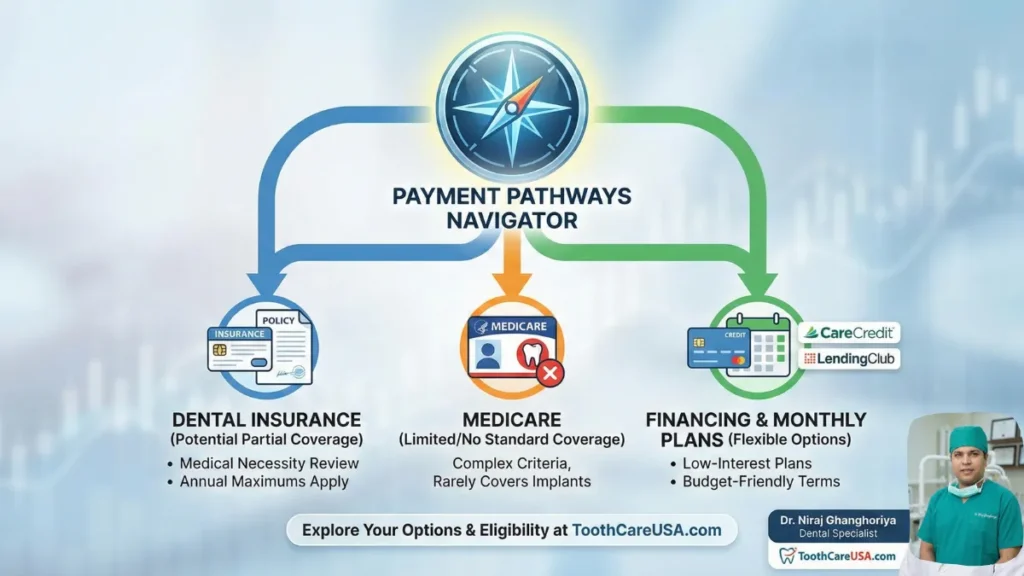
Does insurance cover the cost of zygomatic dental implants? The short answer is: rarely, but sometimes.
Medical vs. Dental Insurance
Standard dental insurance usually has a maximum annual cap of $1,500 to $2,000, which barely scratches the surface. However, because Zygomatic implants are a treatment for severe atrophy (a medical condition) and are anchored in facial bones (the zygoma), we can sometimes argue Medical Necessity.
If your bone loss is due to trauma, tumor removal, or congenital defects, major medical insurance might cover a portion of the surgery. This is not guaranteed, but it is worth having our insurance coordinators investigate.
Medicare
Medicare generally does not cover dental implants, regardless of the type. They classify it as a dental procedure rather than a medical one.
Financing
Most of my patients utilize third-party financing to manage the cost. Services like CareCredit or LendingClub allow you to break the $30,000+ fee into monthly payments over 2 to 5 years, making it comparable to a car payment.
Are Zygomatic Implants Worth the Investment? (The Risks & Rewards)
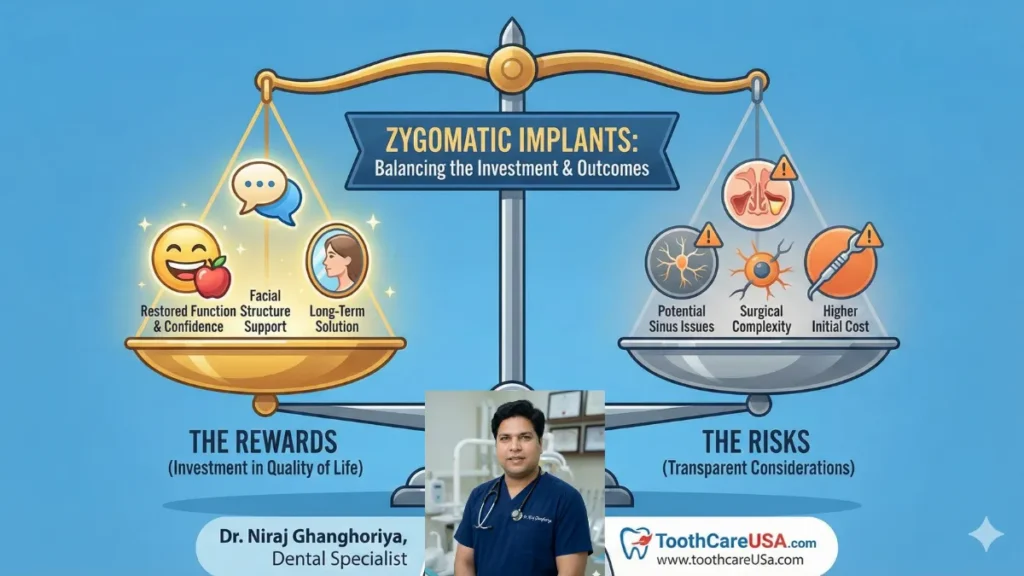
Is it worth the money? This is a personal decision, but here is the Return on Investment (ROI) regarding your quality of life.
The Rewards:
- Bite Force: You can eat steak, apples, and nuts. A denture provides about 20% of natural chewing power; Zygomatic implants restore about 90%.
- Facial Esthetics: By restoring the teeth and bone height, these implants support the lips and cheeks, acting like a “dental facelift” and preventing the sunken look of aging.
- Confidence: The teeth are screwed in. They will not slip, click, or fall out when you laugh or sneeze.
The Risks:
We must be honest about risks. Potential complications include sinusitis (sinus infections) or paresthesia (temporary numbness in the cheek). However, studies show a cumulative survival rate of 96% to 98% after 12 years, making them one of the most successful procedures in dentistry.
How to Choose a Surgeon (Without Overpaying)
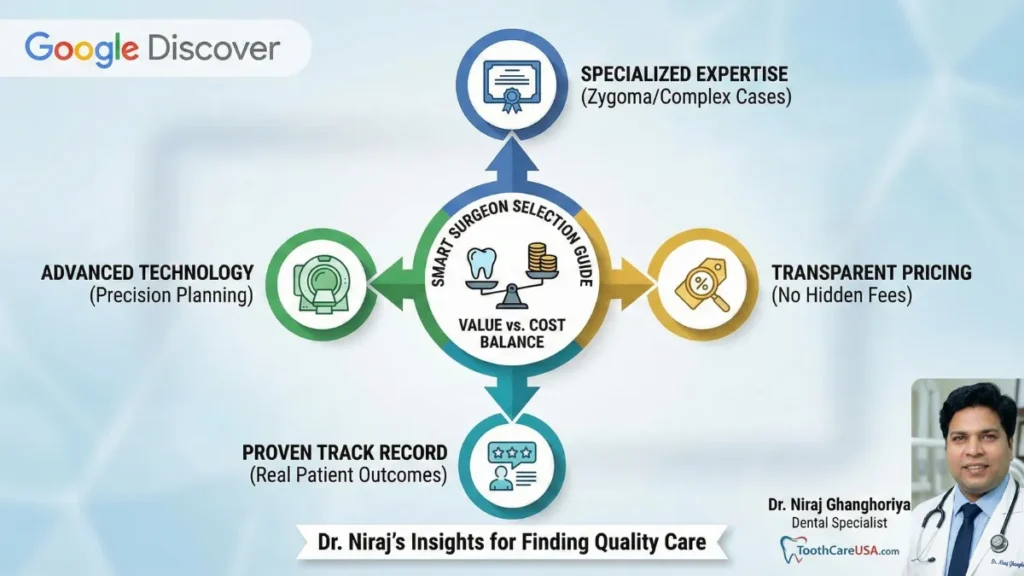
This is the most critical section of this article. Do not choose your surgeon based on the lowest Google Ad.
The Dangers of Medical Tourism
I see many patients who flew abroad to save $10,000, only to return with infected implants or poor prosthetics. The problem is that if a complication arises, local dentists in the US often refuse to touch work done abroad due to liability and lack of knowledge about which implant system was used.
Questions to Ask Your Surgeon:
- “How many Zygomatic cases have you performed in the last year?” (The answer should be dozens, not one or two).
- “Do you use a ZAGA center approach or strict protocols?”
- “What happens if an implant fails? Is the repair included in the cost?”
Critical Comparison: Standard vs. Zygomatic
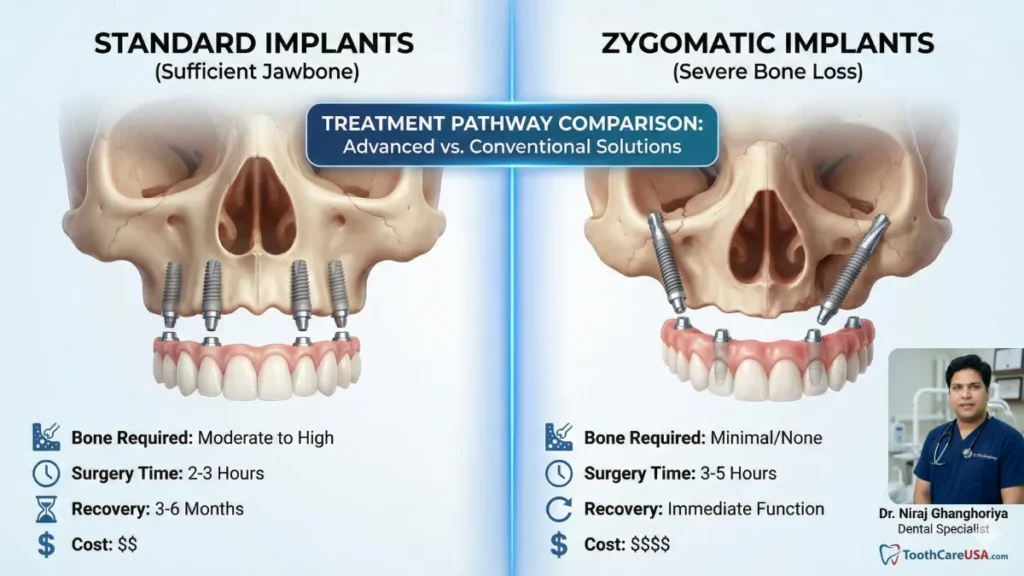
| Feature | All-on-4 (Standard) | Zygomatic Implants | Quad Zygoma |
| Bone Required | Moderate Jaw Bone | No Jaw Bone (Back), Some (Front) | Zero Jaw Bone |
| Anchor Point | Maxilla (Jawbone) | Zygoma (Cheekbone) + Maxilla | Zygoma (Cheekbones only) |
| Surgery Time | 2-3 Hours | 3-4 Hours | 4-5 Hours |
| Recovery | 3-5 Days | 5-10 Days | 7-14 Days |
| Est. Cost (USA) | $20k – $30k | $28k – $38k | $35k – $45k+ |
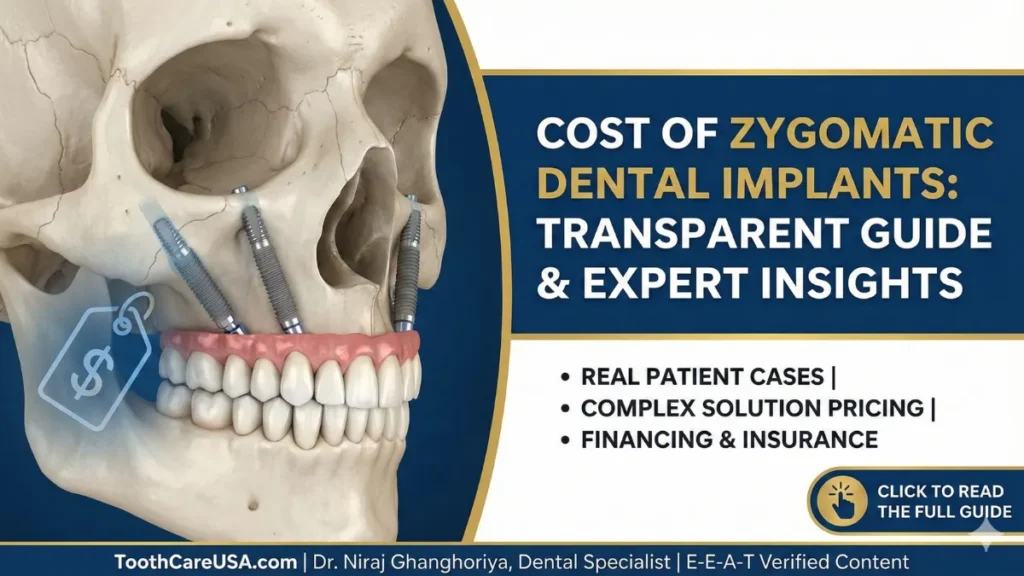
Infographic on Cost of Zygomatic Dental Implants
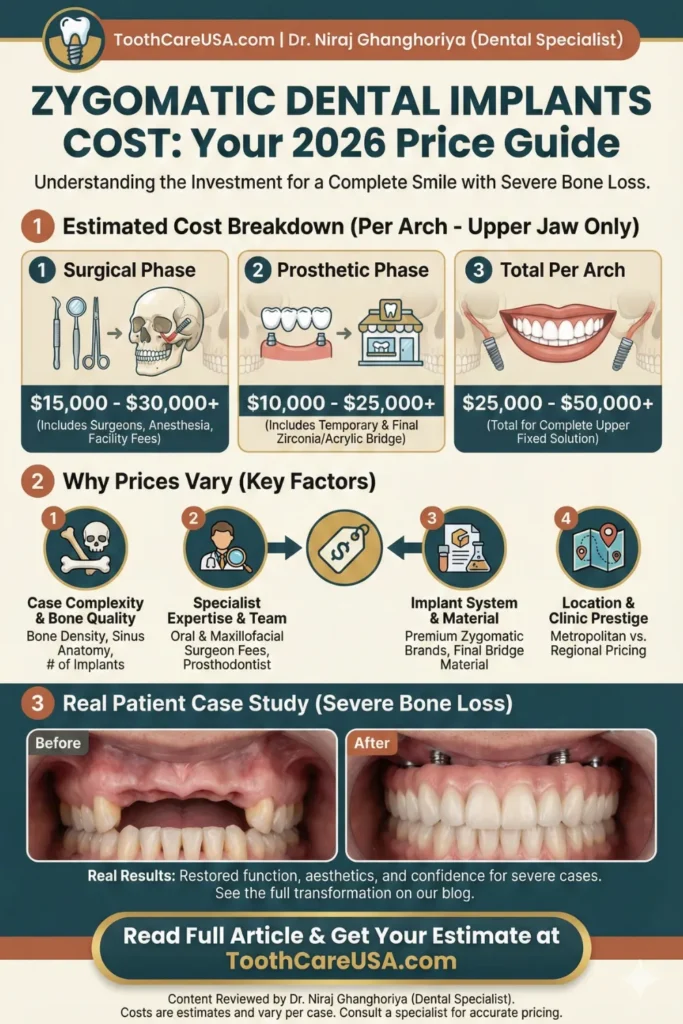
Zygomatic Implants: Specialized Care for Severe Bone Loss
Zygomatic implants are a specialized solution for patients who have been told they have “no bone” in the upper jaw and are not candidates for traditional implants. As illustrated in the infographic, these complex implants are significantly more expensive, typically ranging from $30,000 to $50,000 per arch.
The higher cost is attributed to the surgical complexity and risk. Unlike standard implants that anchor into the jawbone, zygomatic implants are much longer and anchor into the dense zygoma (cheekbone). This procedure requires a highly trained oral and maxillofacial surgeon and is often performed under general anesthesia in a surgical center or hospital setting, which adds to the facility fees.
Despite the cost, zygomatic implants are often the only fixed solution for patients with severe bone atrophy, eliminating the need for months of invasive bone grafting surgeries (and their associated costs). For patients at ToothCareUSA.com, this “graft-less” solution offers a faster path to a permanent smile. Given the difficulty of the procedure, expertise is the single most important factor—this is an investment in surgical skill as much as hardware.
Dr. Niraj Ghanghoriya’s Verdict
In my clinical experience, the cost of zygomatic dental implants is an investment in your future self.
Who is this for?
This is for the patient who has been told “no” by everyone else. If you have severe bone loss and cannot tolerate the timeline of bone grafting, this procedure is a life-changer. It restores function instantly.
Who should avoid this?
If you have enough native jawbone for standard implants, stick to them. Standard implants are less invasive and less expensive. Zygomatic implants are a “rescue” procedure for severe cases, not a default starting point.
Ultimately, do not let the price drive you to an unqualified provider. Your face, your nerves, and your sinuses are priceless.
Conclusion & Next Steps
- Zygomatic implants range from $28,000 to $45,000.
- They eliminate the need for hip grafts or sinus lifts.
- Success relies heavily on the skill of the surgeon, not just the hardware.
If you are tired of loose dentures and want to know if you are a candidate for this permanent solution, the next step is a 3D scan.
References & Further Reading
- Aparicio C, Manresa C, Francisco K, et al. Zygomatic implants: indications, techniques, and outcomes. Periodontol 2000. 2014.
- National Institutes of Health (NIH): Long-term survival of zygomatic implants.
- American Association of Oral and Maxillofacial Surgeons (AAOMS): Dental Implant Surgery Guidelines.
Frequently Asked Questions (FAQ) on Cost of Zygomatic Dental Implants
What is the average cost of zygomatic dental implants in 2026?
The cost of zygomatic dental implants typically ranges from $30,000 to $50,000 for a full upper arch restoration. This premium reflects the complexity of anchoring 30–55mm implants into the cheekbone, requiring a maxillofacial surgeon, specialized 3D surgical guides, and general anesthesia.
Dr. Niraj’s Take: “While the upfront cost is higher, you often save $5,000+ by completely bypassing the need for extensive, multi-stage bone grafting and sinus lifts.”
Why are zygomatic implants more expensive than traditional implants?
The cost of zygomatic dental implants is higher because they require “ZAGA” (Zygoma Anatomy-Guided Approach) expertise and hospital-grade surgical suites. These implants are four times longer than standard screws and involve navigating vital structures like the sinus and orbital floor.
Dr. Niraj’s Take: “You aren’t just paying for the titanium; you are paying for a specialist’s ability to navigate the complex ‘no-man’s-land’ of your mid-face anatomy.”
What is the success rate of zygomatic implants compared to the cost?
Zygomatic implants boast a high cumulative success rate of approximately 96% to 98% over five years. This makes them a highly cost-effective long-term investment for patients with severe bone atrophy who would otherwise face a high failure risk with traditional implants.
Dr. Niraj’s Take: “Statistics show these are more predictable than regular implants in ‘soft’ bone, meaning you’re far less likely to pay for a ‘do-over’ surgery later.”
Does dental insurance cover the cost of zygomatic dental implants?
Most dental insurance plans only cover $1,500–$2,000 annually, which barely scratches the surface of the cost of zygomatic dental implants. However, since this is a reconstructive maxillofacial procedure, some medical insurance policies may provide partial reimbursement if the bone loss is due to trauma or disease.
Dr. Niraj’s Take: “Ask your surgeon for a ‘medical necessity’ letter; if we can prove severe atrophy prevents basic nutrition, your health insurance—not dental—might step in.”
Is the recovery period for zygomatic implants painful?
Post-operative discomfort is manageable with prescribed medication, though patients should expect significant facial swelling and bruising for 3–5 days. Despite the deeper placement, most patients return to non-strenuous activities within a week, often receiving their “teeth-in-a-day” immediately after the surgery.
Dr. Niraj’s Take: “The bruising around the eyes can look scary, but the actual pain is often described as less intense than a standard full-mouth extraction.”
Medical Disclaimer: The content provided in this article is for educational and informational purposes only and does not constitute medical advice, diagnosis, or treatment. Always seek the advice of your dentist or other qualified health provider with any questions you may have regarding a medical condition or treatment. Prices mentioned are estimates based on 2026 market data and may vary by location and provider.

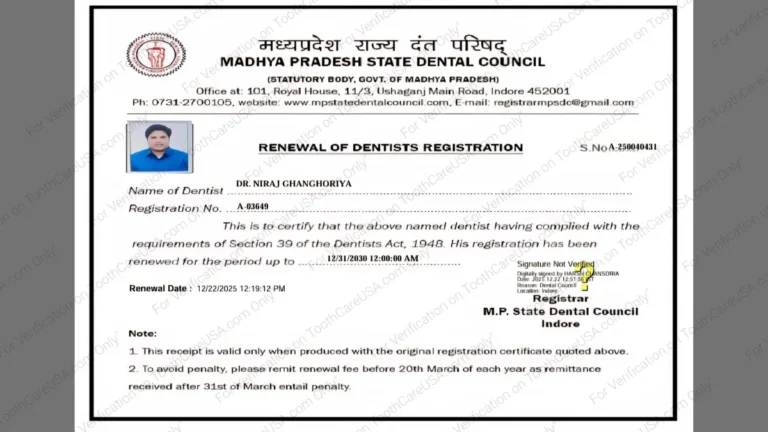
Dr. Niraj Ghanghoriya is a passionate dental surgeon with over 12 years of experience in clinical dentistry. He completed his BDS from the prestigious Sri Aurobindo Institute of Dentistry in 2012 and specializes in painless root canals, smile makeovers, and preventive oral care. He is the Founder of ToothCareUSA.com and a registered Dental Surgeon (Reg No: A-03649) based in Indore. Known for his patient-first approach and clear communication, Dr. Ghanghoriya aims to make dental knowledge accessible to everyone. When he’s not in the clinic, he enjoys writing informative dental blogs to help people take better care of their oral health. He reviews every article on this site to ensure medical accuracy and patient safety.