Author: Dr. Niraj Ghanghoriya, Dental Specialist Website: ToothCareUSA.com Category: Treatments & Surgery Last Updated: January 17, 2026
Introduction
In my years of practice at ToothCareUSA, one of the most common fears I hear from patients isn’t just about cavities—it’s about losing their teeth to gum disease. If you are reading this, you might have been told you have “periodontitis” or need “deep cleaning,” and you are understandably worried.
You are not alone. According to recent CDC data, over 47% of adults aged 30 and older in the USA have some form of periodontal disease. The good news? It is treatable. Whether you are facing early gum inflammation or need advanced surgery, modern dentistry offers solutions and Periodontal Treatment that are less painful and more effective than ever before.
In this comprehensive guide on Periodontal Treatment, I will walk you through everything from basic maintenance to advanced surgical recovery. My goal is to demystify these clinical terms so you can walk into your next appointment with confidence.
Periodontal Treatment
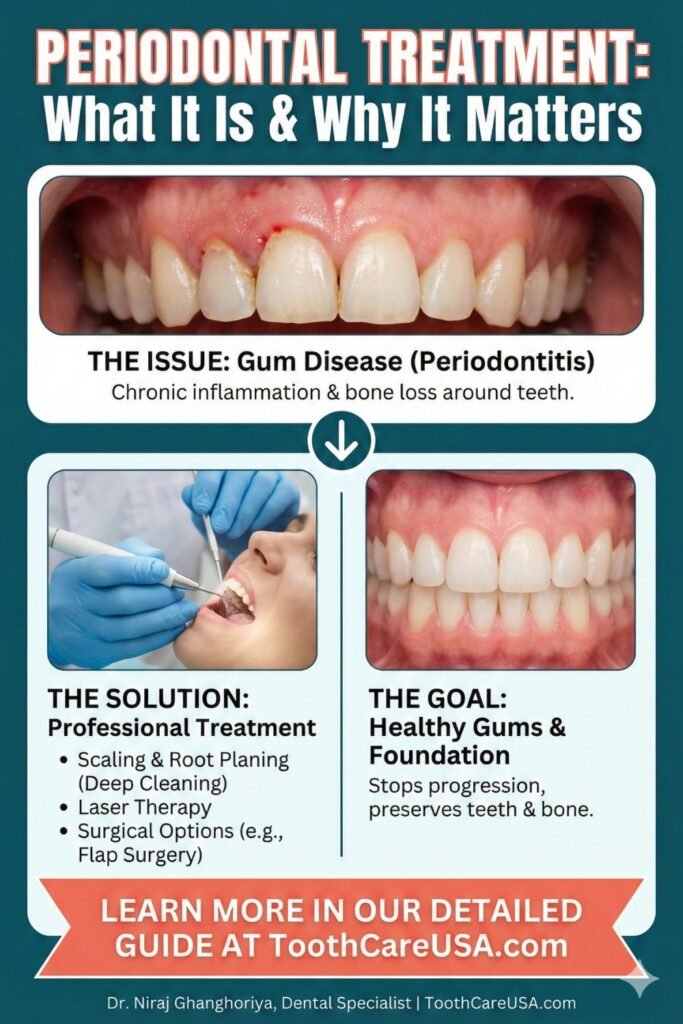
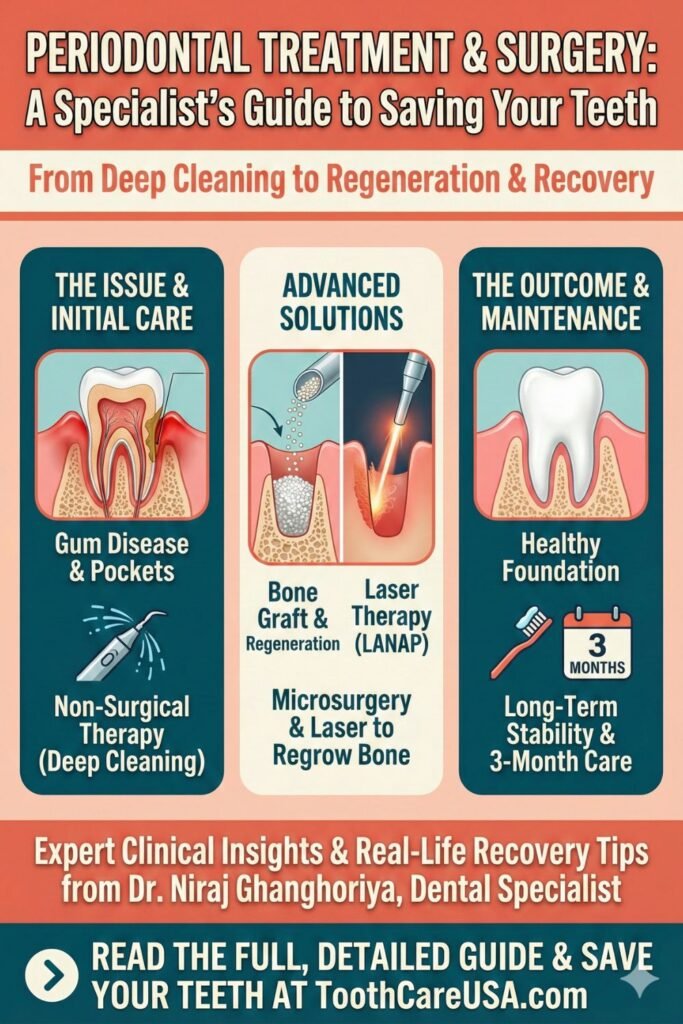
When we talk about periodontal treatment, we are discussing a range of therapies designed to halt the progression of gum disease (periodontitis). Periodontitis is not just “bad breath” or “bleeding gums”; it is a chronic bacterial infection that destroys the bone supporting your teeth. Without treatment, teeth become loose and eventually fall out.
In my clinic, I always tell patients: Healthy gums are the foundation of a healthy smile. You wouldn’t build a house on a sinking swamp, and you shouldn’t invest in crowns or veneers if your gum foundation is infected.
The type of treatment you need depends entirely on the severity of your disease. We grade gum disease in stages (Stage I to IV). Early-stage treatment is non-invasive, focusing on removing the bacterial load. Advanced stages often require surgical intervention to regenerate lost bone. The ultimate goal of any periodontal treatment is simple: reduce inflammation, stop bone loss, and reattach the gums to the teeth.
Dr. Niraj’s Clinical Tip: “If your gums bleed when you floss, that is not normal. It is an active infection. Don’t wait for pain to see a specialist—gum disease is often a ‘silent killer’ of teeth because it doesn’t hurt until it’s too late.”
Periodontal Maintenance
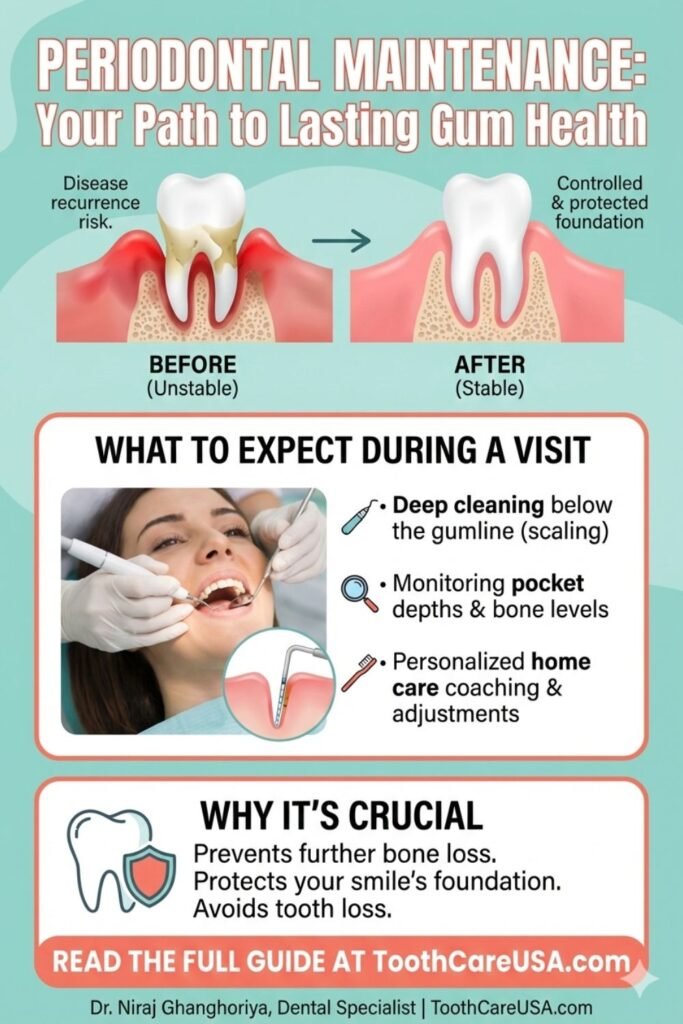
Once active gum disease is brought under control, you enter a phase we call periodontal maintenance. This is different from a regular dental cleaning (prophylaxis) that you might get every six months.
Think of periodontal maintenance as “management” rather than “cure.” Gum disease is a chronic condition, much like diabetes or high blood pressure. Once you have had it, you are always susceptible to a relapse. During a maintenance visit—typically scheduled every 3 to 4 months—we go deeper than a regular cleaning. We carefully instrument the gum pockets to disrupt bacterial colonies that re-form faster in patients with a history of periodontitis.
Why every 3 months? Research shows that periodontal bacteria regrow to destructive levels within 90 days. If we wait six months, we allow the infection to re-establish itself, causing more bone loss.
Dr. Niraj’s Clinical Tip: “Patients often ask if they can go back to 6-month cleanings. My answer is usually no. The 3-month cycle is your safety net. Skipping just one maintenance appointment can allow pockets to deepen again.”
Periodontal Surgery
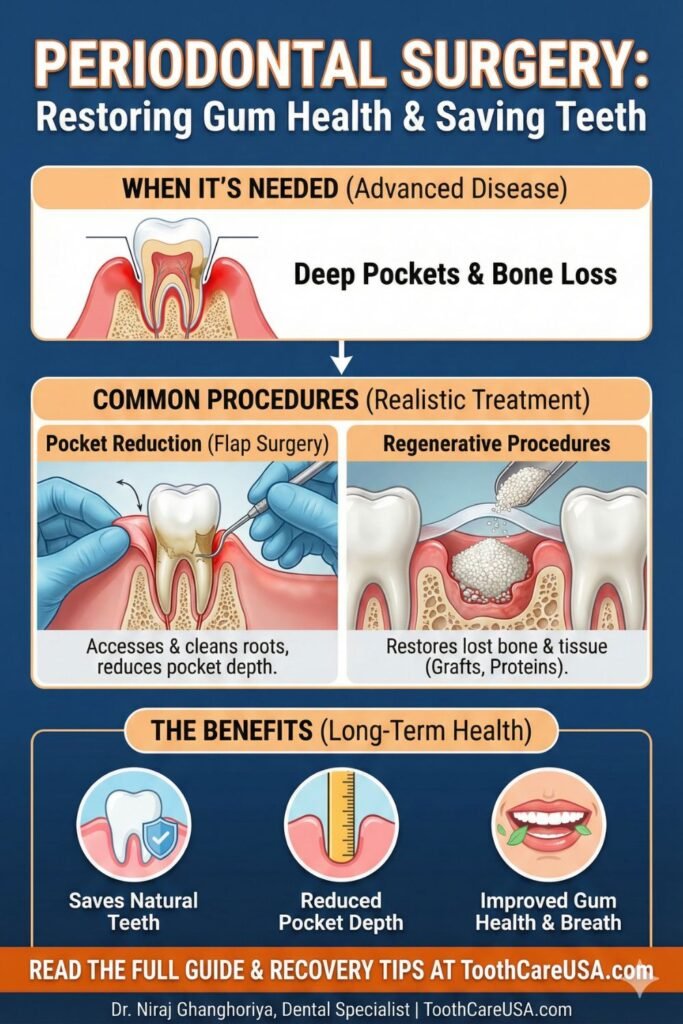
Hearing the word “surgery” is scary, but periodontal surgery is often necessary when non-surgical methods in Periodontal Treatment haven’t effectively reduced the pocket depths. If you still have pockets deeper than 5mm after a deep cleaning, we cannot keep that area clean, and neither can you. It becomes a sanctuary for aggressive bacteria.
Modern periodontal surgery is microsurgical. We use tiny instruments and often magnification to gently lift the gum tissue. This gives us direct visibility to clean the deep calculus (tartar) stuck to the roots and allows us to smooth the irregular bone that traps bacteria.
There are different types of surgeries, including pocket reduction surgery, regenerative procedures, and soft tissue grafts. The outcome we are looking for is “pocket reduction.” By reducing the pocket depth, we make it possible for you to brush and floss effectively again, preserving the tooth for decades.
Dr. Niraj’s Clinical Tip: “Don’t fear the procedure; fear the alternative. Surgery takes about an hour, but losing a tooth affects your chewing and confidence forever. With local anesthesia, the procedure itself is completely painless.”
Periodontal Cleaning
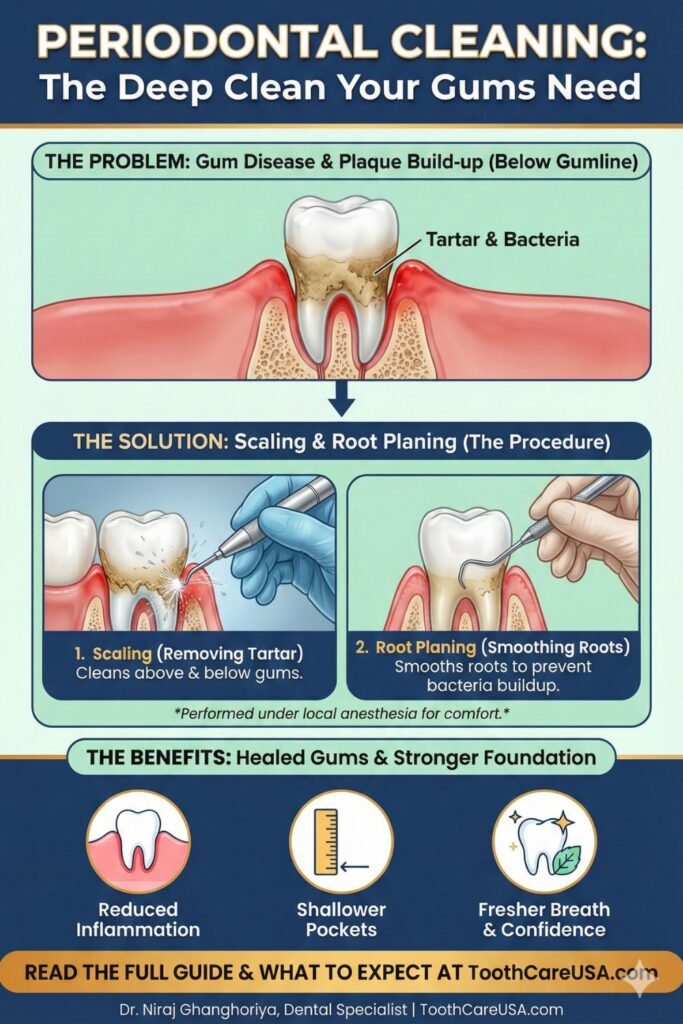
Patients often confuse a periodontal cleaning with a “deep cleaning.” Technically, a periodontal cleaning is part of the maintenance phase we discussed earlier. It is specialized care for patients who have already been diagnosed with periodontal disease.
In a standard cleaning (prophylaxis) for a healthy patient, we mostly polish the crowns of the teeth (above the gumline). In a periodontal cleaning, we are working below the gumline. We use ultrasonic scalers that vibrate at high speeds to flush out toxins and bacteria from the root surfaces.
This procedure is vital because your toothbrush bristles can only reach about 1-3mm below the gums. If you have 5mm pockets, you are physically unable to clean the bottom 2mm. That is where I come in. My job during this cleaning is to reach the areas you cannot.
Dr. Niraj’s Clinical Tip: “You might experience some sensitivity after a periodontal cleaning. This is temporary. Using a sensitivity toothpaste like Sensodyne for a few days before and after your appointment can make a huge difference.”
Periodontal Scaling
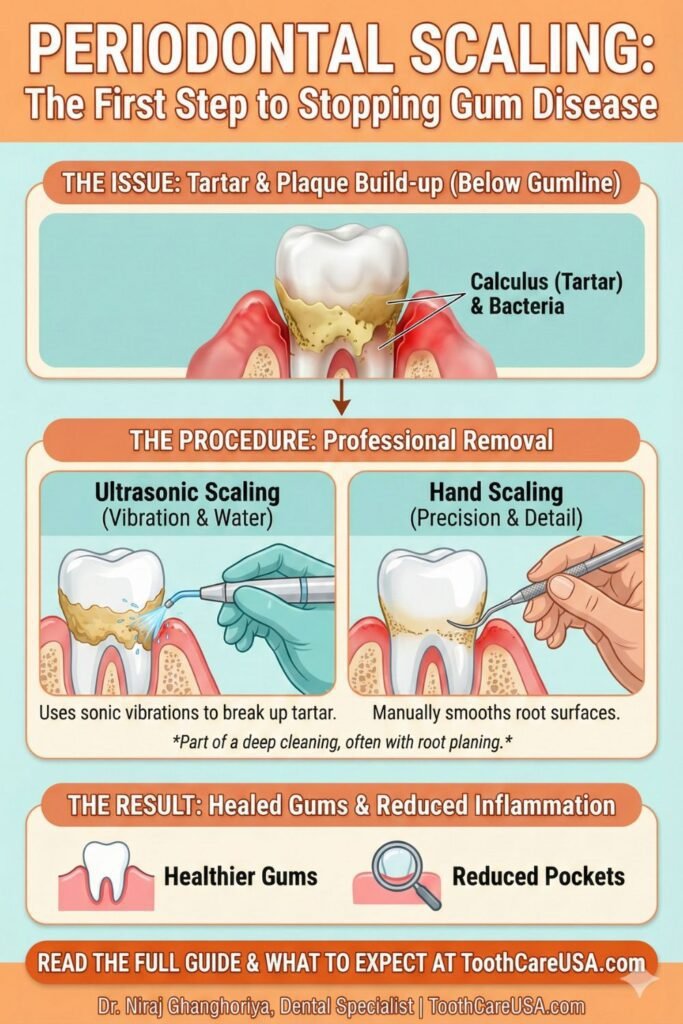
Periodontal scaling is the “scraping” part of the “Scaling and Root Planing” (SRP) procedure. It is the gold standard, first-line treatment for gum disease.
Calculus (tartar) is plaque that has hardened into a cement-like substance. Once it hardens, you cannot brush it off. It sticks to your teeth like barnacles on a ship’s hull. Scaling involves using specialized manual instruments (scalers) and ultrasonic devices to mechanically vibrate and chip these deposits off the tooth surfaces.
We perform scaling both above the gumline (supragingival) and below the gumline (subgingival). The subgingival scaling is critical because that is where the immune system attacks the bone. If we leave even a microscopic piece of tartar on the root, the gums will remain inflamed.
Dr. Niraj’s Clinical Tip: “We usually numb the area for scaling to ensure you are comfortable. If you are anxious, ask for ‘topical gel’ first. It numbs the gum surface before the anesthetic is even administered.”
Periodontal Flap Surgery
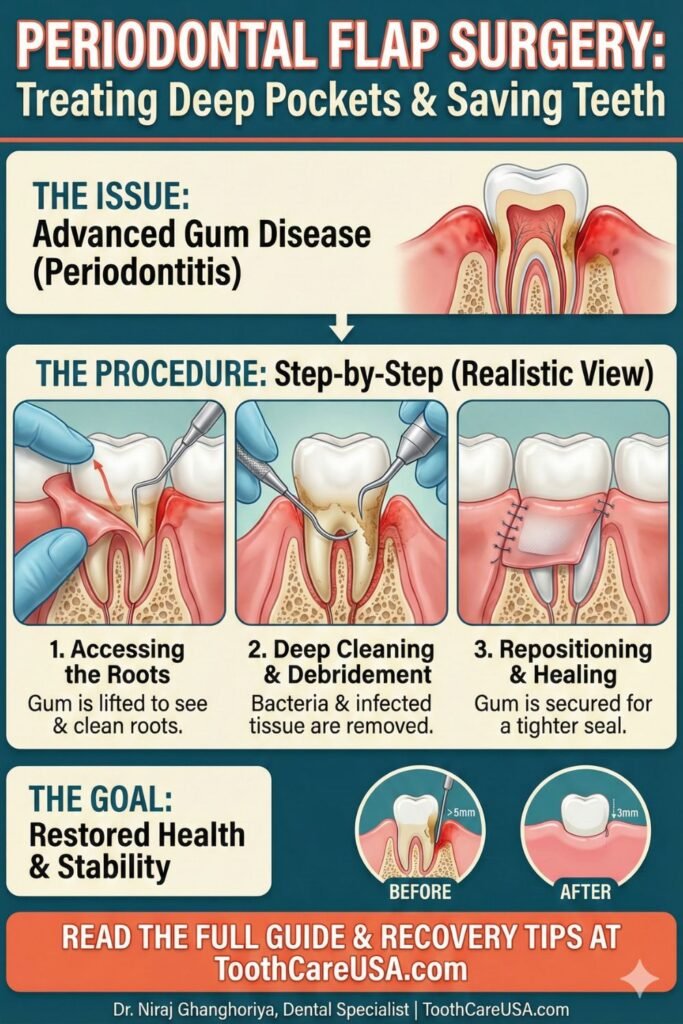
Periodontal flap surgery is a traditional yet highly effective method for treating moderate to advanced periodontitis. The term “flap” refers to the technique: we make a small incision in the gum tissue to gently separate it from the teeth and bone, like lifting the flap of an envelope.
Why do we do this? It provides access. In deep pockets (6mm+), blind scaling isn’t enough because we can’t see the roots. By lifting the gum, I can visualize the root surface perfectly, remove all the infected granulation tissue, and clean the roots thoroughly.
Once the area is clean, I might re-contour the bone if it’s jagged (osseous surgery) and then suture the gums back in place. The gums are typically stitched tighter around the tooth to eliminate the deep pocket.
Dr. Niraj’s Clinical Tip: “The goal of flap surgery is accessibility. It allows us to reset the clock on your gum health. Recovery is faster than you think—most patients are back to work the next day with just over-the-counter pain meds.”
Periodontal Regeneration
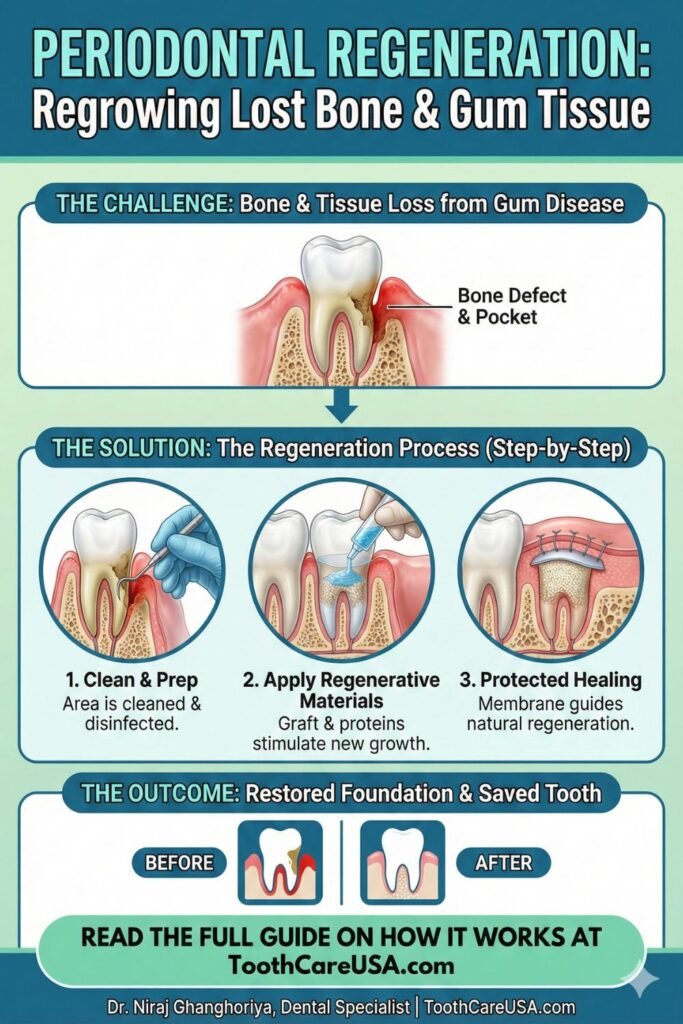
Periodontal regeneration is one of the most exciting advancements in my field. In the past, if you lost bone support, it was gone forever. Now, in specific cases, we can actually regrow lost bone and tissue.
This procedure typically uses biological modifiers or barrier membranes. We might place a bone graft (particles of bone) into the defect caused by the disease. We then cover it with a special membrane that blocks the fast-growing gum tissue from invading the space. This allows the slower-growing bone cells to populate the area and regenerate.
I also frequently use Enamel Matrix Derivatives (like Emdogain), which mimic the proteins involved in tooth development, tricking the body into growing new attachment fibers. This isn’t magic; it’s biology, and it can save teeth that were previously considered “hopeless.”
Dr. Niraj’s Clinical Tip: “Regeneration works best in vertical defects—deep, narrow holes in the bone. It is less effective for horizontal bone loss (where the bone is evenly lower). Early detection allows us to catch these defects when they are still regenerable.”
Periodontal Laser
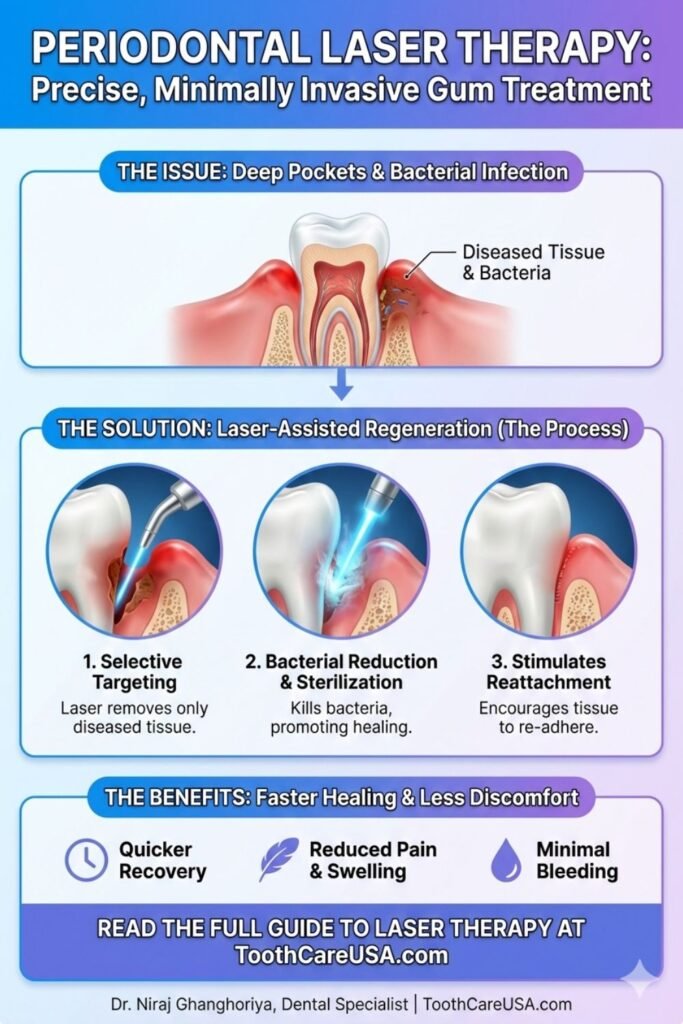
Periodontal laser therapy (often called LANAP or laser-assisted therapy) is a popular alternative to traditional surgery for many of my patients who are anxious about scalpels or sutures.
Lasers work by using specific wavelengths of light to target and kill the dark, pigmented bacteria causing gum disease, while leaving the healthy human tissue unharmed. The laser energy also vaporizes the diseased tissue inside the pocket and stimulates the blood clot to seal the gum against the tooth.
The benefits? Less bleeding, less swelling, and a generally faster recovery time compared to traditional flap surgery. However, lasers are not a magic wand for every case. They are a tool, and their effectiveness depends heavily on the skill of the operator.
Dr. Niraj’s Clinical Tip: “Laser treatment is fantastic, but it must be accompanied by thorough cleaning. The laser kills bacteria, but it doesn’t remove hard tartar. We often use a hybrid approach—ultrasonic cleaning followed by laser sterilization.”
Non Surgical Periodontal Therapy
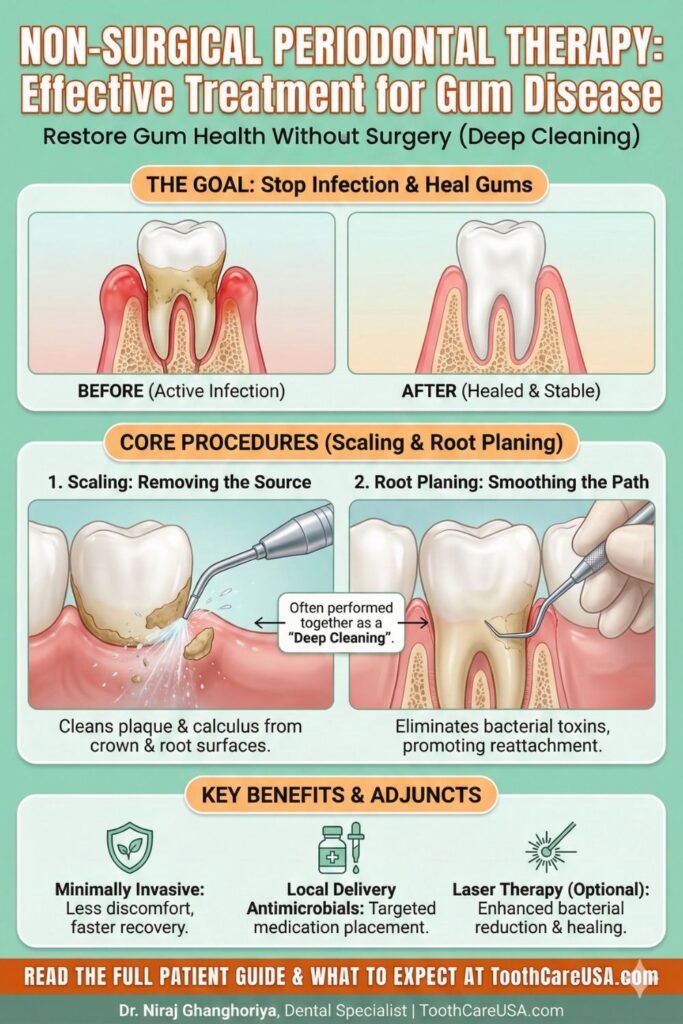
Non-surgical periodontal therapy is the broad term for “Scaling and Root Planing” (SRP). This is always the first step in treating periodontitis. Before we ever consider surgery, we perform a rigorous round of non-surgical therapy.
This involves cleaning the root surfaces (root planing) to make them smooth. Bacteria and toxins embed themselves into the rough cementum of the root. By smoothing this surface, we make it harder for bacteria to stick and easier for your gums to reattach.
Studies show that non-surgical therapy alone can resolve gingivitis completely and reduce pocket depths by 1-2mm in periodontitis cases. For many patients, this is the only treatment they ever need, provided they stick to their maintenance schedule.
Dr. Niraj’s Clinical Tip: “Success here is a 50/50 partnership. I do the cleaning, but you must do the home care. If you don’t floss daily after non-surgical therapy, the bacteria will return within weeks, rendering the treatment useless.”
Periodontal Surgery Recovery
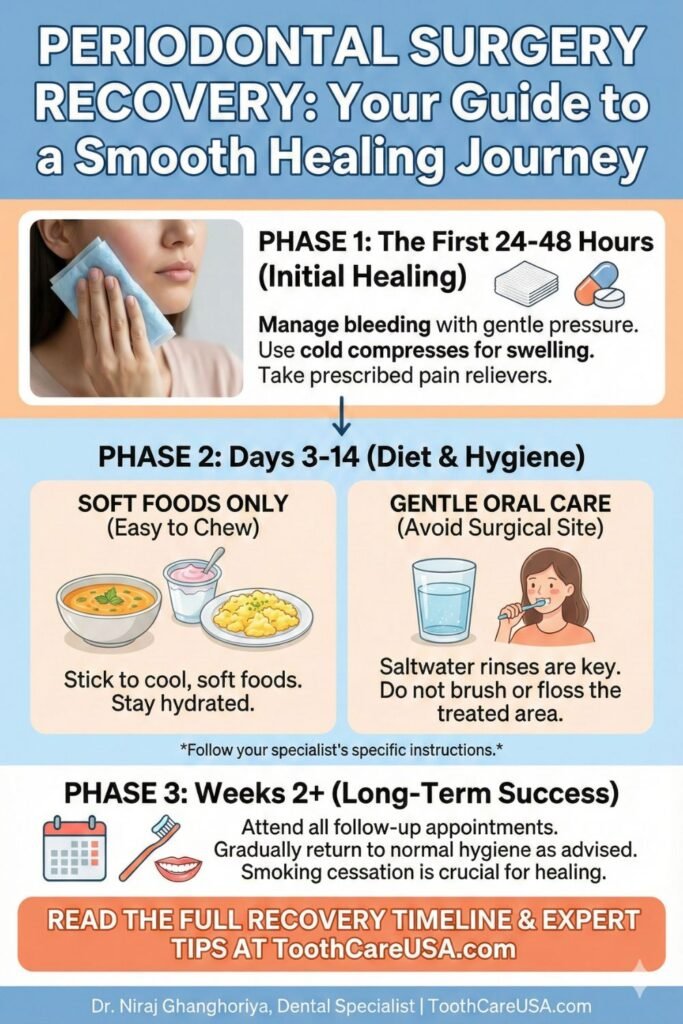
Understanding periodontal surgery recovery is key to a smooth healing process. While every patient heals differently, here is the general timeline I give my patients at ToothCareUSA:
- First 24 Hours: Expect minor bleeding and some swelling. Do not spit or rinse vigorously, as you want the blood clot to stabilize. Use an ice pack on your cheek (20 mins on, 20 mins off) to minimize swelling.
- Days 2-3: Swelling usually peaks here. Stick to a soft diet (yogurt, soup, mashed potatoes). Avoid spicy or crunchy foods.
- Days 7-10: By now, the gums should look much better. Stitches (if not dissolvable) are usually removed at this stage. You can slowly return to your normal diet, but continue to be gentle near the surgical site.
- Months 1-3: Internal bone healing and tissue maturation continue.
Dr. Niraj’s Clinical Tip: “Smokers beware: Nicotine constricts blood vessels and drastically slows down healing. If you smoke during recovery, you risk the failure of the surgery and infection. This is the best time to try quitting.”
Conclusion & Key Takeaways
Treating gum disease is a journey, not a single event. Whether you need non-surgical scaling or regenerative surgery, the goal is always the same: keeping your natural teeth for life.
Key Takeaways:
- Early Action: The sooner you treat gum disease, the less invasive the treatment.
- Maintenance is Key: 3-month cleanings are essential to prevent relapse.
- Modern Options: From lasers to regeneration, we can save teeth today that would have been extracted 20 years ago.
If you are experiencing bleeding gums, loose teeth, or bad breath, please visit us at ToothCareUSA.com or see your local specialist. Your health is worth it.
References & Further Reading
- CDC (Centers for Disease Control and Prevention): Periodontal Disease in Adults (Age 30 or Older).
- American Academy of Periodontology (AAP): Types of Gum Disease & Treatments.
- Journal of Clinical Periodontology: Success rates of non-surgical vs. surgical therapy.
- National Institute of Dental and Craniofacial Research: Periodontal (Gum) Disease Statistics.
Disclaimer: This article is for informational purposes only and does not constitute medical advice. Always consult with a dental professional for diagnosis and treatment.
FAQ on Periodontal Treatment, Maintenance, and Surgery.
Is periodontal surgery painful?
No, you should not feel any pain during the procedure. In my practice, we use local anesthesia to completely numb the area before starting. After the anesthesia wears off, most patients experience mild to moderate tenderness for 24–48 hours. This is typically managed easily with over-the-counter pain relievers like ibuprofen.
Dr. Niraj’s Insight: I often tell patients that the anxiety before the appointment is usually worse than the procedure itself.
Can gum disease be cured without surgery?
It depends on the stage of the disease. Early-stage gum disease (Gingivitis) is reversible with professional cleaning and improved hygiene. Moderate disease (Periodontitis) cannot be “cured” but can be stabilized with non-surgical deep cleaning (Scaling and Root Planing). However, if pockets exceed 6mm, surgery is often the only effective way to reach and clean the infection.
How long does it take to recover from periodontal surgery?
Most patients return to normal light activities within 24 to 48 hours. While complete internal healing takes weeks, the “social” recovery is fast:
Day 1-2: Expect minor swelling and sensitivity.
Day 7-10: Stitches are usually removed (if not dissolvable), and gums look pinker.
Week 2+: You can usually return to your normal diet.
Do gums grow back after periodontal treatment?
No, lost gum tissue does not naturally regrow on its own. Once gum tissue has receded due to disease, it is gone forever. However, treatment stops further loss and allows the remaining gums to tighten and reattach to the teeth. If the recession is cosmetically concerning or causing sensitivity, we can restore the gum line using gum grafting surgery.
How much does periodontal surgery cost in the USA?
Costs typically range from $600 to $3,000 per quadrant (quarter of the mouth). The price varies significantly based on the severity of the infection and whether bone grafting or regenerative materials (like Emdogain) are needed. Most dental insurance plans cover between 50% to 80% of these medically necessary procedures.
Dr. Niraj’s Advice: Always ask for a “pre-determination” of benefits from your insurance before starting treatment so you know your exact out-of-pocket cost.
Periodontal Disease: Your Comprehensive Resource
I invite you to read the articles below for a complete breakdown of gum disease causes, clinical treatments, and my recommended home care routines.
Dental Implant Cost Chicago: The 2026 Price Guide & Hidden Fees S1A5
Author: Dr. Niraj Ghanghoriya (Dental Specialist) Micro-Note: Educational purposes only. See full disclaimer below. Quick…
The Real Cost of Dental Implants in Indiana: A Specialist’s Transparent Guide (2026) S1A4
By Dr. Niraj Ghanghoriya (Dental Specialist).Educational purposes only. See full disclaimer below. Quick Answer: What…
Price for Mini Dental Implants (2026 Cost Guide & Fee Breakdown) S1A3
Author: Dr. Niraj Ghanghoriya, (Dental Specialist), Educational purposes only. See full medical disclaimer below. Quick…
The Cost of Zirconia Implants: Why ‘Cheap’ Ceramic Can Cost You Your Bone
Dr. Niraj’s Quick Answer (2026 Estimate) In the US, Cost of Zirconia Implants(single) lies between…
Bolsa Periodontal: A Multilingual Guide to Gum Care,Bolsa Periodontal(Global Periodontal Health)(Blog 6)
Author: Dr. Niraj Ghanghoriya (Dental Specialist) | Website: ToothCareUSA.com Category: Global Periodontology (International Resources) Introduction…
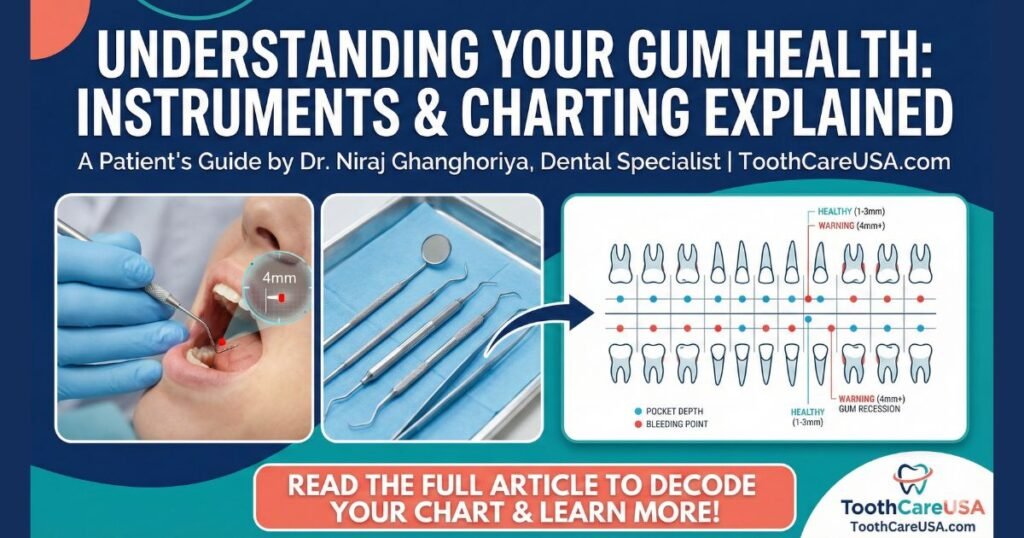
Decoding the Dentist’s Code: Understanding Periodontal Instruments & periodontal chart (Blog 5)
By Dr. Niraj Ghanghoriya, Dental Specialist | ToothCareUSA.com Key Takeaways: The “Numbers”: Hearing “3, 2,…

Dr. Niraj Ghanghoriya is a passionate dental surgeon with over 12 years of experience in clinical dentistry. He completed his BDS from the prestigious Sri Aurobindo Institute of Dentistry in 2012 and specializes in painless root canals, smile makeovers, and preventive oral care. Known for his patient-first approach and clear communication, Dr. Ghanghoriya aims to make dental knowledge accessible to everyone. When he’s not in the clinic, he enjoys writing informative dental blogs to help people take better care of their oral health.