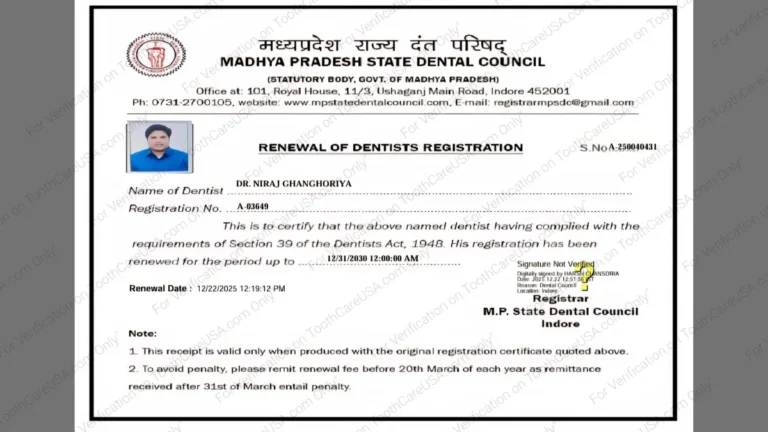
Author: Dr. Niraj Ghanghoriya Category: Dental Health / Myth Busting Reading Time: 10 Minutes
In the age of the internet, everyone seems to have advice on how to take care of their teeth. From viral TikTok trends to old wives’ tales passed down through generations, it is easy to get confused with dental myths to understand what is actually good for your smile.
As a dentist, I often see patients at ToothCareUSA.com who have unknowingly caused irreversible damage to their teeth or gums simply because they followed bad advice they found online.
Today, we are setting the record straight. I’m debunking the 10 biggest myths in dentistry to help you save your enamel, your gums, and your peace of mind.
Myth #1: “The Harder I Brush, The Cleaner My Teeth Will Be”
This is perhaps the most damaging myth I see in my practice. Many patients believe that scrubbing their teeth with force, like scrubbing a dirty floor, will result in a brighter smile.
The Fact: Plaque is soft and sticky. You don’t need force to remove it—you need technique.
Brushing too hard acts like sandpaper on your teeth. Over time, it aggressively wears away your enamel (the white outer layer), leading to permanent sensitivity and yellowing as the darker dentin underneath is exposed. Even worse, it causes your gums to recede (pull back), exposing the vulnerable roots of your teeth.
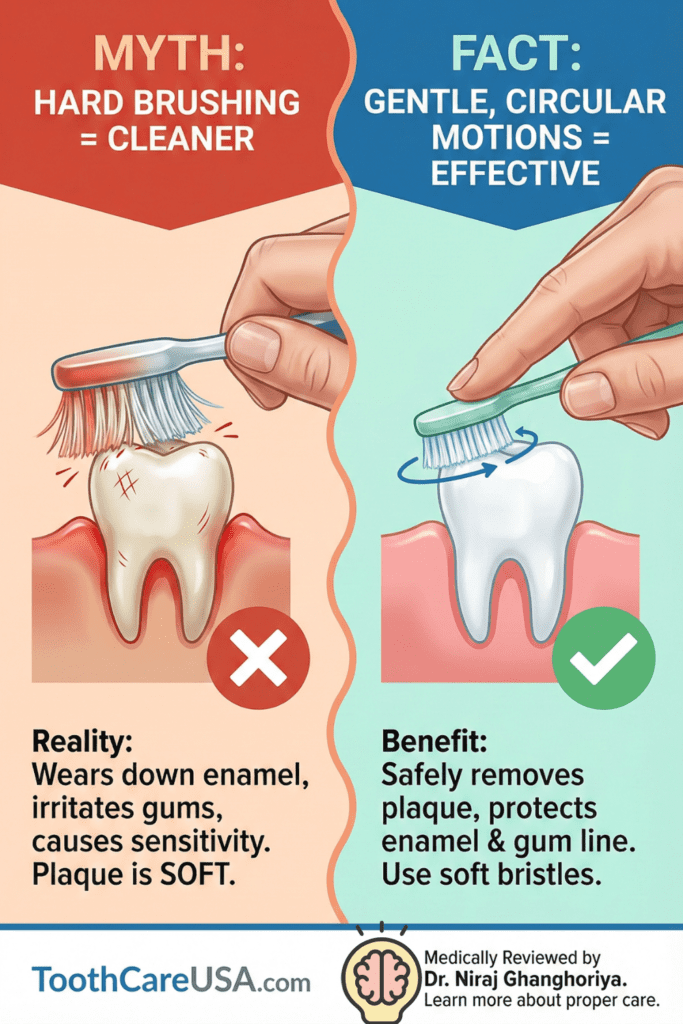
Dr. Niraj’s Advice:
- Throw away your “Medium” or “Hard” bristle toothbrush today.
- Switch to a Soft or Ultra-Soft manual brush or an electric toothbrush with a pressure sensor.
- Use gentle, circular massaging motions, tilting the brush at a 45-degree angle towards the gumline.
Myth #2: “Root Canals Are Extremely Painful”
The words “Root Canal” strike fear into the hearts of many patients. It has an outdated reputation as the most painful procedure in dentistry.
The Fact: A root canal doesn’t cause pain; it cures it.
The intense pain you associate with a root canal actually comes from the severe infection and inflammation inside your tooth before you get treated. With modern dental anesthesia and techniques, the procedure itself is typically no more uncomfortable than getting a standard filling. It relieves your pain almost instantly.
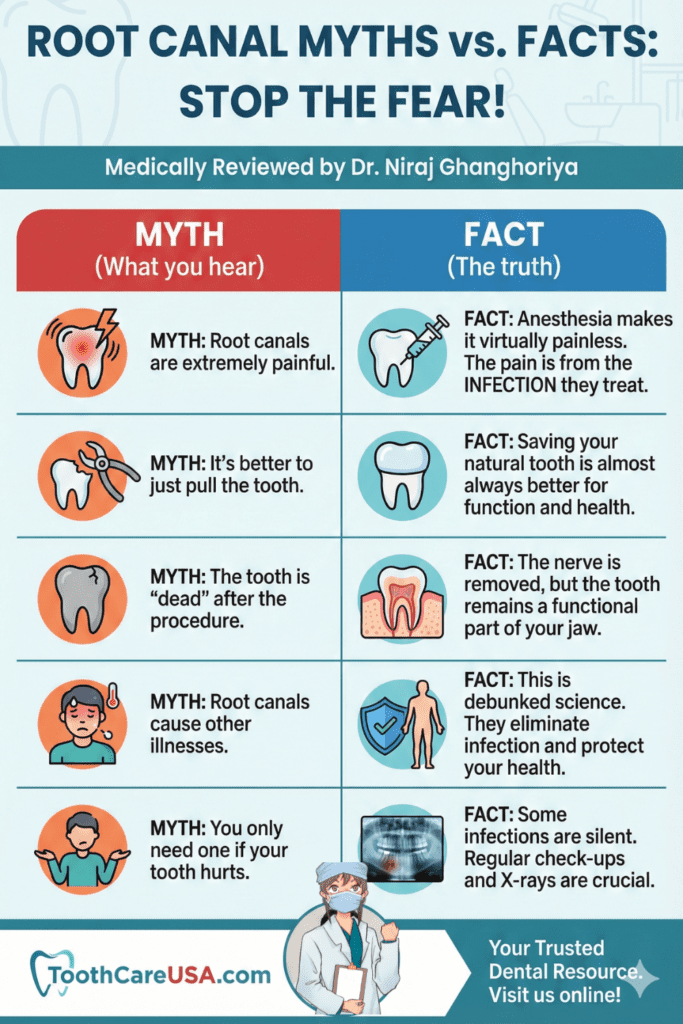
Dr Niraj’s Advice: If you have a severe, throbbing toothache, sensitivity to heat, or swelling, don’t wait. The earlier we treat the infection with a root canal, the higher the chance of saving the
Myth #3: “If My Gums Bleed, I Should Stop Flossing”
When you see blood in the sink while flossing, your natural instinct is to stop because you think you have injured yourself. This is dangerous logic!
The Fact: Healthy gums do not bleed. If your gums bleed when you floss or brush, it is a sign of Gingivitis (active inflammation).
The bleeding happens because bacteria and plaque build-up are trapped between your teeth, irritating the gum tissue. If you stop flossing, the bacteria stay there, and the disease gets worse, eventually leading to irreversible periodontal disease and tooth loss.
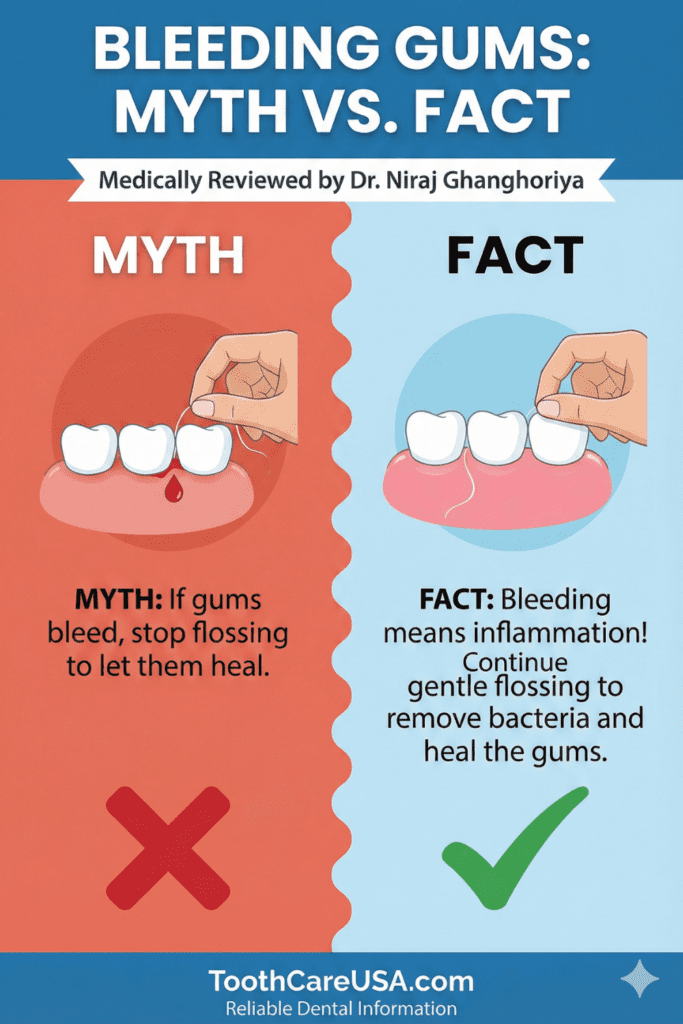
Dr. Niraj’s Advice:
- Do not stop flossing. Bleeding is a signal to be more diligent, not less.
- Floss gently but thoroughly once a day. After about 7-10 days of consistent bacterial removal, the inflammation usually subsides, and the bleeding will stop.
- If bleeding persists after two weeks of good home care, schedule a check-up at ToothCareUSA.com.
Myth #4: “Only Candy Causes Cavities”
We all know we should limit sugar. But many parents and health-conscious adults are surprised when they get a cavity despite not eating much candy.
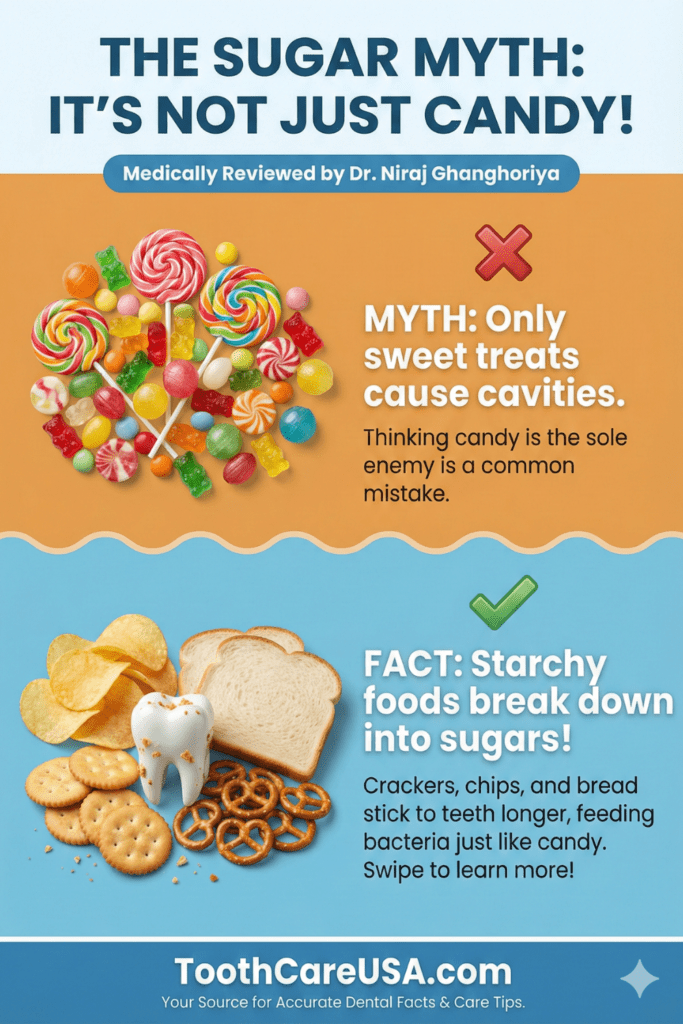
The Fact: Starchy foods—like crackers, potato chips, pretzels, and white bread—can be just as harmful as candy.
Starch is a complex carbohydrate that your saliva breaks down into simple sugars. However, unlike a piece of chocolate that melts away quickly, processed starch turns into a sticky, pasty goo that clings to the teeth and hides in the deep grooves for hours. This provides a long-term feast for cavity-causing bacteria.
Dr. Niraj’s Advice: I’m not saying you can never eat crackers or bread! But be mindful of frequency and duration.
- Drink plenty of water after eating starchy snacks to help wash away food debris.
- Ideally, brush or floss after snacking on chips or pretzels to remove the sticky residue.
Myth #5: “Charcoal Toothpaste is a Safe, Natural Whitener”
This trend exploded on social media, promising a Hollywood smile using “natural” activated charcoal. It looks cool, but the reality is damaging.
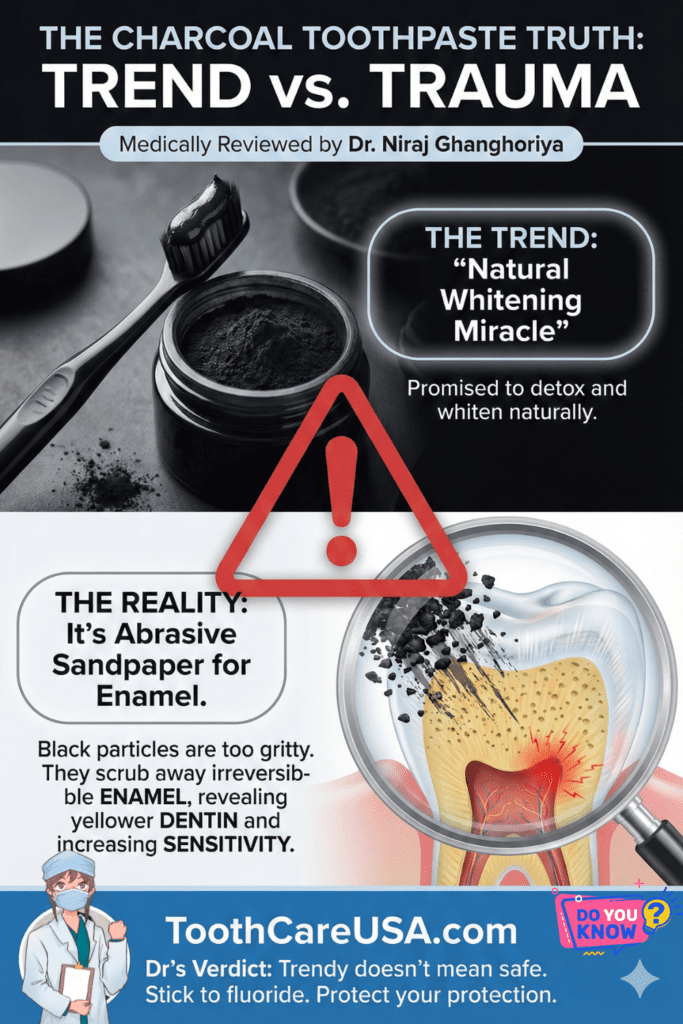
The Fact: Charcoal toothpaste is highly abrasive. Think of it as scrubbing your teeth with fine sand.
While it may scrub away some surface stains, it simultaneously scrubs away your precious enamel. Since enamel is what makes your teeth look white, thinning it actually reveals the yellowish dentin underneath, making your teeth look darker over time and causing extreme sensitivity.
Dr. Niraj’s Advice:
- Avoid toothpastes with activated charcoal, baking soda, or other harsh grits as primary ingredients.
- Look for whitening toothpastes that use chemical agents (like peroxide) rather than abrasives, and always look for the ADA Seal of Acceptance.
- For safe, effective whitening, professional in-office or custom-tray treatments are your best option.
Myth #6: “Diet Soda is Safe for Teeth Because it Has No Sugar.”
Many people switch to “diet” or “zero sugar” drinks, believing they are making a healthy choice for their teeth.
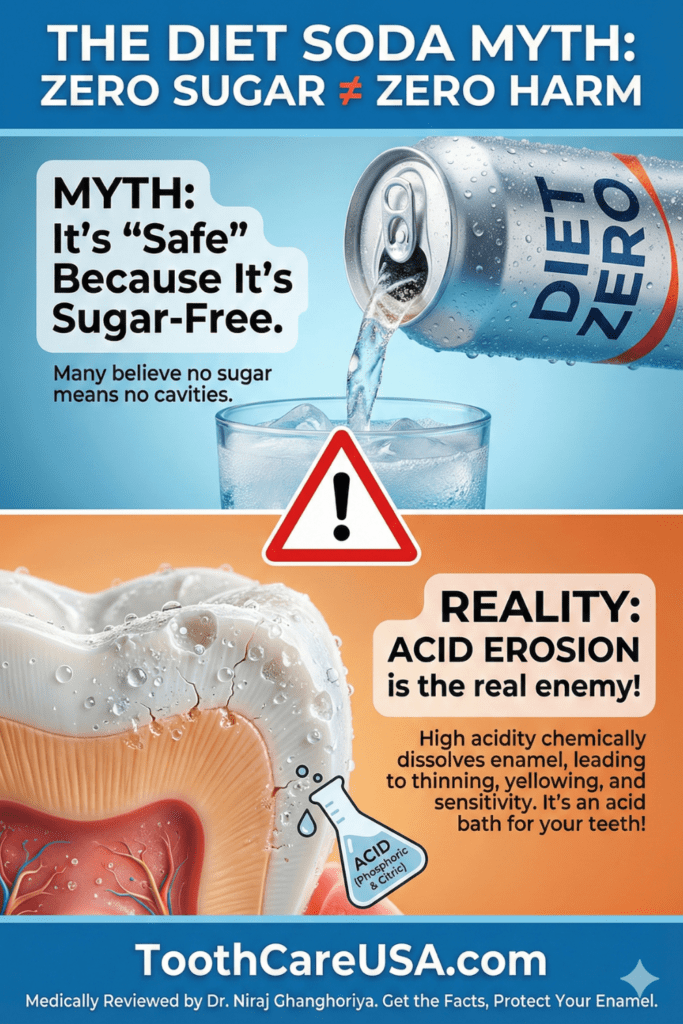
The Fact: It’s not just the sugar that causes cavities; it’s the acid.
Diet sodas, sports drinks, and sparkling waters contain high levels of phosphoric acid, citric acid, or tartaric acid. Each sip lowers the pH in your mouth, launching an “acid attack” that chemically dissolves your enamel. This “acid wear” thins teeth, making them yellow, translucent, and sensitive, regardless of sugar content.
Dr. Niraj’s Advice:
- Water is always the best beverage for your teeth.
- If you drink acidic beverages, use a straw to bypass your teeth.
- Never brush immediately after drinking soda. Your enamel is softened by the acid, and brushing will scrub it away. Wait at least 30 minutes.
Myth #7: “Baby Teeth Don’t Matter Because They Just Fall Out”
This is a common and regrettable misconception among parents. It often leads to premature tooth loss in children, causing long-term problems.
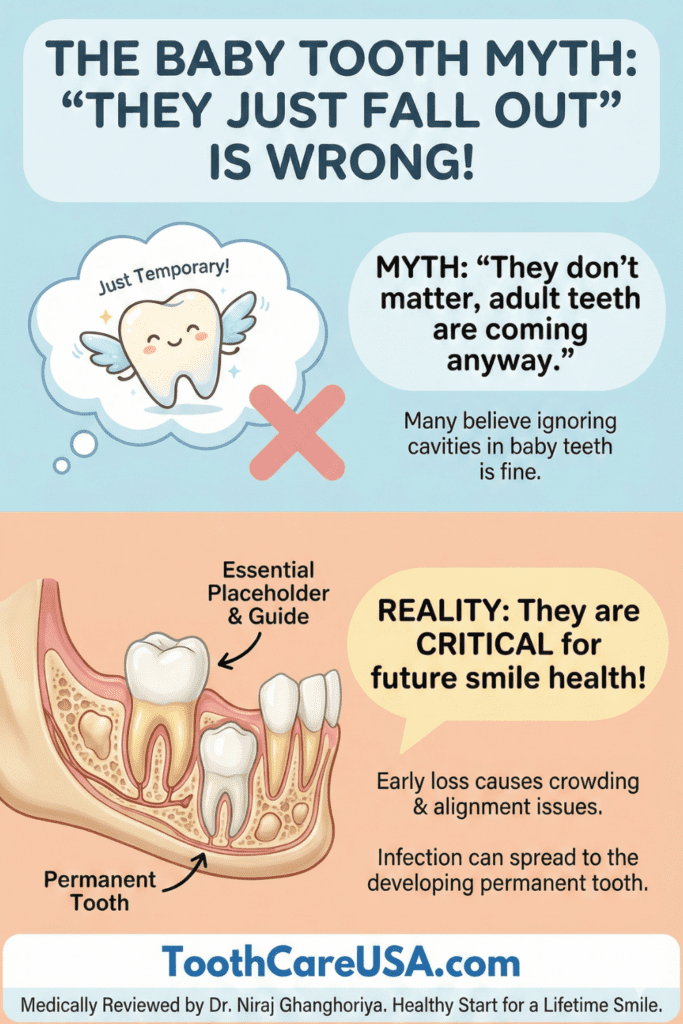
The Fact: Baby (primary) teeth are critical place-holders for adult teeth.
They guide the permanent teeth into their proper positions. If a baby tooth is lost too early due to decay, surrounding teeth can drift into the empty space, causing severe crowding and alignment issues that require extensive orthodontic treatment later. Furthermore, an untreated infection in a baby tooth can spread down and damage the developing permanent tooth underneath it.
Dr. Niraj’s Advice:
- Start cleaning your child’s gums even before teeth erupt.
- Schedule their first dental visit by their first birthday (or within 6 months of their first tooth appearing).
- Treat cavities in baby teeth promptly—do not just “wait for them to fall out.”
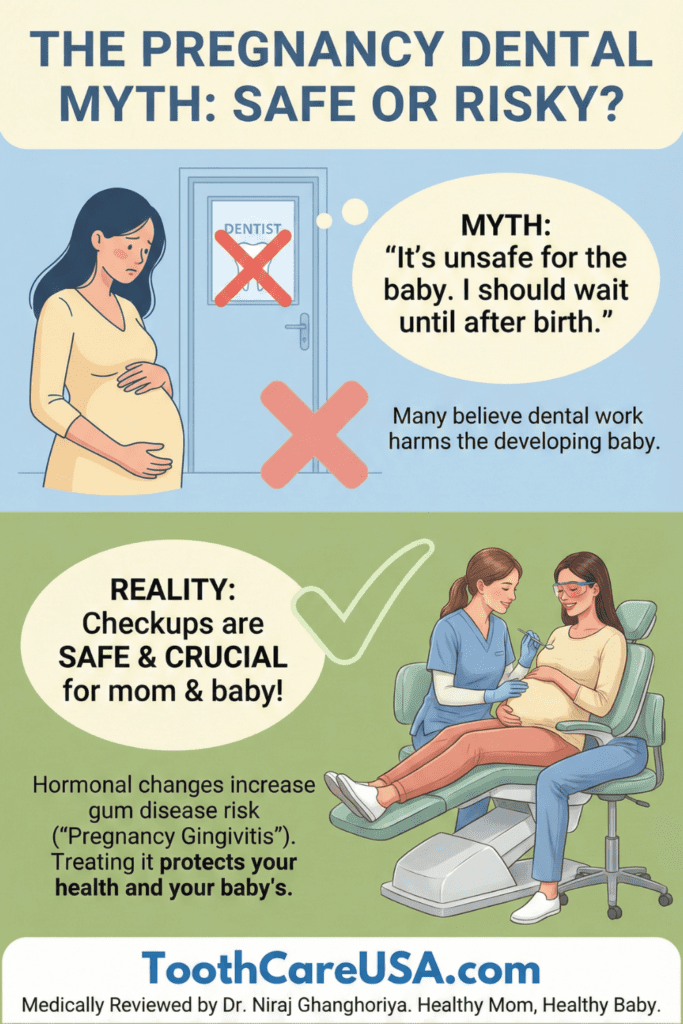
Myth #8: “Dental Visits Are Unsafe During Pregnancy”
Some expectant mothers avoid the dentist due to a misplaced fear that treatment or X-rays could harm their developing baby.
The Fact: Routine dental care is not only safe during pregnancy, but it is also crucial.
Hormonal changes during pregnancy cause an exaggerated response to plaque, leading to a condition known as “Pregnancy Gingivitis.” If left untreated, this can progress to severe gum disease, which has been linked to pre-term birth and low birth weight. Preventive cleanings are essential for both maternal and fetal health.
Dr. Niraj’s Advice:
- Tell your dentist if you are pregnant or trying to conceive.
- Keep up with your regular checkups and cleanings. The second trimester is often the most comfortable time for routine dental work.
- Modern digital dental X-rays use extremely low radiation doses and shielding, making them safe when necessary for diagnosis.
Myth #9: “If My Teeth Are White, They Must Be Healthy”
In our image-obsessed culture, we often equate a bright white smile with perfect health. This can be a deceptive and dangerous assumption.
The Fact: You can have a blindingly white smile and still have serious, silent dental problems.
Gum disease (periodontitis) is often painless in its early to moderate stages. You could have significant bone loss around your bright white teeth without knowing it. Cavities also frequently form between teeth where they aren’t visible, even in the whitest of smiles.
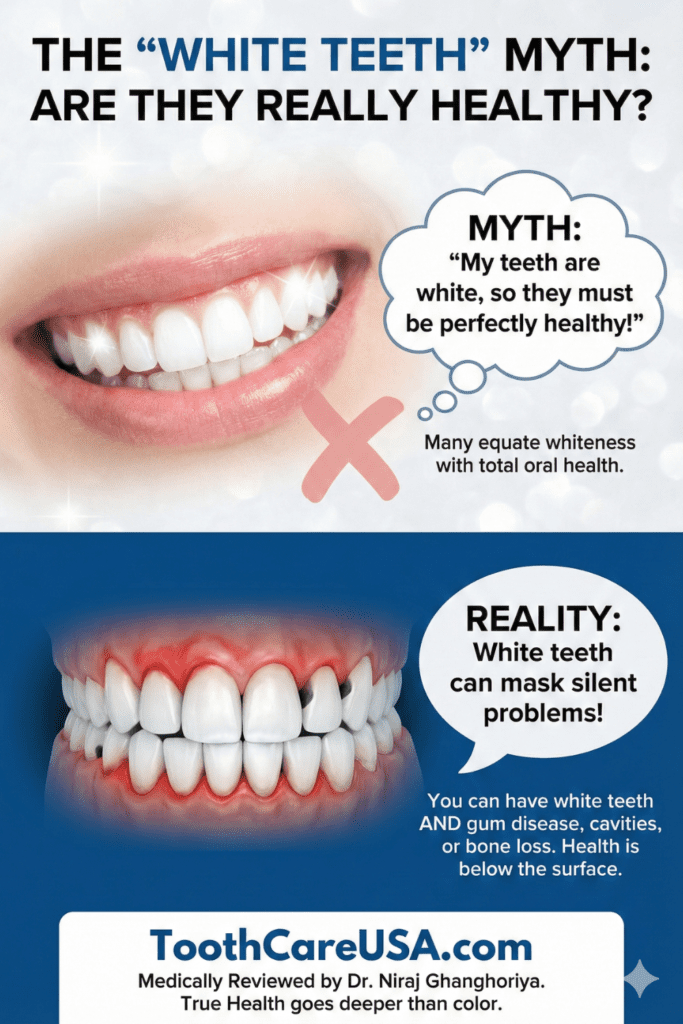
[INSERT IMAGE 9 HERE: The “White Teeth” Myth Image] (Caption: Health is more than skin deep. You can’t see gum disease or bone loss just by looking in the mirror.)
Dr. Niraj’s Advice:
- Don’t rely on the mirror for a diagnosis. Only a professional exam with X-rays can reveal what’s happening below the gumline and between teeth.
- Focus on health first—pink, firm gums that don’t bleed—and whiteness second.
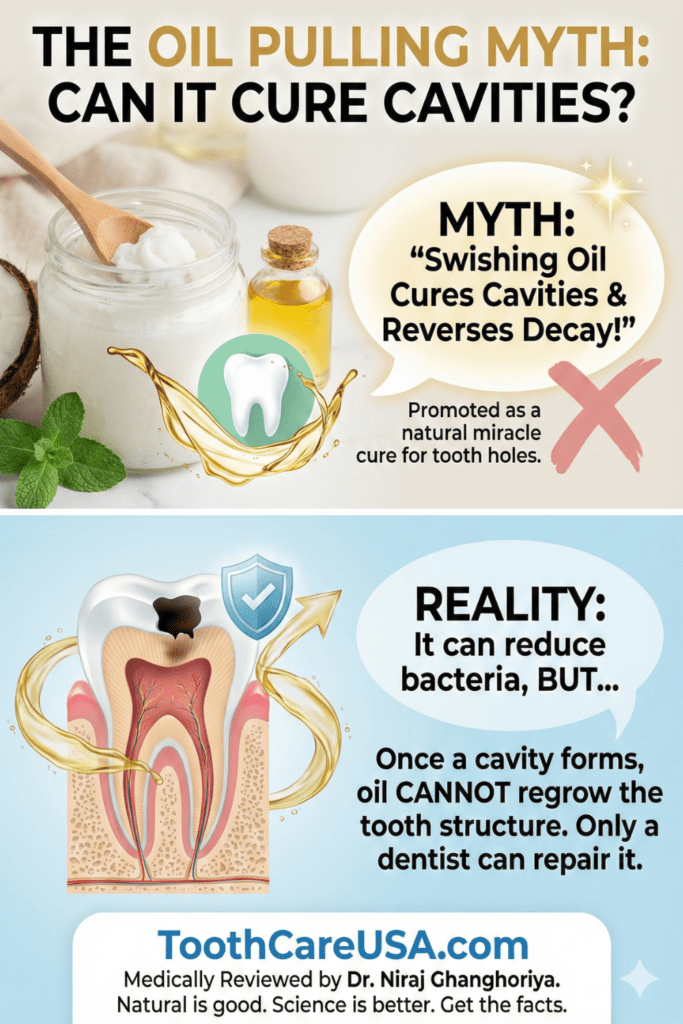
Myth #10: “Oil Pulling Can Cure Cavities”
The natural wellness community has popularised “oil pulling” (swishing coconut or sesame oil) as a miracle cure for everything from bad breath to reversing tooth decay.
The Fact: While oil pulling may help reduce some bacteria in the mouth, it cannot cure an existing cavity.
Once tooth structure is destroyed and a physical hole (cavity) has formed, no amount of oil, vitamins, or supplements can make the tooth regrow itself. The decay will continue to spread deeper into the tooth until it is physically removed and repaired by a dentist with a filling or crown.
Dr. Niraj’s Advice:
- If you enjoy oil pulling as a supplemental part of your routine, that’s fine, but do not use it as a replacement for brushing, flossing, or professional care.
- If you suspect you have a cavity, see a dentist immediately. Delaying treatment in hopes of a “natural cure” will only lead to a bigger, more expensive, and potentially painful problem later.
You are absolutely right! We discussed this concept in the planning phase, but it didn’t make it into the final text of the “10 Myths” blog post.
Since this is a high-traffic topic on Pinterest (DIY beauty hacks), it is crucial to include.
Here is the Blog Post Text and the Image Metadata for the “Lemon & Baking Soda” myth. You can add this as Myth #11 or swap it with another myth in your post.
Myth #11: “Lemon and Baking Soda is a Safe, Natural Way to Whiten”
If you scroll through Pinterest or TikTok, you will inevitably see influencers mixing lemon juice and baking soda to create a “miracle” whitening paste. It looks natural and cheap, so it must be good, right?
The Fact: This combination is a chemical recipe for disaster.
Lemon juice is highly acidic (low pH), which chemically softens and dissolves the mineral structure of your enamel. Baking soda is abrasive. When you mix them, you are essentially creating an acidic sandpaper. You aren’t just scrubbing off stains; you are scrubbing off your enamel.
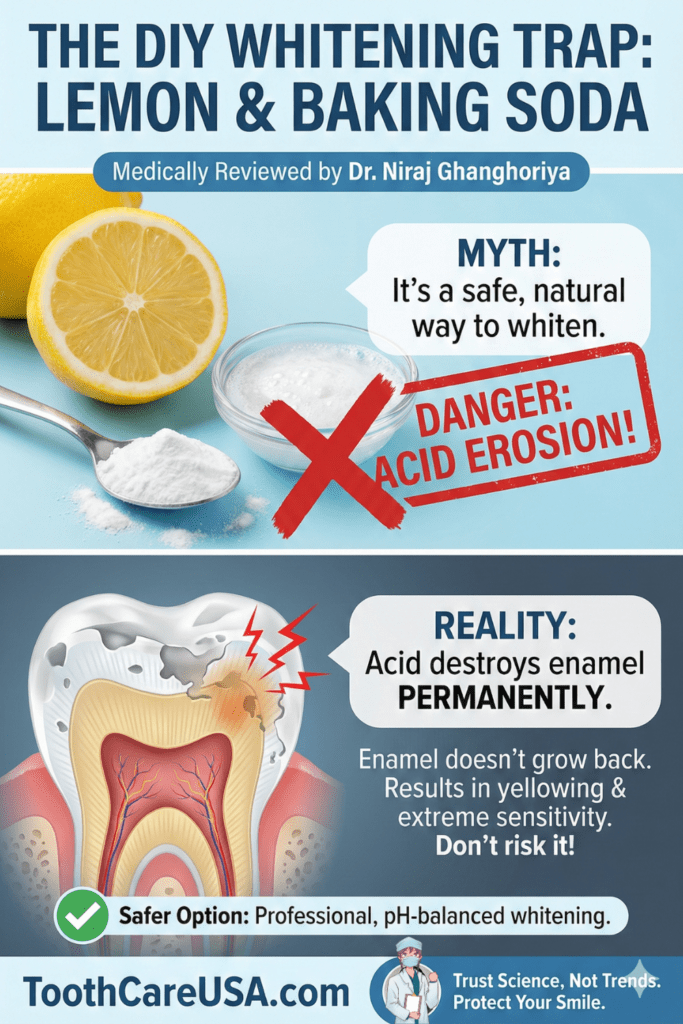
The Irony: Enamel is the white layer of your tooth. When you wear it down with acid, the yellow layer underneath (dentin) starts to show through. So, while this DIY hack might make teeth look brighter for a day, it actually makes your teeth yellower and extremely sensitive in the long run. And remember: Enamel does not grow back.
Dr Niraj’s Advice:
- Stop the scrub: If you have been using this mixture, stop immediately to preserve the enamel you have left.
- Trust Chemistry, not the Kitchen: Use whitening products that are pH-balanced.
- Safe Options: Professional whitening or ADA-approved whitening strips use ingredients that lift stains without dissolving the tooth structure.
The Bottom Line
Your oral health is an investment that affects your entire body. Don’t let trendy myths and misinformation cost you your smile. When in doubt, always turn to science-backed medicine and ask a professional.
At ToothCareUSA.com, our mission is to empower you with accurate, medically reviewed information so you can make the best decisions for your health.
Have you heard another dental rumour you want me to fact-check? Drop a comment below or schedule a consultation with Dr Niraj Ghanghoriya to get the truth about your unique smile!
Frequently Asked Questions (FAQ)
Is it safe to use baking soda to whiten teeth at home?
While baking soda can remove surface stains, it is abrasive. Using it too often or scrubbing too hard can thin your enamel permanently. It is safer to use an ADA-approved whitening toothpaste for daily use.
How often should I really visit the dentist?
For most patients with good oral health, a check-up and cleaning every 6 months is standard. However, if you have a history of gum disease, are pregnant, or have other risk factors, Dr Niraj may recommend coming in every 3 to 4 months to monitor your condition closely.
Once enamel is gone, can it grow back?
No. Unlike skin or bones, enamel contains no living cells, so it cannot regenerate. Once it is worn away by acid or abrasion, it is gone forever. This is why prevention is so critical.
📚 References & Further Reading
This article was medically reviewed by Dr. Niraj Ghanghoriya and is based on current clinical standards. For more information on these topics, please visit the following authoritative sources:
- American Dental Association (MouthHealthy): Brushing Your Teeth Correctly
- <a href=”https://www.mouthhealthy.org/all-topics-a-z/brushing-your-teeth” target=”_blank” rel=”noopener”>Read the Guidelines</a>
- American Association of Endodontists:Myths About Root Canals
- <a href=”https://www.aae.org/patients/root-canal-treatment/myths-about-root-canals/” target=”_blank” rel=”noopener”>View the Myths</a>
- Journal of the American Dental Association:Natural Teeth Whitening & Charcoal Safety
- <a href=”https://jada.ada.org/” target=”_blank” rel=”noopener”>See the Research</a>
- American Academy of Pediatric Dentistry:The Importance of Primary (Baby) Teeth
- <a href=”https://www.aapd.org/resources/parent/” target=”_blank” rel=”noopener”>Parent Resources</a>
- American Academy of Periodontology:Gum Disease and Pregnancy
- <a href=”https://www.perio.org/for-patients/gum-disease-and-other-diseases/gum-disease-and-pregnancy/” target=”_blank” rel=”noopener”>Learn More</a>
⚠️ Medical Disclaimer
The content provided on this blog and on ToothCareUSA.com is for informational and educational purposes only.
While this content is medically reviewed by Dr. Niraj Ghanghoriya, it is not intended to be a substitute for professional dental advice, diagnosis, or treatment. Never disregard professional medical advice or delay in seeking it because of something you have read on this website.
- Reading this blog does not establish a doctor-patient relationship between you and Dr Niraj Ghanghoriya.
- Always seek the advice of your dentist or other qualified health provider with any questions you may have regarding a medical condition or treatment.
- In case of a dental emergency: Please contact your local dentist or emergency services immediately.

Dr. Niraj Ghanghoriya is a passionate dental surgeon with over 12 years of experience in clinical dentistry. He completed his BDS from the prestigious Sri Aurobindo Institute of Dentistry in 2012 and specializes in painless root canals, smile makeovers, and preventive oral care. He is the Founder of ToothCareUSA.com and a registered Dental Surgeon (Reg No: A-03649) based in Indore. Known for his patient-first approach and clear communication, Dr. Ghanghoriya aims to make dental knowledge accessible to everyone. When he’s not in the clinic, he enjoys writing informative dental blogs to help people take better care of their oral health. He reviews every article on this site to ensure medical accuracy and patient safety.