Gum recession is one of the most common dental problems I see today — and surprisingly, many people don’t even realize it’s happening to them.
I still remember a patient in his early 30s who came to me worried because his teeth suddenly looked “longer.” He brushed twice a day, never missed a day, and believed he was doing everything right. But when I examined his gums, the truth was clear — gum recession had already started, and the main cause was not poor hygiene, but how he was brushing.
This is exactly why understanding what causes gum recession is so important. Let’s break it down clearly and practically.
What Is Gum Recession?
Gum recession occurs when the gum tissue pulls away from the tooth surface, exposing the root of the tooth. Unlike enamel, tooth roots are not designed to be exposed, which is why people experience sensitivity, pain, and higher risk of decay.
Once gums recede, they do not grow back naturally — but the good news is that early damage can be stopped.
What Causes Gum Recession? (Overview)
There isn’t just one cause. Gum recession usually develops due to a combination of habits, medical conditions, and natural factors.
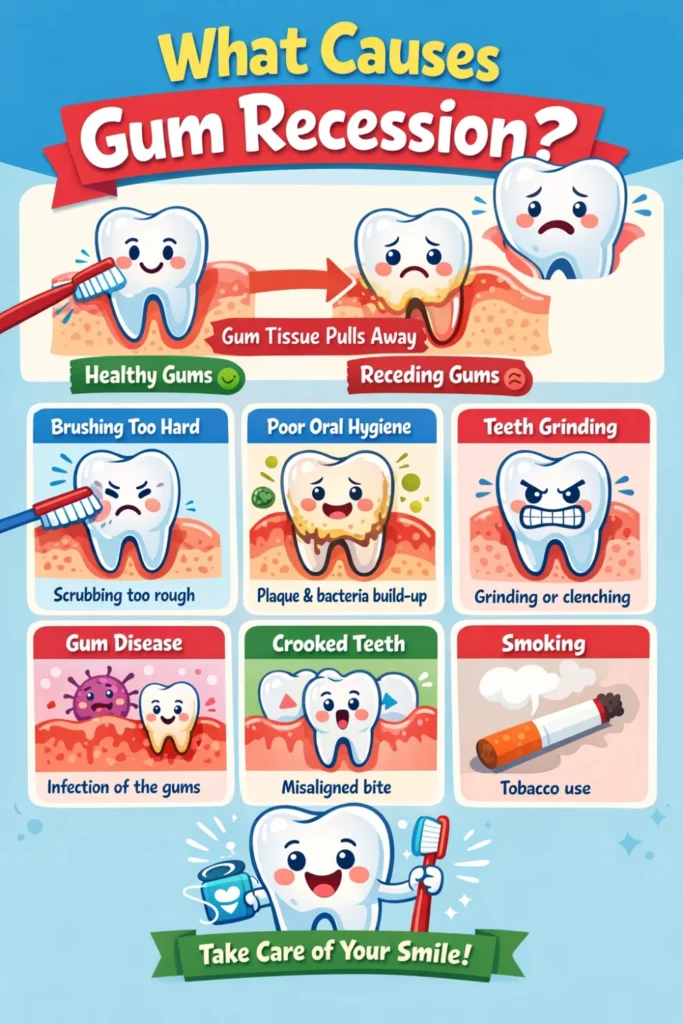
The main causes include:
- Brushing mistakes
- Gum disease
- Lifestyle habits
- Medical & dental conditions
- Aging and genetics
Let’s explore each one in detail.
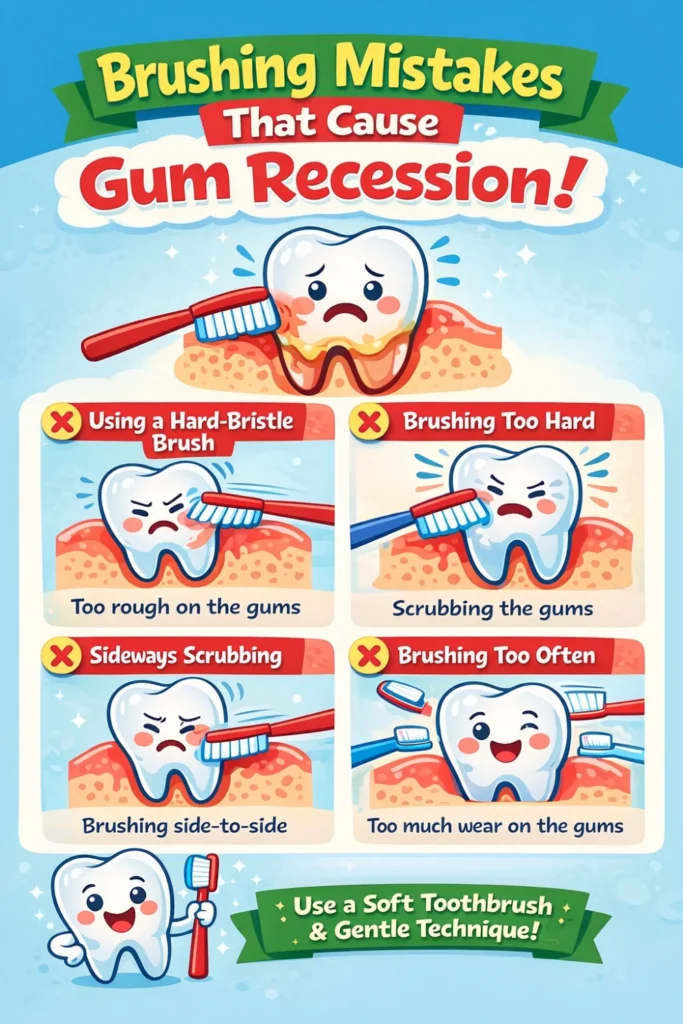
Brushing Mistakes That Cause Gum Recession
This is one of the most underestimated causes.
Many people believe:
“The harder I brush, the cleaner my teeth.”
Unfortunately, this belief damages gums over time.
Common brushing mistakes:
- Using a hard-bristle toothbrush
- Applying too much pressure
- Side-to-side scrubbing
- Brushing more than recommended
In my clinical experience, patients who are overly aggressive with brushing often develop recession faster than those who brush gently.
What to do instead:
- Use a soft-bristle toothbrush
- Gentle circular motions
- Let the brush do the work — not your hand
Lifestyle Habits That Cause Gum Recession
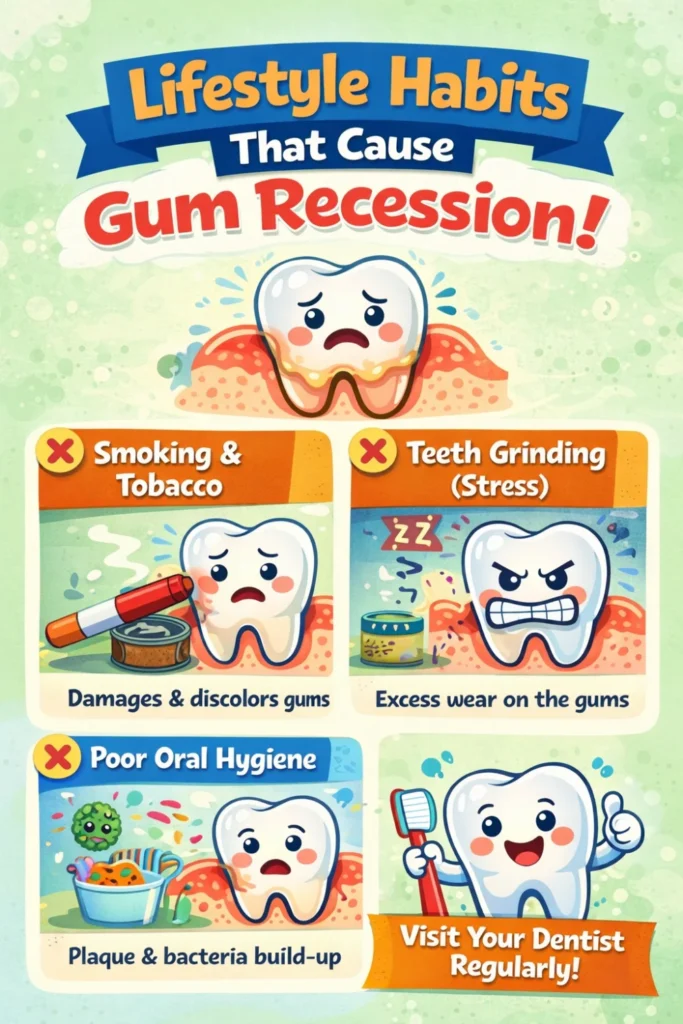
Your daily habits play a major role in gum health.
Key lifestyle causes:
- Smoking & tobacco use
Tobacco reduces blood flow to gums, making them weak and prone to recession. - Teeth grinding (bruxism)
Often stress-related and happens during sleep. The constant pressure damages both teeth and gums. - Poor oral hygiene
Plaque buildup leads to inflammation, infection, and eventually gum loss.
I’ve seen young adults with severe recession purely due to nighttime grinding they were unaware of.
Medical & Dental Conditions That Cause Gum Recession
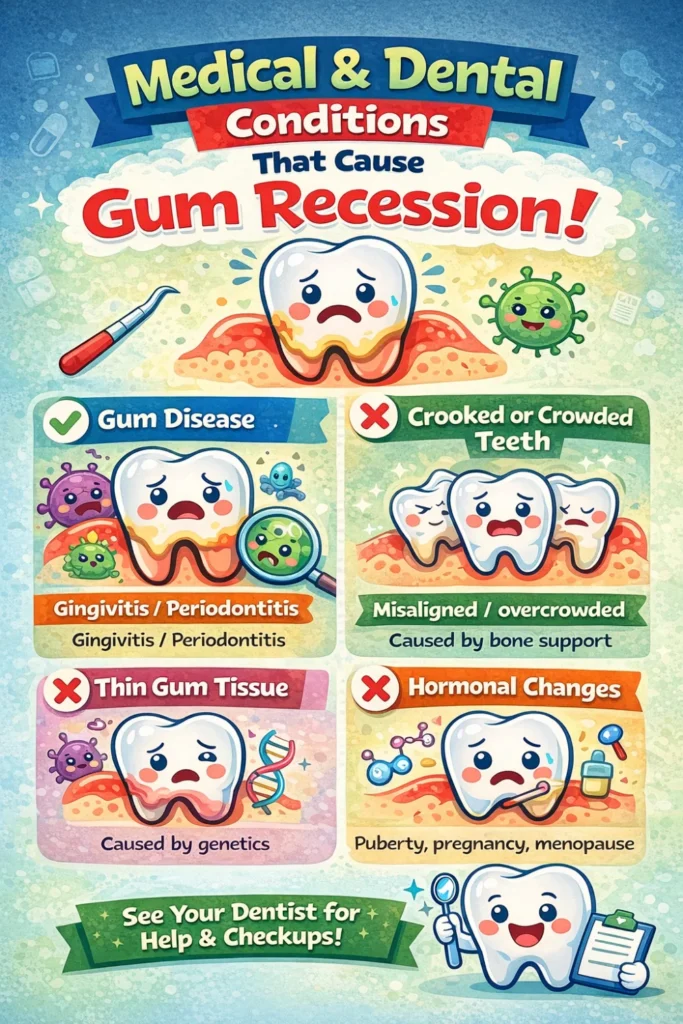
Sometimes, gum recession happens even when a person maintains good oral hygiene.
Medical and dental contributors:
- Gum disease (gingivitis & periodontitis)
The most serious cause. Infection destroys gum tissue and bone. - Crooked or crowded teeth
Uneven pressure on the gums leads to localized recession. - Thin gum tissue (genetics)
Some people naturally have thinner gums that recede easily. - Hormonal changes
Puberty, pregnancy, and menopause can increase gum sensitivity.
This is why regular dental checkups are essential — problems are often invisible in early stages.
Age-Related vs Preventable Causes of Gum Recession
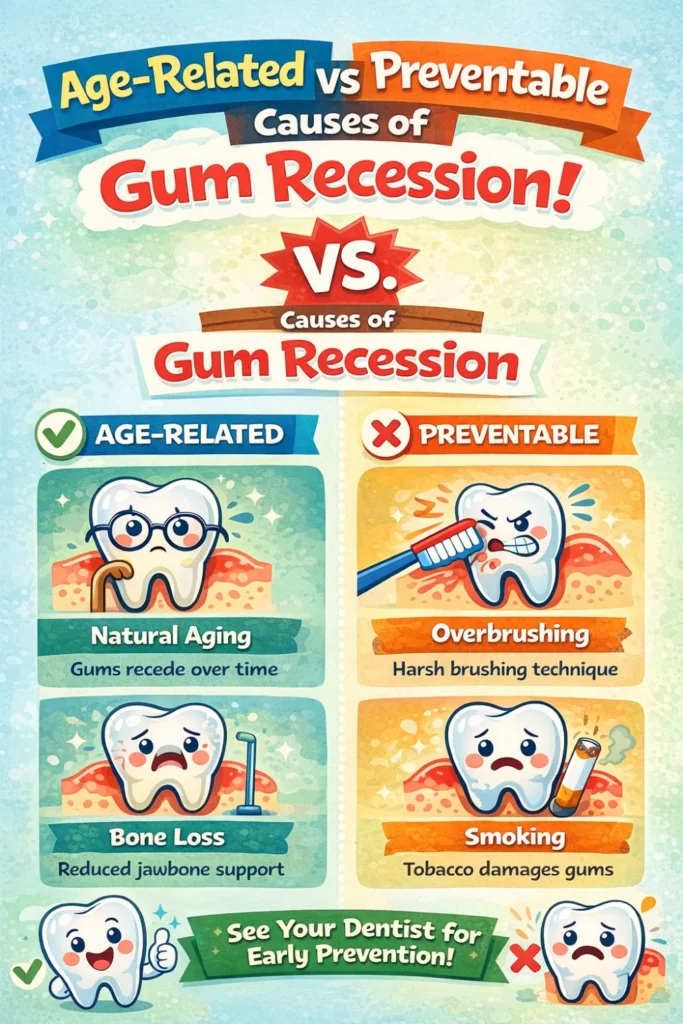
A very common question I hear:
“Is gum recession just a part of aging?”
The answer is partly yes, but mostly no.
Age-related causes:
- Natural tissue thinning
- Bone density reduction
Preventable causes:
- Overbrushing
- Smoking
- Untreated gum disease
- Poor dental care
Many people accept gum recession as “normal aging,” when in reality, most cases are preventable.
Gum Recession: Causes You Can Control vs Can’t Control
Understanding control gives patients confidence and motivation.
Causes you CAN control:
- Brushing technique
- Smoking & tobacco use
- Oral hygiene habits
- Managing teeth grinding
Causes you CAN’T control:
- Genetics
- Aging
- Certain hormonal changes
The key is focusing energy on what can be controlled — this alone can slow or stop recession progression.
Early Signs of Gum Recession You Should Not Ignore
Gum recession often progresses silently.
Watch out for:
- Teeth appearing longer
- Sensitivity to cold or sweet foods
- Bleeding while brushing
- Visible tooth roots
Early detection can prevent permanent damage.
Can Gum Recession Be Reversed?
This is one of the most searched questions.
The honest answer:
- Gums do not grow back naturally
- A recession can be stopped and treated
Treatment options depend on severity:
- Desensitizing toothpaste
- Professional cleaning
- Treating gum disease
- Gum graft surgery (advanced cases)
Early action always means simpler treatment.
How to Prevent Gum Recession from Getting Worse
Simple daily steps make a huge difference:
- Switch to a soft toothbrush
- Use proper brushing technique
- Quit smoking
- Wear a night guard if you grind teeth
- Visit your dentist regularly
Prevention is always easier than correction.
Final Thoughts: A Personal Note
One thing I’ve learned over years of patient interactions is this — gum recession is not just a dental issue; it’s a habit issue.
Most patients feel relieved when they realize:
“I didn’t lose my gums overnight — and I can still protect what I have.”
Awareness, gentle care, and timely professional advice can save your smile for life.
FAQ Related To What Causes Gum Recession
What causes gum recession the most?
The most common cause of gum recession is brushing too hard or using a hard-bristle toothbrush. Other major causes include gum disease, smoking, teeth grinding, poor oral hygiene, and genetic factors. In many cases, gum recession develops due to a combination of habits and medical conditions.
Can gum recession happen even if I brush daily?
Yes, gum recession can happen even if you brush every day. Incorrect brushing technique, excessive pressure, or using the wrong toothbrush can damage gum tissue over time. Medical conditions, genetics, and teeth grinding can also cause gum recession despite good oral hygiene.
Is gum recession a normal part of aging?
Gum recession becomes more common with age, but it is not always normal or unavoidable. While natural tissue thinning can occur, most gum recession is caused by preventable factors such as aggressive brushing, smoking, and untreated gum disease.
Can gum recession be reversed naturally?
No, gum recession cannot be reversed naturally once the gum tissue is lost. However, early gum recession can be stopped from getting worse with proper brushing techniques, professional dental care, and treatment of underlying causes. Advanced cases may require surgical treatment.
How can I prevent gum recession from getting worse?
You can prevent gum recession from worsening by:
Using a soft-bristle toothbrush
Brushing gently with proper technique
Quitting smoking or tobacco use
Treating teeth grinding
Visiting a dentist regularly
Early prevention is the best way to protect your gums.

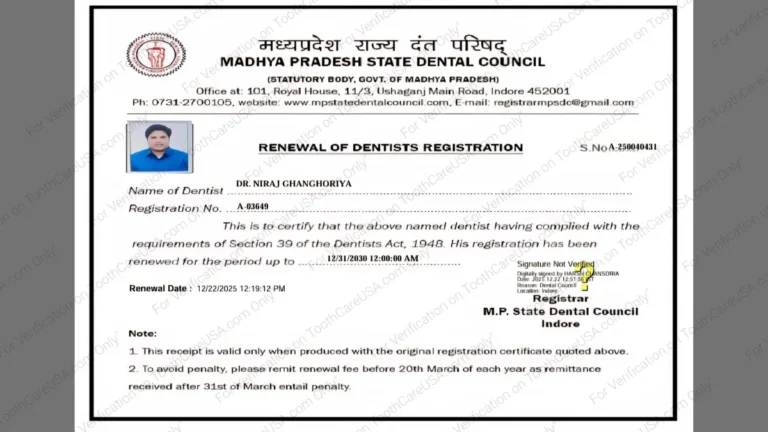
Dr. Niraj Ghanghoriya is a passionate dental surgeon with over 12 years of experience in clinical dentistry. He completed his BDS from the prestigious Sri Aurobindo Institute of Dentistry in 2012 and specializes in painless root canals, smile makeovers, and preventive oral care. He is the Founder of ToothCareUSA.com and a registered Dental Surgeon (Reg No: A-03649) based in Indore. Known for his patient-first approach and clear communication, Dr. Ghanghoriya aims to make dental knowledge accessible to everyone. When he’s not in the clinic, he enjoys writing informative dental blogs to help people take better care of their oral health. He reviews every article on this site to ensure medical accuracy and patient safety.